
Grease Trap Cleaning in JLT, Dubai Marina & JBR: Tower Kitchens Guide
Few parts of Dubai pack as many kitchens into as little space as the Marina cluster. Cafés line the podiums of Jumeirah Lakes Towers, restaurants stack along the Marina Walk, and beachfront terraces and hotel kitchens run flat out on The Walk at JBR. Almost all of them sit inside residential or mixed-use towers, sharing risers, basement lines, service lifts and loading bays with dozens of neighbors.
That setting changes everything about grease management. This guide covers what grease trap cleaning in JLT, Dubai Marina & JBR actually involves for tower kitchens: how the drainage system works, who is responsible for what, how access and scheduling are handled, how often to service, how to keep odors away from the floors above and how to choose a contractor the building will let through the door.
Dense, vertical food service: Cafés, restaurants, bakeries, cloud kitchens and hotel outlets operate side by side in podiums and ground floors, with residential or office floors directly above.
Shared drainage: Several tenants often discharge into the same vertical riser and basement line. One neglected trap can send grease downstream to every outlet connected to it.
Tight service access: Contractors reach kitchens through freight lifts, service corridors and basement bays that building management controls, often with restricted hours and booking systems.
Peaks that don’t follow a calendar: Winter tourist season, weekends, school holidays, Ramadan evenings, public holidays and New Year’s Eve push volumes far above the weekday average, particularly along the waterfront.
Coastal humidity and warmth: Heat and humidity speed up grease breakdown and odor, and open-air terraces mean smells travel quickly to neighbours and guests.
Mixed regimes: Depending on the building and your license, you may deal with the building’s management, a free zone authority and the food safety authority all at once. Our guide to grease trap rules in UAE free zones explains how to work out which apply to your unit.
Why the Marina Cluster Is Different
| Area | Typical Kitchen Profile | What Stands Out for Grease Management |
|---|---|---|
| JLT | Cafés, casual restaurants, bakeries and cloud kitchens in tower podiums and clusters | Many small outlets sharing risers and basement lines; varied building managers and rules |
| Dubai Marina | Restaurants, cafés and bars along the Marina Walk, plus tower podiums and hotel outlets | Waterfront terraces, evening peaks, shared podium plant and strict service windows |
| JBR | Beachfront restaurants, hotel kitchens and cafés on and around The Walk | Very high seasonal and weekend volumes, strong tourist demand and heavy foot traffic that limits daytime service |
The Three Areas at a Glance
How a Tower Kitchen’s Grease System Works
Understanding the path your waste takes explains most of the problems:
- Kitchen fixtures: (pre-rinse sinks, dishwashers, floor drains) discharge greasy wastewater
- Your tenant grease trap: intercepts most fats, oils and grease before they leave the unit
- Branch pipework: carries wastewater to the building’s vertical riser
- The riser: joins wastewater from other units, often on several floors
- A central interceptor: where one exists, provides a further stage of separation, usually in a basement or plant room
- The public network: takes what remains
When any link fails, whether an overdue tenant trap or a neglected central interceptor, grease reaches pipes that are shared and hard to reach. That’s why a single outlet’s maintenance record can affect every neighbor on the same line.
Who Is Responsible for What?
Responsibilities vary by building, so confirm them in your lease and the building’s fit-out manual. An illustrative guide:
| Item | Typically Responsible | Confirm In |
|---|---|---|
| Tenant grease trap inside or serving the unit | Tenant | Lease and fit-out manual |
| Cleaning schedule and service records for that trap | Tenant, often with audit rights for the landlord | Tenant handbook |
| Central or communal interceptor | Landlord, master developer or building manager | Operating agreement |
| Shared risers and basement lines | Landlord or building manager | Operating agreement |
| Building access and lift bookings | Building management | Fit-out manual |
| Cost recovery for shared works | According to service charge terms | Lease |
Every item should have a named owner. Gaps between tenant and landlord responsibilities are where failures hide.
Access and Scheduling in Tower Buildings
A technically perfect service done at the wrong time or by an unapproved contractor won’t happen at all. Plan around:
- Building-approved contractor lists: Many towers only admit contractors who have been vetted, insured and registered with the building.
- Freight lift and loading bay bookings: often needed days ahead and limited to certain hours
- Working-hour restrictions: with service frequently allowed only late at night or early in the morning
- Waste routing: along approved corridors that respect fire egress and avoid residential and public areas
- Basement height and access limits: that affect which vehicles and equipment can be used
- Permits, inductions and escorted entry: at many buildings
- Odor and noise control: with sealed containment and tidy hose management so nothing leaks into corridors or lifts
Build these requirements into your schedule so that missed access slots don’t turn into overdue traps. See our guides to grease trap services in Business Bay and Downtown and to grease trap maintenance in shopping malls for more on tower and multi-tenant access.
Sizing and Space in Podium Kitchens
Tower kitchens rarely have the room a standalone restaurant does. Common constraints include:
- Limited plant room or under-counter space: which can force compact or high-capacity designs
- Low ceilings and tight corridors: that complicate access and pumping
- Shared drainage with fixed capacity: that can’t absorb a sudden increase in load
- Changes of use: such as a café becoming a grill, which push output beyond the original design
If you experience blockages, odors or overdue-looking traps far more often than comparable outlets, your trap may be undersized for your actual output. A proper assessment can tell you whether a resize or an additional trap is cheaper than years of over-frequent cleaning.
How Often Should Tower Kitchens Clean Their Grease Traps?
Follow any interval set in your approved conditions or by the relevant authority. As a starting point:
| Outlet Type | Typical Interval |
|---|---|
| High-volume fried, grilled or shawarma outlets | Every 2 to 4 weeks |
| Beachfront and Marina Walk restaurants with peak-season demand | Every 2 to 4 weeks, with extra cycles before peaks |
| Hotel kitchens and banqueting | Every 2 to 4 weeks |
| Standard full-service restaurants | Every 4 to 6 weeks |
| Cafés, bakeries and low-oil outlets | Every 6 to 8 weeks |
| Cloud kitchens with several brands | Every 2 to 4 weeks |
| Central interceptors serving several tenants | Set by measured accumulation, often more frequent than any single tenant trap |
Don’t set the interval once and forget it. Measure how quickly each trap fills over its first few cycles and adjust.
Planning for Peaks and Events
Waterfront and tourist-driven kitchens feel demand swings sharply:
- Add cycles before peak periods: such as the winter tourist season, long weekends, Ramadan evenings and New Year’s Eve, instead of servicing after something goes wrong
- Coordinate with building management: early, since lift and bay slots fill fast around events
- Agree an emergency contact and response time: with your contractor in writing
- Brief kitchen staff: on keeping grease out of drains during busy services
Keeping Odors Away From Neighbors and Guests
In a tower, a smell doesn’t stay in your kitchen. It travels through risers, corridors and ventilation to the floors above and to outdoor seating. To prevent complaints:
- Service on schedule: since overdue traps are the main source of odor
- Check covers, seals and vents: for damage
- Clear and flush floor drains: which can host drain flies
- Keep waste areas sealed and clean
- Act on the first complaint: rather than waiting for a pattern
- Use odor-controlled transport: for waste leaving the building
Complaints from residents or other tenants can reach building management quickly, which can lead to access restrictions or compliance notices.
Humidity, Rain and Backflow
Coastal humidity, occasional heavy rain and lower-level kitchens combine to raise backflow risk. A clean trap and clear drains before the rain season reduce the chance of grease and wastewater rising into your kitchen. See our guide to grease trap backflow during heavy rain for a pre-storm checklist.
Compliance and Records
Whatever your building and license, inspectors, building managers and insurers will ask for evidence. Keep in one place:
- Before-and-after photographs: ideally
- The contractor’s license and insurance details
- Waste disposal or transfer records: from an authorised collector
- Dated service reports: for every visit
- Records of defects found and actions taken
- Your fit-out approvals and trap drawings
Requirements differ between mainland areas, free zones and individual buildings, so confirm what applies to your unit. Our UAE restaurant compliance checklist covers the wider set of kitchen records, and our annual grease trap maintenance plans guide explains how a scheduled contract generates them automatically.
What a Proper Service Includes
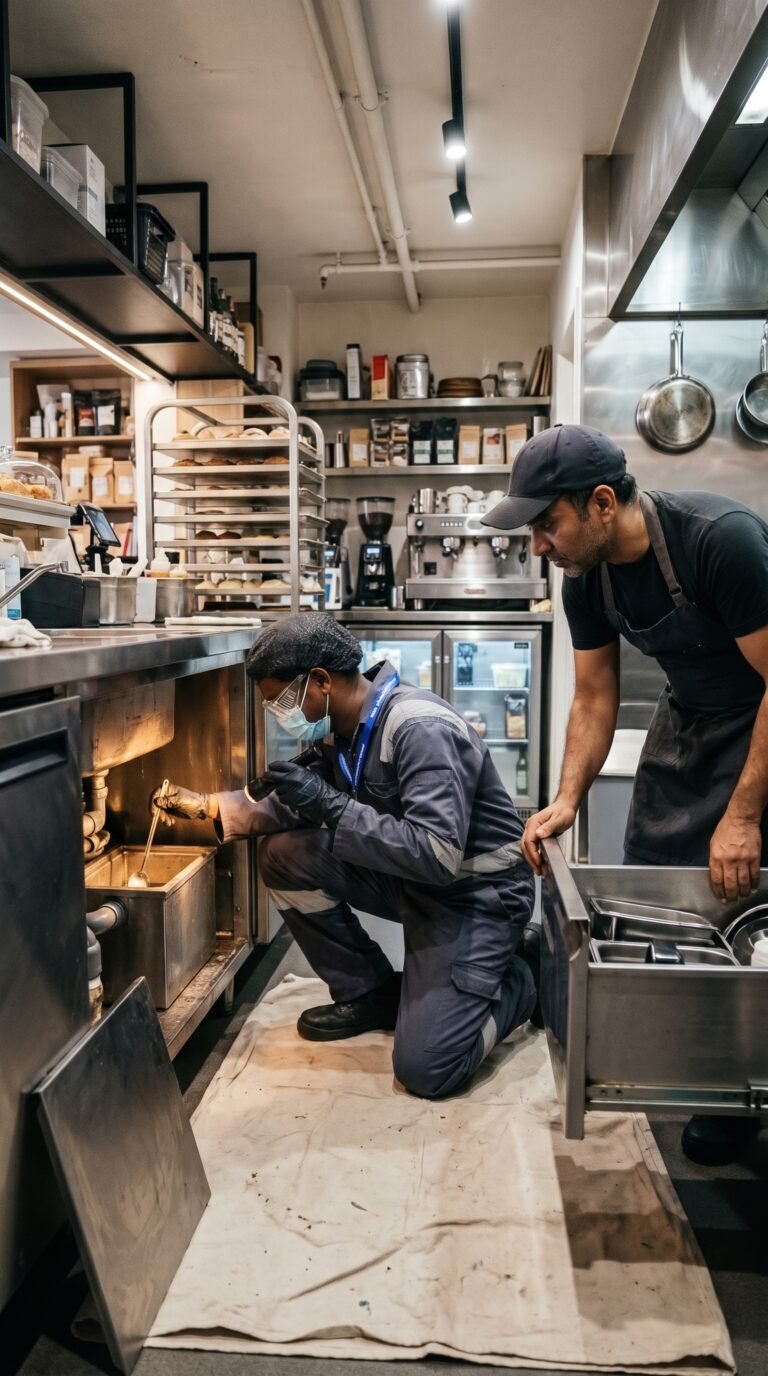
A genuine visit covers more than skimming the surface:
- Full pump-out: of liquids, solids and the grease cap
- Wall and baffle scraping
- Inlet and outlet pipe flushing
- Inspection: of the unit’s condition, seals and covers, with defects reported
- Authorised disposal: of the waste
- A dated service certificate: and disposal record
- Before-and-after photographs
Ask for the scope in writing. See our guide to grease trap cleaning quotes for the factors that explain price differences between providers.
Choosing a Grease Trap Contractor for Tower Kitchens
Look for a provider who can show:
- A valid trade license: and authorisation to handle and dispose of FOG waste
- Experience in towers and podium kitchens: in JLT, Dubai Marina and JBR
- Familiarity with building approval processes: including approved-contractor lists, permits and inductions
- Flexible, off-peak scheduling: and reliable freight lift coordination
- Compact, odor-controlled equipment: suited to tight access
- Itemised pricing: and a clear written scope
- A service certificate and disposal record: after every visit
- A written emergency response commitment
- Public liability insurance: suited to working in occupied buildings
- References from other tower and waterfront outlets
See Our contractor selection guide provides a fuller checklist.
Areas We Cover
Our service for grease trap cleaning in JLT, Dubai Marina & JBR includes:
- JLT clusters and podium retail: cafés, restaurants, bakeries and cloud kitchens
- Dubai Marina towers and the Marina Walk: restaurants, bars and podium outlets
- JBR and The Walk: beachfront restaurants, cafés and hotel kitchens
- Hotels and serviced apartments: across the Marina cluster
- Neighboring Marina and Al Sufouh areas: on request
Keep Your Tower Kitchen Running Smoothly
Good grease trap cleaning in JLT, Dubai Marina & JBR comes down to understanding your shared system, agreeing responsibilities in writing, servicing on a schedule that matches your output and peaks, working within building access rules and keeping records you can show on the day. Get those right and your trap becomes one less thing to worry about.
Book a free grease trap assessment today. Blue Diamond technicians will inspect your trap, check your access arrangements with the building and set up a documented service schedule with authorized disposal, for kitchens in JLT, Dubai Marina, JBR and across Dubai.
Contact us today on WhatsApp | Call | Email
Phone: +971 55 996 3058
Email: info@bluediamondfm.com
Most Frequently Asked Question
Usually the tenant for the trap serving their unit, and the landlord or building manager for central interceptors and shared lines. The details depend on your lease and the building’s fit-out manual, so confirm them in writing.
High-volume outlets and waterfront restaurants typically need service every two to four weeks, with extra cycles before peak periods. Your approved conditions or authority guidance may set a specific interval, which takes priority.
Yes. Shared risers and basement lines mean overdue traps can cause blockages and odors that affect other tenants, and odors can travel to floors above. Keeping to your schedule and records protects you and them.
Many towers maintain approved-contractor lists and require insurance, permits and inductions before access is granted. Ask your building manager before booking.
Dated service reports, disposal records, the contractor’s license and insurance details and your fit-out and trap approvals, all stored in one place and easy to produce.
Our Services
Our step-by-step guide simplifies the cleaning process, ensuring a hassle-free experience while keeping your traps clean.
Drain Line Jetting
Pest Control Service
Deep Cleaning
business
Our Working Process
Let’s start the journey towards success and enhance revenue for your business. Take your company to the next level.
Book An Appointment Today
Blue Diamond would like to hear from you. if you have business inquiries. Get in touch with us.