Grease Trap Backflow During Heavy Rain UAE: Prevention Tips
The UAE doesn’t get much rain, but when it comes, it often arrives hard and fast. Drainage systems designed for dry weather suddenly have to cope with water they weren’t built to handle. For restaurants and food businesses, one of the ugliest results is grease trap backflow during heavy rain: wastewater, grease and sewage rising back up through floor drains, sinks and the trap itself, straight into the kitchen.
It’s a messy, expensive and potentially closure-level problem, and much of it is preventable. This guide explains why backflow happens in storms, how to spot the warning signs, what to do before the rain arrives, what to do while it falls, and how to recover safely afterwards.
Several local factors make rain-related backflow more likely here than in places that get regular rain:
- Infrequent but intense rainfall: Drainage networks are sized for typical conditions, so heavy downpours can overwhelm them quickly.
- Sand, dust and litter: Dry spells let debris accumulate in gullies, yard drains, roof outlets and storm drains, and the first heavy rain washes it all into the pipework.
- Low-lying and basement kitchens: Service yards, basement car parks and lower-level food courts sit below street or drain level and are the first to back up.
- Shared and ageing drainage: Older buildings, shared risers and mixed-use developments may have limited capacity or cross-connected systems.
- Hard surfaces everywhere: Roads, car parks and roofs shed water rapidly into the same drains.
- Grease-laden pipework: Pipes already narrowed by grease build-up have even less capacity when storm flow arrives.
Why the UAE Is Especially Vulnerable
Backflow means wastewater flowing in the wrong direction, back up the drain instead of away from the building. In heavy rain it typically happens when:
- The public or shared drainage network fills up: and the water level rises above the level of your outlets
- Stormwater enters the foul drainage system: through cross-connections, damaged pipes, open covers or low-level inlets
- Downstream pipes or pumps can’t keep up: so water backs up the line toward the lowest openings, which are often your floor drains and grease trap
- Blockages downstream: (sand, silt, grease, debris) restrict the flow just when it’s needed most
A grease trap sits in the middle of this path. If it’s already full of grease and solids, backed-up water pushes the contents out of the trap and into the kitchen, instead of simply rising and falling.
This increases the risk of foul odors, hygiene issues, and operational disruptions within the kitchen area.
Regular cleaning, proper maintenance, and installing backflow prevention measures can significantly reduce the impact of heavy rainfall events and drainage surcharges.
What Backflow Actually Is?
Warning Signs Before a Storm
Don’t wait for the sky to turn grey. Signs your system is already vulnerable include:
- Slow-draining sinks and floor drains in normal weather
- Gurgling sounds from drains
- Persistent odors near the trap or drains
- Recurring blockages in the same line
- A trap overdue for cleaning, or no record of the last service
- Damaged, missing or loose trap covers and seals
- Standing water or damp patches around the trap or drains
- Debris-filled gullies, yard drains or roof outlets
If you recognise more than one of these, treat your premises as high risk and act before the next forecast. See our guides on the signs your grease trap needs cleaning and restaurant drain blockages.
Prevention: What to Do Before the Rain Season
1. Service the Grease Trap Before It’s Needed
A freshly cleaned trap has maximum capacity, and far less grease to push into your kitchen if water surges back. Schedule a full pump-out and clean (liquids, solids and grease cap, plus scraping and flushing) ahead of the rainy period, and again before a major storm forecast. See our guide to annual grease trap maintenance plans for how to build this into a schedule.
2. Check Covers, Seals and Access Points
- Trap covers should be intact, correctly seated and sealed
- Gaskets should be in good condition and bolts should be present and tightened
- Inspection chamber covers should be secure
- Replace damaged covers promptly, since an open or cracked cover is a direct route for water and contamination
3. Clear the Drains Upstream and Around You
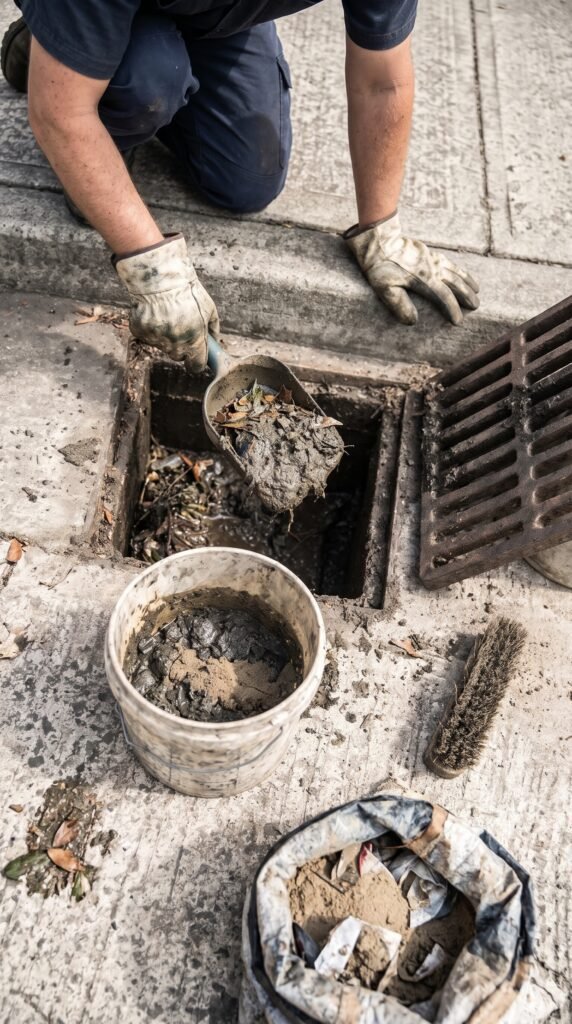
- Remove sand, silt and litter from yard drains, gullies and roof outlets
- Check roof drainage and downpipes for blockages
- Clear storm drains around your premises where it’s your responsibility, and report blocked public drains to the right authority
- Make sure surface water has a clear route away from doors, service yards and basement ramps
4. Check for Stormwater Entering the Wrong System
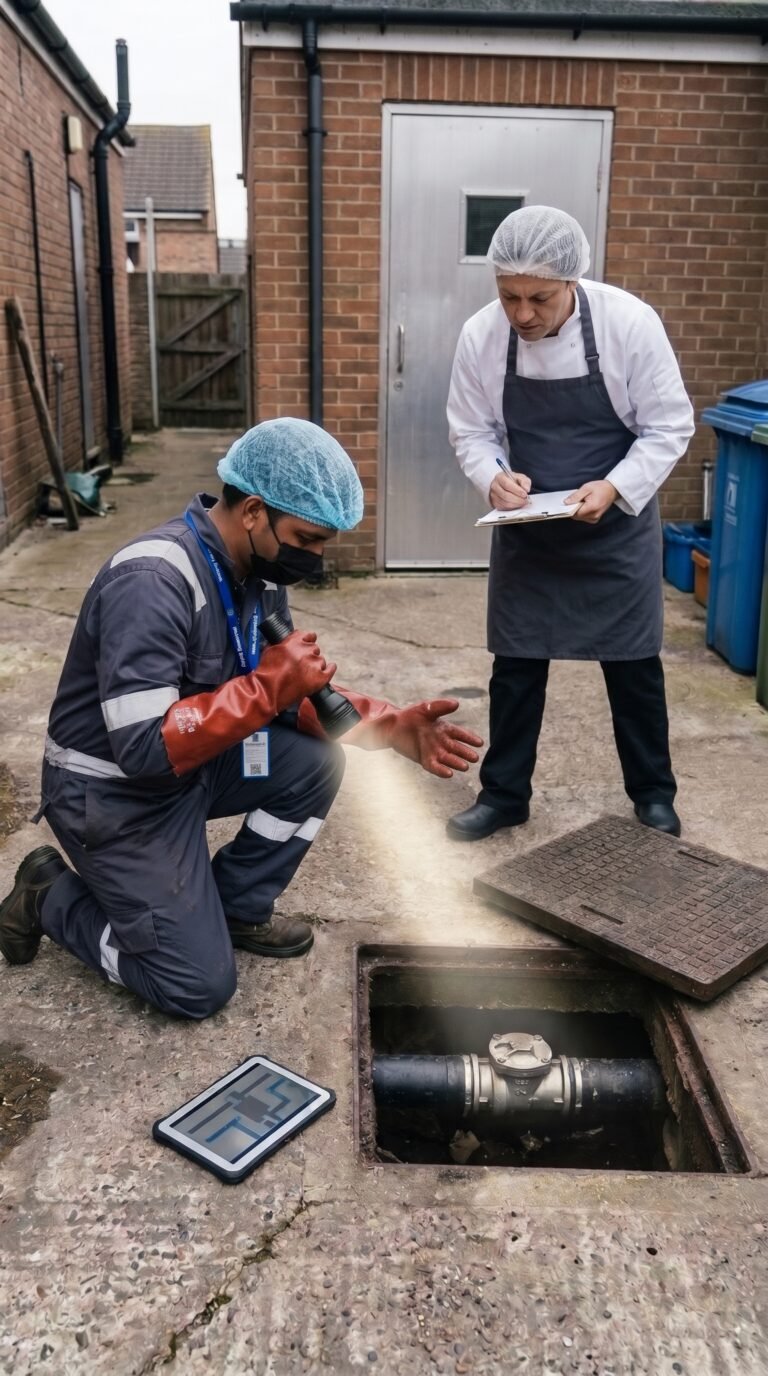
Ask a qualified drainage contractor or engineer to confirm that stormwater and foul drainage are properly separated and that no roof or yard drains connect to the grease or foul line. A CCTV drain survey can reveal cross-connections and damage you can’t see.
5. Consider Backflow Protection
In some premises, a non-return (backwater) valve or similar device can stop water flowing backwards into the building. These must be correctly specified, installed and maintained, and in many buildings they need landlord and authority approval. Get a qualified engineer’s advice rather than fitting one yourself, because a wrongly installed valve can cause its own problems.
6. Maintain Pumps, Sumps and Alarms
If your premises relies on a sump or pump station:
- Test pumps and float switches regularly
- Check for blockages and wear
- Confirm any high-level alarm works
- Know what happens during a power cut and whether standby power covers the pumps
7. Prepare the Premises
- Store food, packaging, chemicals and equipment off the floor in low-lying areas
- Keep flood barriers, door guards, sandbags or similar measures available where appropriate
- Know where your electrical isolators are, and keep access clear
- Photograph the premises and equipment in good condition before the rain, so you have a baseline for any insurance claim
8. Write a Simple Storm Plan
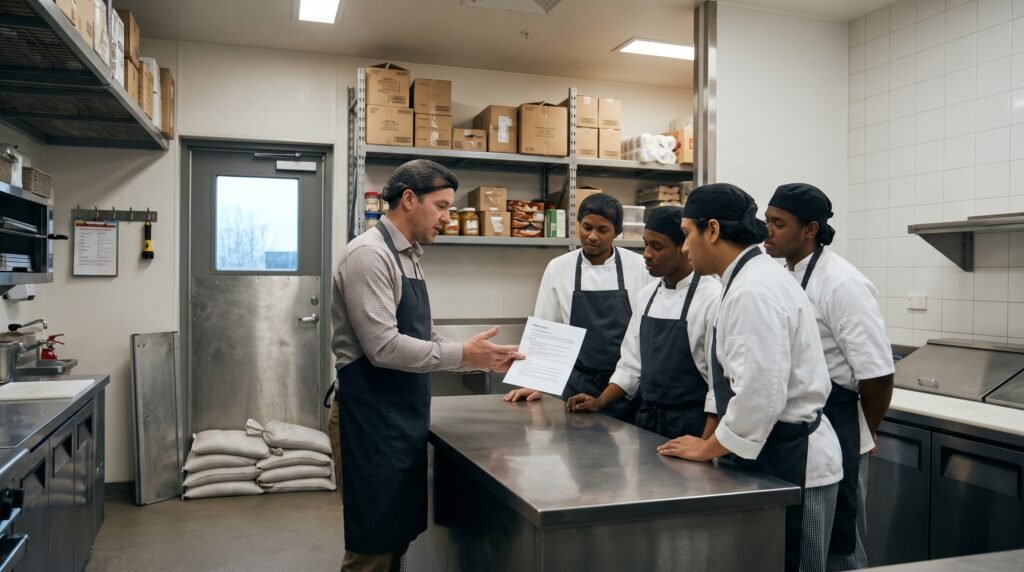
A one-page plan should state who is responsible, who to call (contractor, building management, insurer), which areas to protect first and what to do if backflow starts. Brief your team, and keep the contact list somewhere easy to find.
A Pre-Storm Checklist
| When | Action |
|---|---|
| Before the season | Full trap service, drain survey where needed, cover and seal repairs, pump tests |
| Several days before a forecast storm | Re-check covers, clear gullies and yard drains, move stock off floors, brief the team |
| 24 hours before | Confirm contractor availability, check pumps and backup power, protect low-level doors and drains |
| During the storm | Keep staff safe, avoid using kitchen drains, monitor low areas, isolate affected equipment |
| After the storm | Inspect, document, clean and disinfect, service the trap, assess food safety before reopening |
During the Storm: What to Do and Not Do
Do:
- Put staff safety first, and move people away from flooded areas
- Switch off electrical equipment in affected areas only if it’s safe to reach the isolator, and keep clear of any wet electrics
- Stop sending wastewater into the drains while they are backing up, including dishwashing and pre-rinse
- Move stock and equipment to higher ground where safely possible
- Keep a record, with photos and timestamps
- Call your emergency contractor and building management early
Don’t:
- Open the grease trap cover while water is rising, which can release contaminated water and expose staff to hazards
- Attempt to pump out the trap or clear blockages while the network is still surcharged, because the water will simply return
- Wade through floodwater near live electrics
- Use chemicals or boiling water to “fix” a backing-up drain
- Re-open for service until the area has been cleaned and assessed
After the Storm: Safe Recovery
Backflow water is contaminated, and recovery should be methodical.
- Make the area safe: Confirm electrics and gas are safe before re-entering or restarting equipment.
- Document everything: Photograph damage and keep service records, which will support insurance claims.
- Remove contaminated water and debris: using appropriate equipment and PPE.
- Clean and disinfect: all affected surfaces, floors, drains and equipment using food-safe products, and dispose of contaminated waste properly.
- Service the grease trap: A flooded trap will have been disturbed, so a full pump-out, scraping, flushing and inspection is usually needed.
- Check the drainage line: A CCTV survey can find silt, damage or displacement caused by the surge.
- Assess food safety: Discard any food, packaging or ice that may have been contaminated, and follow your authority’s guidance on re-opening after flooding.
- Review and improve: Work out why it happened, and update your plan, schedule and protection measures.
Requirements for re-opening and reporting can apply after flooding, so confirm what your local authority expects before restarting food service.
Designing Out the Problem: Fit-Out and Landlord Considerations
If you’re building or refitting a kitchen, ask your consultant to consider:
- Trap and chamber levels: relative to the surrounding drainage and flood-prone areas
- Sealed, bolted covers: where appropriate
- Backflow prevention: where it’s permitted and suitable
- Clear separation: of stormwater and foul drainage
- High-level alarms: on sumps and pump stations
- Accessible, safe maintenance routes
- Capacity for peak loads: not just average use
For tenants in malls, towers and shared buildings, ask the landlord who owns and maintains the shared lines, backflow devices and pump stations, and what the storm response arrangements are. Our guides on grease trap maintenance for shopping malls and for high-rise kitchens explain how responsibilities are usually shared.
What Backflow Costs
Rain-related backflow is rarely just a cleaning bill. Typical costs include:
- Lost trading days: while the kitchen is cleaned and cleared for use
- Emergency callout rates: during peak demand when contractors are stretched
- Damaged equipment, stock and flooring
- Food-safety and regulatory consequences: if contamination reaches food areas
- Insurance excesses and disputes: if records are missing
- Reputation damage: if customers see or smell the problem
A few hours of preparation almost always costs less than a day of closure.
Get Storm-Ready Before the Forecast
Preventing grease trap backflow during heavy rain in the UAE comes down to preparation: a freshly serviced trap, secure covers, clear drains, protected low-level areas, working pumps and a plan your team can follow. The kitchens that cope best aren’t the ones with the luckiest location, they’re the ones that prepared in advance.
Book a free storm-readiness inspection with Blue Diamond Team. They will check your grease trap, covers, drains and low-level risk points, advise on what needs fixing before the next heavy rain and put your trap on a documented service schedule, for restaurants and food businesses anywhere in the UAE.
Contact us today on WhatsApp | Call | Email
Phone: +971 55 996 3058
Email: info@bluediamondfm.com
Most Frequently Asked Question
Usually because the public or shared drainage network fills up, or stormwater enters the foul system, pushing water back up through the lowest openings, which are often floor drains and the trap. A trap that’s already full of grease and solids makes it much worse.
Yes. If the network itself is surcharged, water can rise through even a freshly cleaned trap. A clean trap reduces the grease and contamination in the backflow and gives you more capacity, but it can’t stop the network filling up. That’s where drainage separation, backflow protection and pumps come in.
Keep people safe, stop sending wastewater into the drains, isolate electrics only if it’s safe, move stock and equipment up, document the event and call your emergency contractor and building management. Don’t open the trap or try to force the drains while the network is surcharged.
Not until the affected areas have been cleaned, disinfected and assessed, contaminated food has been discarded and any authority requirements for re-opening have been met. Contaminated floodwater is a serious food-safety risk.
Keep dated service reports, disposal records and photographs from every visit, and photograph the premises before and after any event. A scheduled maintenance plan produces most of this evidence automatically.
Our Services
Our step-by-step guide simplifies the cleaning process, ensuring a hassle-free experience while keeping your traps clean.
Drain Line Jetting
Pest Control Service
Deep Cleaning
business
Our Working Process
Let’s start the journey towards success and enhance revenue for your business. Take your company to the next level.
Book An Appointment Today
Blue Diamond would like to hear from you. if you have business inquiries. Get in touch with us.