
Dubai Municipality Grease Trap Approval: Step-by-Step Application Process
Planning a new restaurant, hotel kitchen, café, catering facility, or commercial kitchen in Dubai? One of the technical considerations that should be addressed early is your grease management system.
Understanding the Dubai Municipality Grease Trap Approval process can help businesses avoid costly design changes, installation delays, and compliance issues later in the project. A properly planned grease trap or grease interceptor helps manage fats, oils, and grease (FOG) before they enter drainage and wastewater systems, supporting efficient kitchen operations and responsible wastewater management.
However, grease trap requirements are not necessarily identical for every business. The appropriate solution can depend on the type of food operation, kitchen layout, wastewater flow, equipment connected to the drainage system, available installation space, and the specific requirements applicable to the project.
This is why businesses should not treat grease trap approval as a simple equipment purchase. The process should be approached as part of a coordinated project involving kitchen design, plumbing, drainage, wastewater management, installation, inspection, and ongoing maintenance.
Dubai Municipality provides dedicated resources for food establishments, including food establishment requirements and food-related permits and approval services. Its published technical guidance also addresses grease trap maintenance, cleaning, waste transportation, approved grease traps and suppliers, and factors relevant to sizing. Because official requirements and procedures can change, businesses should always verify the latest applicable requirements with Dubai Municipality or the relevant authority before submitting an application or commencing installation.
In simple terms, grease trap approval refers to the regulatory or project approval considerations associated with selecting, designing, installing, and operating a grease management system for applicable commercial food operations in Dubai.
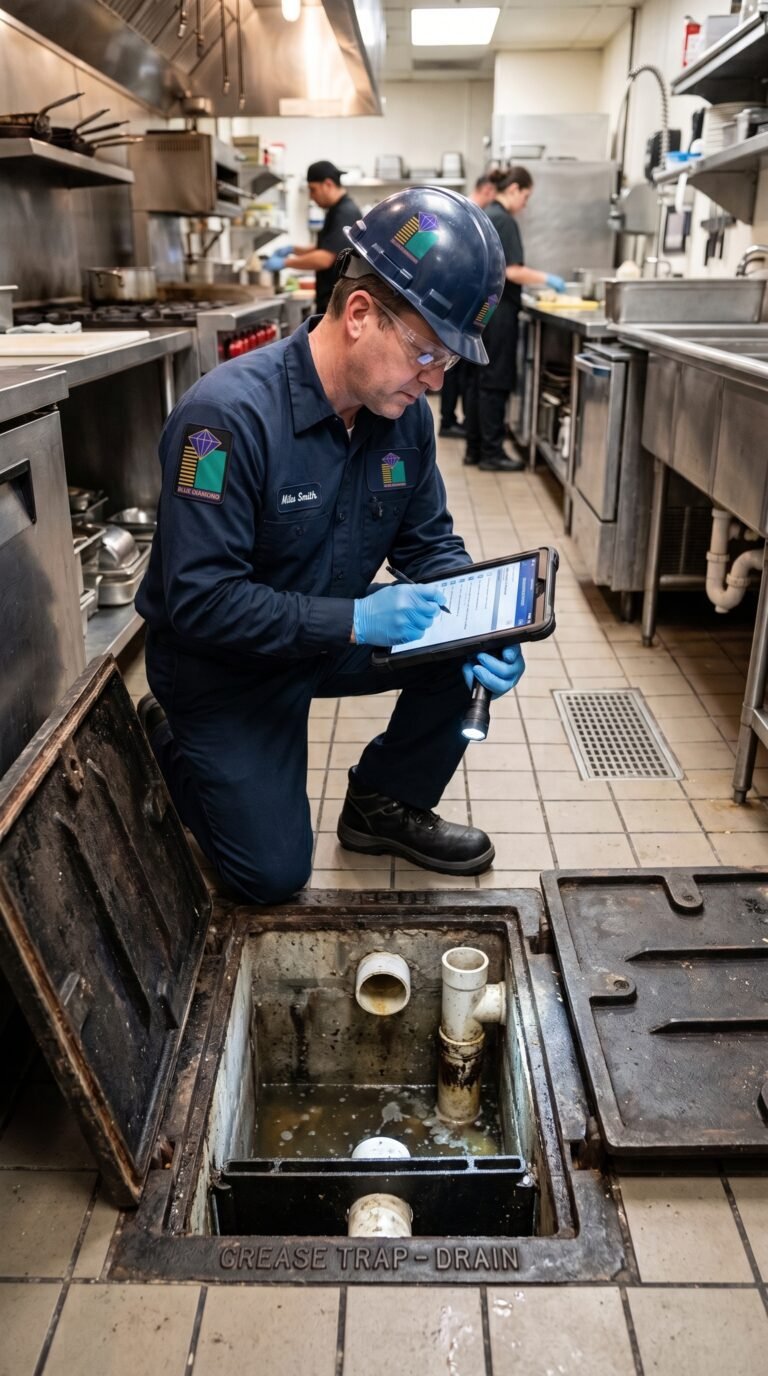
A grease trap is designed to separate fats, oils, and grease from wastewater generated by kitchen activities. Without appropriate grease management, FOG can enter drainage networks, accumulate inside pipes, contribute to blockages, and create operational and environmental problems.
For a commercial kitchen, however, approval should not be confused with the installation itself.
These are separate but connected considerations:
- Approval or clearance: Any required review or authorization from the relevant authority or project stakeholders.
- Compliance: Meeting applicable regulatory, technical, health, environmental, and project requirements.
- Installation: Physically supplying and installing the selected grease management system.
- Inspection or verification: Any inspection or confirmation required for the particular project.
- Maintenance: Regular cleaning, inspection, waste removal, and recordkeeping after the system becomes operational.
Dubai Municipality’s published guidance states that grease traps and their suppliers are approved by Dubai Municipality and that unapproved grease traps or suppliers should not be used. The same guidance addresses regular cleaning and identifies factors relevant to grease trap sizing, including water flow and the number of connected kitchen fixtures. Businesses should confirm the current version and applicability of these requirements before proceeding.
The key takeaway is simple: do not purchase or install a grease trap based solely on price or a generic capacity recommendation.
The system should be evaluated as part of the entire kitchen drainage and wastewater strategy.
What Is Dubai Municipality Grease Trap Approval?

Who May Need Grease Trap Approval or Compliance?
The need for grease management and any associated approval or compliance requirements may arise in a range of food-related and institutional operations, including:
- Restaurants
- Hotels
- Cafés and coffee shops
- Catering kitchens
- Food courts
- Central kitchens
- Commercial kitchens
- Institutional kitchens
- Healthcare and hospital kitchens
- Large food-service operations
The exact requirements may vary according to the nature of the operation, building configuration, project scope, and applicable authority requirements.
For example, a small café with limited food preparation may have very different wastewater characteristics from a high-volume hotel kitchen or a central catering facility.
Therefore, businesses researching grease trap approval for restaurants in Dubai should assess their specific operation rather than relying on a one-size-fits-all solution.
Dubai Municipality’s food establishment resources include requirements and services related to food establishments and food-related permits. The Dubai Building Code also addresses restaurants and food facilities as a specific building-use category. This reinforces the importance of coordinating kitchen planning with the relevant building, food safety, plumbing, and drainage requirements applicable to the project.
Dubai Municipality Grease Trap Approval: Step-by-Step Process
The following framework is a practical project workflow, not a claim that every project follows an identical official process. Specific application channels, documents, review stages, fees, and inspection requirements should be confirmed with Dubai Municipality or the relevant authority for the individual project.
Step 1: Determine Whether a Grease Management System Is Required
The first step is to understand the requirements applicable to the proposed food establishment.
Consider:
- Type of food preparation
- Volume of wastewater
- Number and type of kitchen fixtures
- Dishwashing operations
- Cooking methods
- Kitchen operating hours
- Expected peak demand
- Drainage connection
- Building and site configuration
A professional assessment at this stage can prevent businesses from selecting unsuitable equipment.
Step 2: Assess the Kitchen and Wastewater System
Before choosing a grease trap, the kitchen drainage network should be reviewed.
The assessment may consider:
- Kitchen sinks
- Dishwashers
- Floor drains
- Wash basins
- Cleaning areas
- Drainage pipe sizes
- Wastewater flow
- Existing plumbing connections
- Available installation location
A technical guidance was published on Dubai Municipality’s website indicates that grease trap sizing is related to factors including water flow, the number of washbasins and cleaning sinks, dishwashers, and other relevant kitchen parameters. This is one reason why system selection should be based on technical assessment rather than simply choosing the cheapest available unit.
Step 3: Select the Appropriate Grease Trap or Grease Interceptor
The next step is selecting a system suitable for the operation.
Depending on the project, considerations may include:
- Required capacity
- Flow rate
- Kitchen size
- Number of fixtures
- Type of food operation
- Peak wastewater generation
- Installation location
- Access for cleaning
- Ventilation requirements
- Maintenance requirements
- Compatibility with the drainage system
The difference between a grease trap and a larger grease interceptor can be significant in terms of capacity, location, cleaning access, and installation requirements.
The correct selection should be based on the project’s technical requirements and applicable authority guidance.
Step 4: Prepare Technical Drawings and Supporting Information
Depending on the project, technical documentation may be required for review.
Potential documentation categories may include:
- Business information
- Site information
- Kitchen layout
- Plumbing drawings
- Drainage plans
- Grease trap specifications
- Product data sheets
- Technical drawings
- Installation details
- Contractor information
This is a potential documentation checklist, not a definitive list of mandatory documents for every Dubai project.
Before submission, confirm the current documentation requirements through the applicable official channel.
Incomplete or inconsistent documentation is one of the common reasons projects experience additional review or requests for clarification.
Step 5: Submit Through the Applicable Official Process
Once the technical information is prepared, the relevant application or approval request can be submitted through the applicable official process.
The exact process may depend on:
- Project type
- Food establishment activity
- Building or development status
- Authority jurisdiction
- Nature of the requested approval
- Whether other approvals are involved
Businesses searching for how to apply for grease trap approval in Dubai should therefore avoid relying on outdated third-party instructions.
Dubai Municipality maintains current online resources covering food establishment requirements and food-related permits and approvals. Always check the official website for the current process before submission.
Step 6: Respond to Authority Comments or Required Modifications
Some projects may require clarification, technical amendments, or additional information.
Potential issues could involve:
- Incorrect sizing
- Incomplete drawings
- Drainage coordination
- Installation location
- Missing technical information
- Changes to the kitchen layout
Responding quickly and accurately can help reduce unnecessary project delays.
Step 7: Obtain the Required Approval or Clearance
Once the relevant review process has been completed and any required comments addressed, the project may proceed to the applicable approval or clearance stage.
The terminology used may vary depending on the project and authority process.
It is important to distinguish between:
- Approval of a design or proposal
- Approval or acceptance of equipment
- Approval of a food establishment
- Installation completion
- Inspection or verification
- Ongoing operational compliance
These should not automatically be treated as the same thing.
Step 8: Proceed With Installation
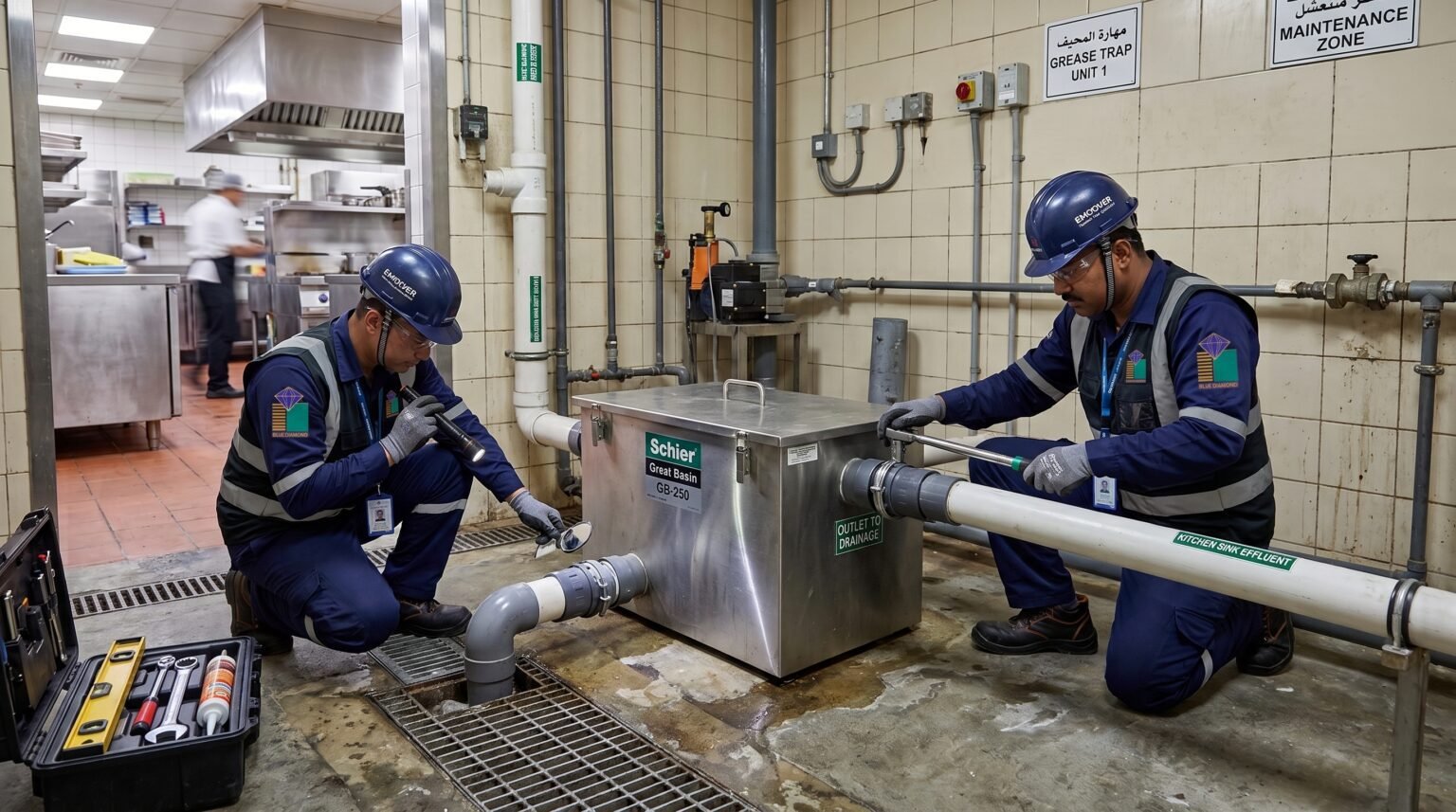
Installation should be carried out according to the approved or accepted project requirements and coordinated with the kitchen’s plumbing and drainage systems.
Professional installation should consider:
- Correct positioning
- Proper pipe connections
- Accessibility
- Maintenance access
- Structural considerations
- Odor control
- Cleaning requirements
- Safe operation
A technically correct grease trap that is installed in an inaccessible location can become a significant maintenance problem later.
Step 9: Complete Inspection or Verification, If Applicable
Depending on the project, an inspection or verification stage may apply.
Businesses should ensure that the completed installation matches the relevant approved design or project requirements.
Any changes made during construction should be properly documented and coordinated with the relevant stakeholders.
Step 10: Maintain the System to Support Ongoing Compliance
Approval is not the end of the process.
A grease trap must be properly maintained after installation.
Documents You May Need for Grease Trap Approval in Dubai
When preparing for Dubai Municipality Grease Trap Approval, businesses should be prepared to organize technical and project information.
Depending on the project, this may include:
| Documentation Category | Potential Information |
|---|---|
| Business information | Company and establishment details |
| Site information | Location and project details |
| Kitchen layout | Equipment and workflow |
| Plumbing drawings | Kitchen drainage connections |
| Drainage plans | Wastewater routing |
| Grease trap specifications | Capacity and technical characteristics |
| Product data | Manufacturer information |
| Technical drawings | Dimensions and installation details |
| Installation details | Connection and access arrangements |
| Contractor information | Installation/service provider details |
Important: This table is a planning guide, not a definitive list of mandatory documents. Exact requirements should be verified against the current official process applicable to the project.
How to Choose the Right Grease Trap
Choosing the right grease trap is a technical decision.
The following factors should be evaluated:
Kitchen Size
Larger kitchens generally produce more wastewater and FOG than small cafés or limited-service food outlets.
Wastewater Flow
Flow rate is an important consideration when evaluating system capacity.
Number of Fixtures
The number of sinks, dishwashers, cleaning areas, and other connected fixtures can affect the system requirements.
Type of Food Operation
A bakery, café, fast-food restaurant, hotel kitchen, and central catering facility may generate very different FOG loads.
Peak Usage
The system should be evaluated against expected operational demand rather than average usage alone.
Available Installation Space
The available space can influence the system type and installation configuration.
Maintenance Access
The trap must be accessible for inspection, cleaning, and waste removal.
Long-Term Operating Cost
The cheapest equipment may not be the most economical solution if it causes frequent blockages, difficult cleaning, or premature replacement.
This is particularly important for businesses considering commercial grease trap Dubai solutions. The right system should balance technical suitability, installation requirements, operational performance, and maintenance needs.
Common Reasons for Grease Trap Approval Delays or Problems
Several avoidable issues can complicate a project.
Incorrect Sizing
An undersized system may struggle with the kitchen’s wastewater and FOG load.
Incomplete Documentation
Missing drawings or technical information can lead to additional clarification requests.
Poor Design Coordination
The kitchen, plumbing, drainage, architectural, and MEP designs should be coordinated early.
Incorrect Installation
Installation that differs from the intended design can create operational or compliance concerns.
Poor Maintenance Access
A trap that cannot be easily accessed may become difficult and expensive to maintain.
Failure to Follow Project-Specific Requirements
Generic industry advice should never replace project-specific authority requirements.
Using Inexperienced Contractors
A contractor without relevant experience may overlook technical coordination, documentation, or maintenance considerations.
How Much Does Grease Trap Approval Cost in Dubai?
There is no single universal cost for a grease trap project.
The total investment may depend on:
- Technical design
- Site assessment
- Grease trap equipment
- Grease interceptor selection
- Technical drawings
- Application-related charges
- Installation
- Plumbing modifications
- Inspection requirements
- Required corrective work
- Cleaning and maintenance
Government or authority fees should not be assumed from outdated online articles.
Businesses should verify current official fees directly through Dubai Municipality or the applicable authority.
For an accurate commercial quotation, it is generally more useful to evaluate the entire project rather than asking only, “How much is a grease trap permit in Dubai?”
The real project cost may include equipment, installation, design coordination, approvals, modifications, and ongoing maintenance.
How Long Does the Grease Trap Approval Process Take?
The answer depends on the project.
Potential factors include:
- Completeness of the application
- Complexity of the kitchen
- Project size
- Authority review requirements
- Technical revisions
- Inspection requirements
- Coordination with other approvals
Therefore, businesses should avoid relying on a guaranteed number of days unless the timeline is confirmed through the current official process.
The best way to reduce avoidable delays is to prepare accurate documentation, coordinate the kitchen and drainage design early, and respond promptly to technical comments.
Common Mistakes Businesses Should Avoid
Before beginning a grease trap project, avoid these common mistakes:
- Installing before confirming applicable requirements
- Choosing equipment based only on price
- Selecting the wrong capacity
- Ignoring cleaning and maintenance access
- Submitting incomplete technical information
- Failing to verify current requirements
- Assuming approval and installation are the same process
- Ignoring long-term cleaning and waste disposal requirements
A professional approach starts with compliance and technical planning—not with purchasing equipment.
Why Hire a Professional Grease Trap Contractor in Dubai?
Working with an experienced grease trap contractor Dubai businesses can rely on may simplify the technical side of the project.
A qualified provider can assist with:
- Site assessment
- Kitchen drainage evaluation
- System selection
- Capacity assessment
- Design coordination
- Equipment supply
- Installation
- Technical documentation
- Approval preparation support
- Inspection coordination
- Cleaning
- Preventive maintenance
Professional assistance does not mean that approval can be guaranteed.
Instead, the value lies in reducing avoidable mistakes and improving the technical readiness of the project.
For restaurants and commercial kitchens, this can also help ensure that the system remains practical to operate and maintain after installation.
Why Choose Our Grease Trap Services?
Choosing a grease trap service provider should be based on technical capability, relevant experience, equipment, responsiveness, and the ability to support the system beyond initial installation.
Our services can support businesses with:
- Grease trap consultation
- Site assessment
- Grease trap supply
- Grease trap installation
- Technical support
- Approval preparation support
- Inspection coordination
- Grease trap cleaning
- Grease trap pumping
- Preventive maintenance
- Ongoing service programs
Whether you are opening a new restaurant, upgrading a commercial kitchen, developing a hotel facility, or managing an existing food establishment, our team can help assess your grease management requirements and recommend a practical approach based on the project.
Our goal is to help clients make informed decisions, coordinate technical requirements, and maintain their grease management systems properly over the long term.
Service availability and project scope should be confirmed based on the specific location and requirements.
Conclusion
Dubai Municipality Grease Trap Approval should be approached as part of a complete commercial kitchen and wastewater management strategy—not as an isolated administrative step.
For restaurants, hotels, cafés, catering facilities, healthcare kitchens, and other commercial food operations, early planning can make a significant difference.
The right approach is to:
- Confirm applicable requirements.
- Assess the kitchen and wastewater system.
- Select the appropriate grease management solution.
- Prepare accurate technical documentation.
- Follow the applicable official approval process.
- Install the system correctly.
- Maintain it consistently after installation.
Most importantly, businesses should verify current requirements directly with Dubai Municipality or the relevant authority because procedures, fees, application channels, and technical requirements may change.
For businesses planning a new kitchen or upgrading an existing grease management system, professional technical support can help reduce avoidable mistakes and improve project readiness.
Need help with grease trap design, installation, approval preparation, cleaning, or maintenance in Dubai? Contact our team today to discuss your project, request a site assessment, or obtain a customized quotation.
Contact us today on WhatsApp | Call | Email
Phone: +971 55 996 3058
Email: info@bluediamondfm.com
Most Frequently Asked Question
It generally refers to the applicable regulatory or project approval and compliance considerations associated with grease management systems used by commercial food operations in Dubai. The exact process and requirements should be verified with Dubai Municipality or the relevant authority for the specific project.
Requirements can depend on the type of food operation, wastewater generation, kitchen configuration, and applicable regulations. Dubai Municipality's published grease trap guidance addresses installation and maintenance requirements, but businesses should confirm the current requirements applicable to their specific establishment.
The applicable process depends on the project and authority requirements. Businesses should first assess the kitchen and drainage system, prepare the required technical information, and confirm the current application route through official Dubai Municipality resources before submitting.
Potential documentation may include site information, kitchen layouts, plumbing and drainage drawings, grease trap specifications, technical data, and contractor information. However, the exact list should be confirmed through the current official process for the project.
Potential documentation may include site information, kitchen layouts, plumbing and drainage drawings, grease trap specifications, technical data, and contractor information. However, the exact list should be confirmed through the current official process for the project.
There is no single project cost. Expenses can include equipment, design, technical drawings, installation, application-related charges, inspections, modifications, and maintenance. Current government fees should be verified directly with the relevant authority.
Our Services
Our step-by-step guide simplifies the cleaning process, ensuring a hassle-free experience while keeping your traps clean.
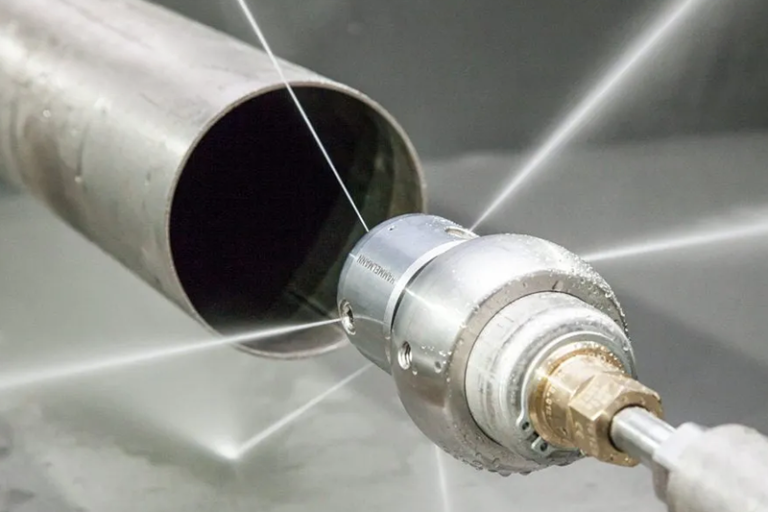
Drain Line Jetting
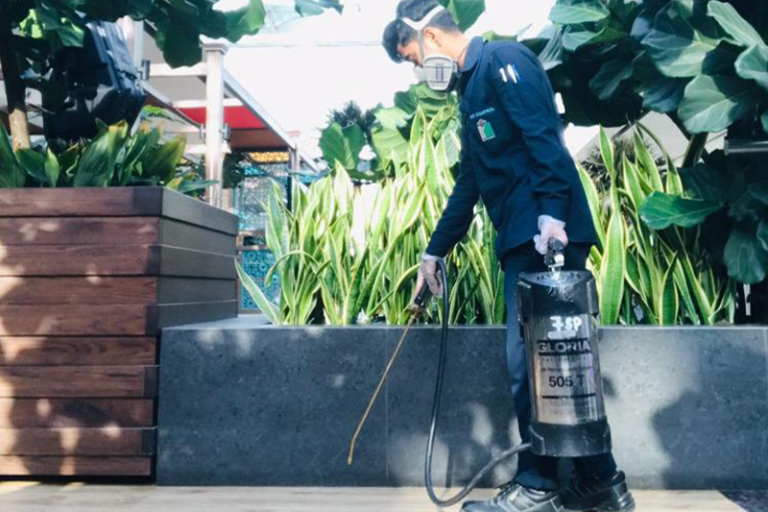
Pest Control Service
Deep Cleaning
business
Our Working Process
Let’s start the journey towards success and enhance revenue for your business. Take your company to the next level.




Why Choose Us
Grease Trap Cleaning UAE
28 years of expertise
Renowned name in facility management
New Technology
We are using latest techniques and technology
Customized Plans
We provide AMC & On call service
Satisfied Clients
40k+ clients trust our expertise
Book An Appointment Today
Blue Diamond would like to hear from you. if you have business inquiries. Get in touch with us.