Commercial Grease Trap Cleaning Dubai — Complete Restaurant Owner's Guide
Running a restaurant, hotel kitchen, or food processing facility in Dubai means you already know how demanding the UAE’s food safety standards are. Yet one critical compliance item that many operators overlook — until it becomes an emergency — is commercial grease trap cleaning in Dubai. Whether you manage a single café in Jumeirah or a chain of restaurants across the emirate, understanding grease trap maintenance is not optional. It is a legal requirement, a health safeguard, and frankly, a smart business decision.
This complete guide walks you through everything you need to know about commercial grease trap cleaning in Dubai: what it is, why it matters, how often it must be done, what Dubai Municipality regulations say, and how to choose a professional service that keeps your kitchen running without costly interruptions.
Grease trap cleaning is a professional maintenance service that removes accumulated fats, oils, and grease (FOG) from the interceptor unit installed in your commercial kitchen — before that build-up causes blockages, backflows, or regulatory violations. Think of it less like a one-off repair and more like an oil change for your kitchen’s plumbing: skip it long enough, and something far more expensive breaks down.
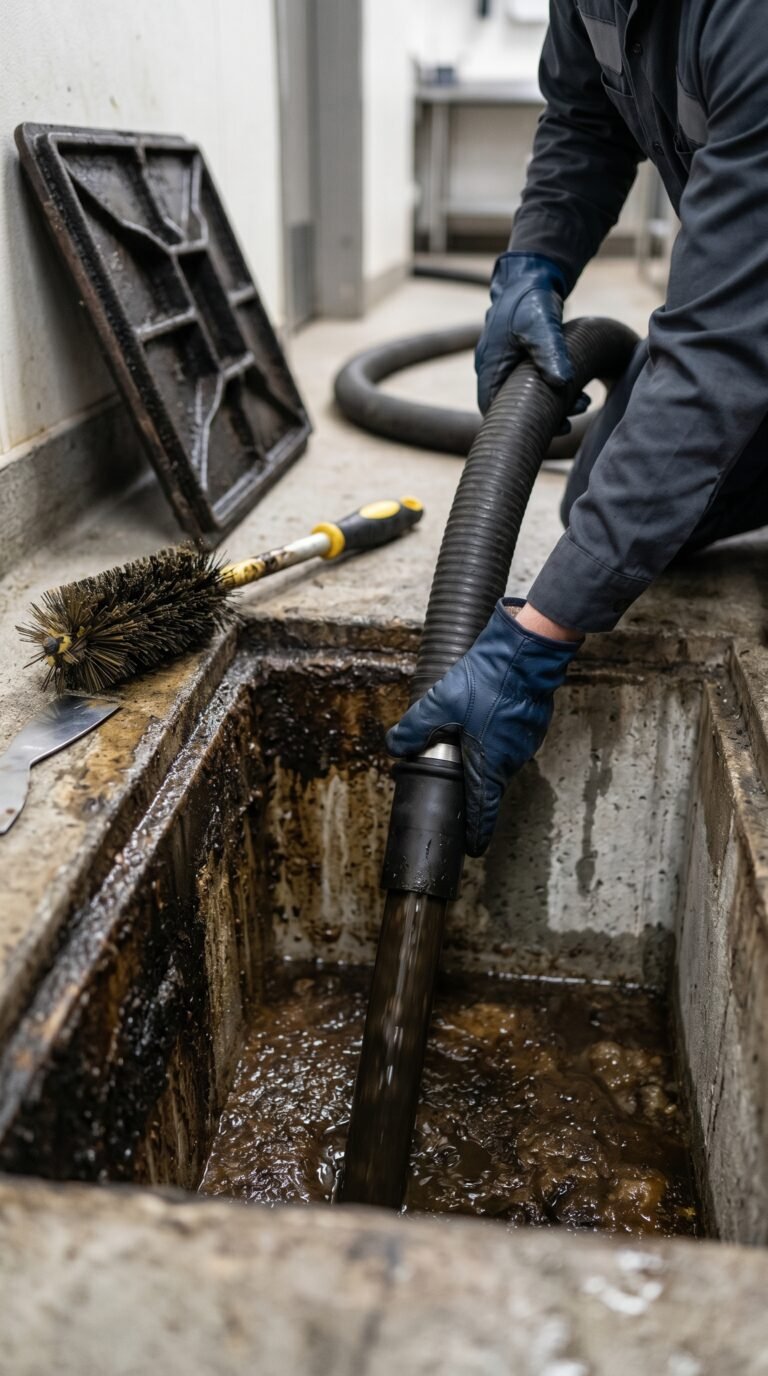
A grease trap works by slowing wastewater flow so that FOG — which is lighter than water — rises to the surface and gets trapped, while relatively cleaner water continues into the sewer system. Over time, that captured grease hardens and accumulates until the trap can no longer do its job. Cleaning the trap means professionally pumping out all that solidified waste, scrubbing the interior components, inspecting the baffles, and disposing of the collected FOG through a licensed, Dubai Municipality-approved waste carrier.
In Dubai’s food-service industry, where high ambient temperatures accelerate grease solidification and commercial kitchens operate at intense volumes, this build-up happens significantly faster than in cooler climates. That is what makes commercial grease trap cleaning in Dubai not just a routine maintenance task, but a genuinely urgent operational and legal priority.
What Is Grease Trap Cleaning and Why It Matters
Dubai Municipality Regulations on Grease Trap Cleaning
Dubai Municipality enforces strict guidelines under its Environmental Health and Safety standards, specifically targeting food establishments connected to the public sewer network. Under these regulations, every commercial kitchen must have an appropriately sized grease trap installed and must maintain a documented cleaning schedule.
Key regulatory requirements every restaurant owner must know:
Mandatory Installation: All new food establishments in Dubai must install a grease interceptor as part of their fit-out approval process. Existing establishments are expected to retrofit compliant units.
Cleaning Frequency: Dubai Municipality recommends cleaning grease traps at a minimum of once every one to three months, depending on kitchen output volume. High-turnover restaurants may need monthly commercial grease trap cleaning in Dubai to stay compliant.
Service Documentation: You are required to maintain records of every cleaning service, including the date, waste volume removed, and the waste disposal certificate from the contractor. Inspectors can and do request these records during routine audits.
Approved Waste Disposal: The grease and sludge removed from your trap must be disposed of by an approved, licensed waste carrier. Illegal dumping carries severe penalties under UAE environmental law.
Working with a certified provider for commercial grease trap cleaning in Dubai ensures your documentation is always audit-ready and your disposal follows proper channels.
How Often Should You Schedule Commercial Grease Trap Cleaning in Dubai?
There is no one-size-fits-all answer, because the right cleaning frequency depends on several factors specific to your operation. However, here is a practical framework most food-service professionals in the UAE use:
High-Volume Kitchens (Hotels, Large Restaurants, Catering Facilities): Monthly cleaning is standard. These operations produce large quantities of FOG daily, and grease traps fill up quickly in the Dubai heat.
Mid-Volume Operations (Cafés, Small Restaurants, Food Courts): Every six to eight weeks is generally sufficient, though it is wise to monitor your trap and schedule more frequently if you notice slow drainage or odors.
Low-Volume Kitchens (Smaller Outlets, Staff Canteens): Quarterly cleaning may be adequate, but you should never go longer than three months without professional commercial grease trap cleaning in Dubai, regardless of how light your output seems.
The 25% Rule is a useful guideline: if grease and solids fill more than 25% of your trap’s capacity, it is time to clean — do not wait for your scheduled appointment. A reputable grease trap cleaning service in Dubai will advise you on the right schedule after assessing your trap size and kitchen output.
What Happens During a Professional Commercial Grease Trap Cleaning?
Understanding the cleaning process helps you evaluate service providers and ensure you are getting proper, thorough work. A professional commercial grease trap cleaning in Dubai typically involves the following steps:
Initial Inspection: The technician opens the trap, measures the grease and sludge layers, and photographs the condition for your records. This baseline measurement is important for compliance documentation.
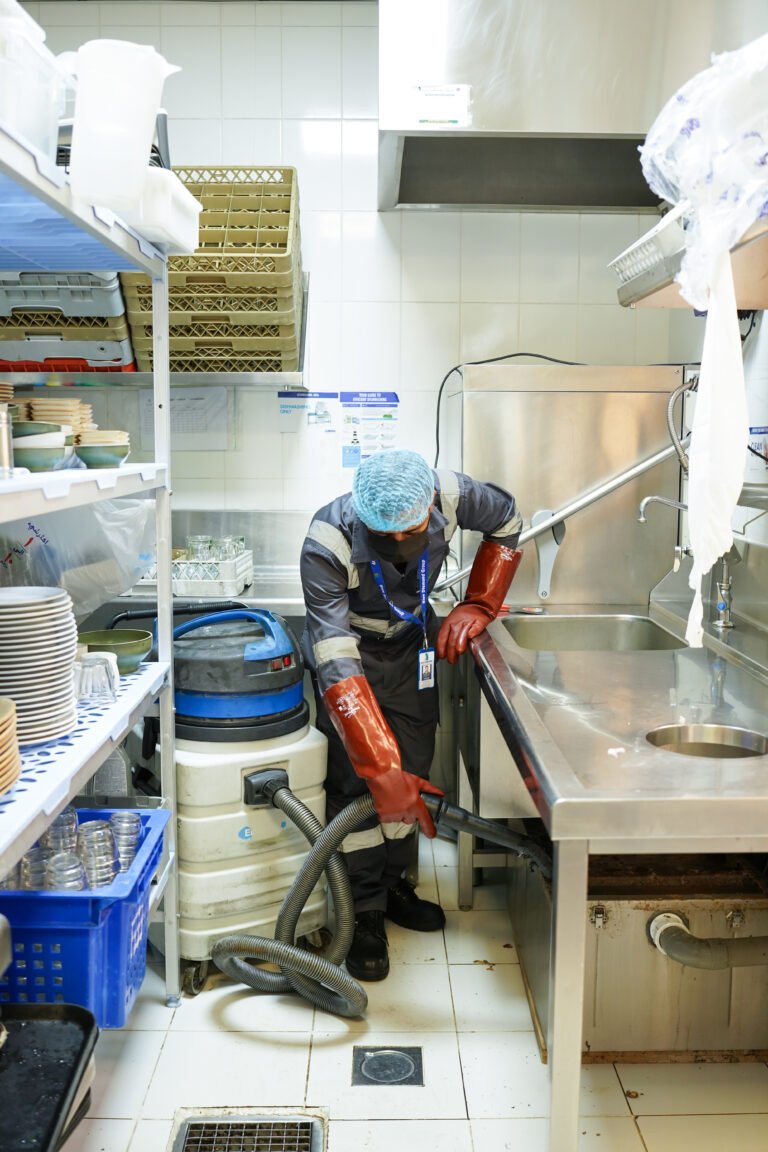
Pumping Out Waste: Using a vacuum tanker or pump, the technician removes all liquid waste, accumulated grease, and solids from the trap. This is the core of the service.
Scraping and Scrubbing: The interior walls, baffles, and inlet/outlet pipes of the trap are manually scraped and scrubbed to dislodge hardened grease that pumping alone cannot remove.
Inspection of Components: Baffles, lids, and inlet pipes are checked for damage or wear. A damaged baffle allows FOG to bypass the trap entirely — a serious compliance failure.
Water Rinse and Refill: The trap is rinsed clean with water and refilled to the correct level before being sealed.
Waste Disposal and Documentation: The collected waste is transported by a licensed tanker to an approved treatment or disposal facility. You receive a waste manifest and service report that forms part of your compliance record.
This is why choosing an experienced provider for commercial grease trap cleaning in Dubai matters so much — cutting corners on any of these steps creates compliance risk and shortens the interval before the next cleaning is needed.
Signs Your Grease Trap Needs Immediate Attention
Do not wait for a scheduled service if you notice any of these warning signs in your kitchen:
Slow drainage from sinks or floor drains is almost always the first indicator that your grease trap is approaching capacity. Foul, sulphuric odours near drains or in the kitchen indicate organic decomposition inside an overloaded trap. Visible grease overflow or backup into sinks means your trap is full and wastewater is bypassing it entirely. Frequent drain blockages in kitchen pipes suggest FOG has already escaped the trap and is building up downstream. Complaints from dining area guests about odours that seem to come from the kitchen or service areas should never be ignored.
Any of these symptoms calls for emergency commercial grease trap cleaning in Dubai immediately — not at your next scheduled date.
Choosing the Right Commercial Grease Trap Cleaning Company in Dubai
With dozens of service providers operating across Dubai and the wider UAE, selecting the right partner for commercial grease trap cleaning in Dubai requires careful evaluation. Here is what separates a trustworthy professional service from a cut-price operator who creates more problems than they solve:
Dubai Municipality Approval: Your cleaning contractor must hold a valid waste collection and disposal licence issued by Dubai Municipality or the relevant emirate authority. Always ask for a copy of their licence before signing any contract.
Licensed Waste Tankers: The tanker vehicles used to remove grease waste must be registered and approved for FOG transportation. Unapproved disposal is illegal, and the liability ultimately falls on you as the business owner.
Documented Service Reports: A professional provider issues a full service report after every visit, including pre- and post-cleaning photos, waste volumes, and a disposal certificate. This paperwork is your legal protection during inspections.
Experience in Commercial Environments: Restaurant and hotel kitchens have larger, more complex grease trap systems than residential units. Choose a company with specific experience in commercial grease trap cleaning in Dubai and a track record of serving the food-service industry.
Emergency Response Capability: Grease traps do not always fail on a weekday morning. Look for a provider that offers 24/7 emergency service for unplanned blockages or overflows.
Transparent Pricing: A reliable company will assess your trap, quote clearly based on size and condition, and not add hidden charges. Be wary of unusually low quotes — proper disposal and documentation have a cost.
Take Action Before Your Next Inspection
The smartest thing any restaurant owner, hotel operator, or food-service manager in Dubai can do is get ahead of their grease trap maintenance — not react to it. Scheduling regular commercial grease trap cleaning in Dubai protects your business from fines, shutdowns, and the reputational damage that comes with a failed health inspection.
Our team of Dubai Municipality-approved professionals is ready to assess your system, set up a compliant maintenance schedule, and ensure your documentation is always inspection-ready. We serve restaurants, hotels, malls, food courts, catering kitchens, and industrial food facilities across Dubai and the entire UAE.
Contact us today for a free site assessment and quote for commercial grease trap cleaning in Dubai
-
We respond within 24 hours and offer emergency services for urgent situations.
Serving Dubai • Abu Dhabi • Sharjah • Ajman • RAK • Fujairah • UAQ
Contact us today on WhatsApp | Call | Email
Phone: +971 55 996 3058
Email: info@bluediamondfm.com
Most Frequently Asked Question
Yes. Any food establishment connected to Dubai's public sewer network is legally required to have a grease trap installed and maintained. Dubai Municipality enforces this through inspection programs.
Small, low-volume traps can be manually cleaned by trained staff, but commercial grease traps require vacuum tankers for proper waste removal and licensed disposal. DIY cleaning does not satisfy the documentation requirements for compliance.
For most restaurant-scale systems, a professional clean takes between one and three hours. Larger interceptors or heavily neglected traps may take longer.
Licensed contractors transport FOG waste to approved treatment facilities where it is processed in accordance with UAE environmental regulations. You receive a disposal certificate as proof.
A certified technician can assess your kitchen output and calculate the appropriate interceptor size based on Dubai Municipality's sizing guidelines. If your trap fills up between scheduled cleans, it is likely undersized.
Yes, fast-response services are available for urgent cases.
Our Services
Our step-by-step guide simplifies the cleaning process, ensuring a hassle-free experience while keeping your traps clean.
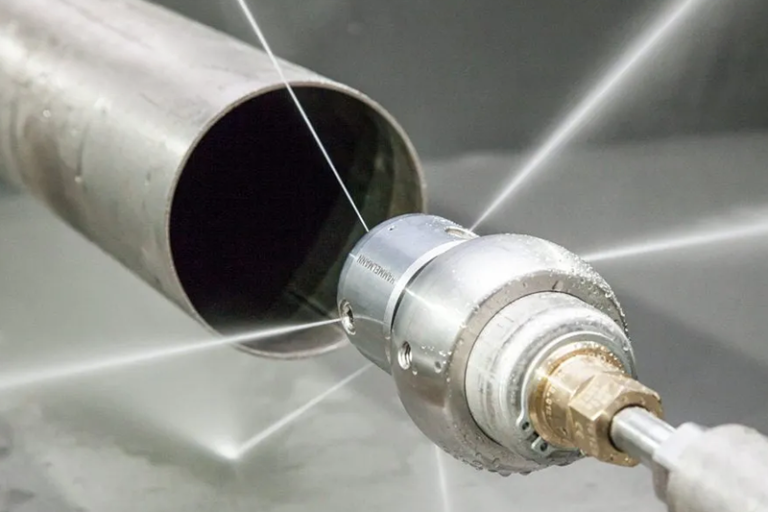
Drain Line Jetting
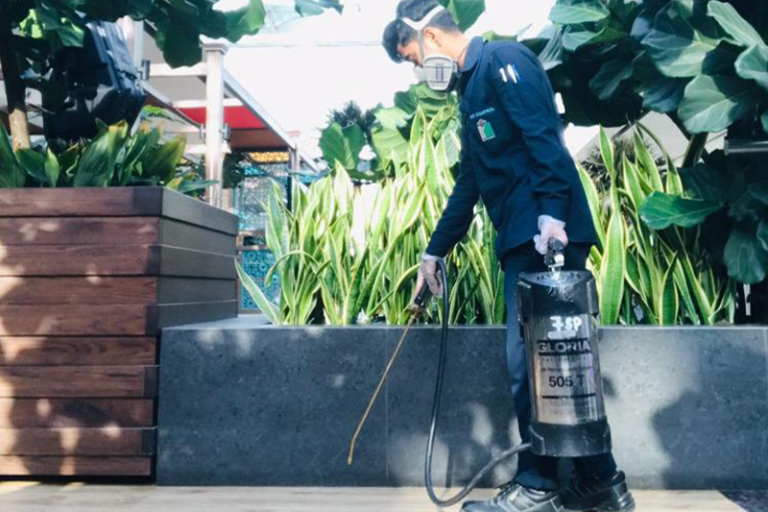
Pest Control Service
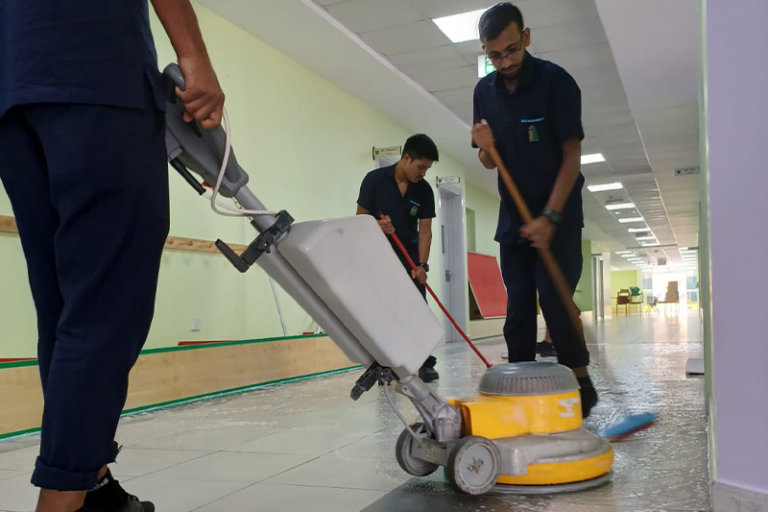
Deep Cleaning
business
Our Working Process
Let’s start the journey towards success and enhance revenue for your business. Take your company to the next level.
Book An Appointment Today
Blue Diamond would like to hear from you. if you have business inquiries. Get in touch with us.