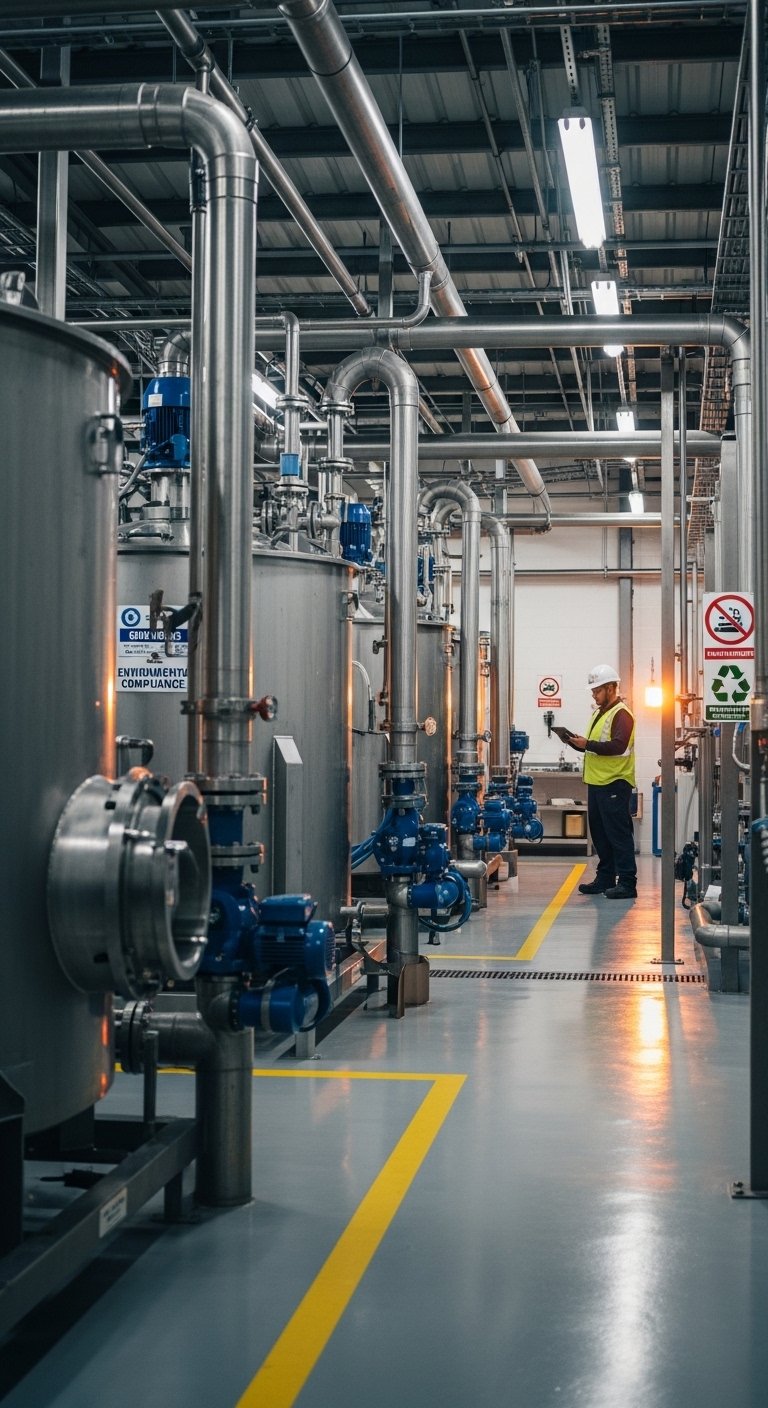

Why FOG recycling now matters in the UAE
FOG Recycling in the UAE has moved from optional sustainability talk to a practical compliance requirement for restaurants, hotels and central kitchens. As food service density increases across Dubai and Abu Dhabi, municipal authorities are tightening enforcement to prevent sewer blockages and environmental harm. For operators, implementing a reliable FOG Recycling in the UAE program reduces the risk of fines, supports corporate sustainability goals and converts used cooking oil into a recoverable resource rather than a costly disposal problem.
FOG — fats, oils and grease — is produced during everyday kitchen activities: frying, sauce preparation, butter and dairy use, and equipment wash-down. When FOG is washed into drains, it cools, solidifies and adheres to pipe walls and interceptor baffles. Over time this leads to blockages, odours, pest attraction, and increased sewage treatment costs. Effective FOG Recycling in the UAE addresses the issue at multiple stages: in-kitchen segregation, scheduled trap services, secure transport and licensed recycling at approved plants.
What is FOG and why is it a serious problem?
UAE regulations and municipality requirements for FOG disposal
Local authorities expect restaurants to operate compliant interceptors and to record grease trap cleaning and disposal activities. Dubai Municipality, Abu Dhabi regulators and municipal inspectors commonly request cleaning logs, waste-transfer manifests, trap access evidence and proof that the receiving facility is licensed. A robust FOG Recycling in the UAE program makes it straightforward to present time-stamped reports and disposal certificates during audits, demonstrating a clear chain of custody and reducing inspection friction.
Grease trap waste: the collection-to-recycling workflow
A professional FOG Recycling in the UAE process follows these stages:
On-site segregation: collect used cooking oil (UCO) in sealed containers and prevent solids from entering drains with strainers.
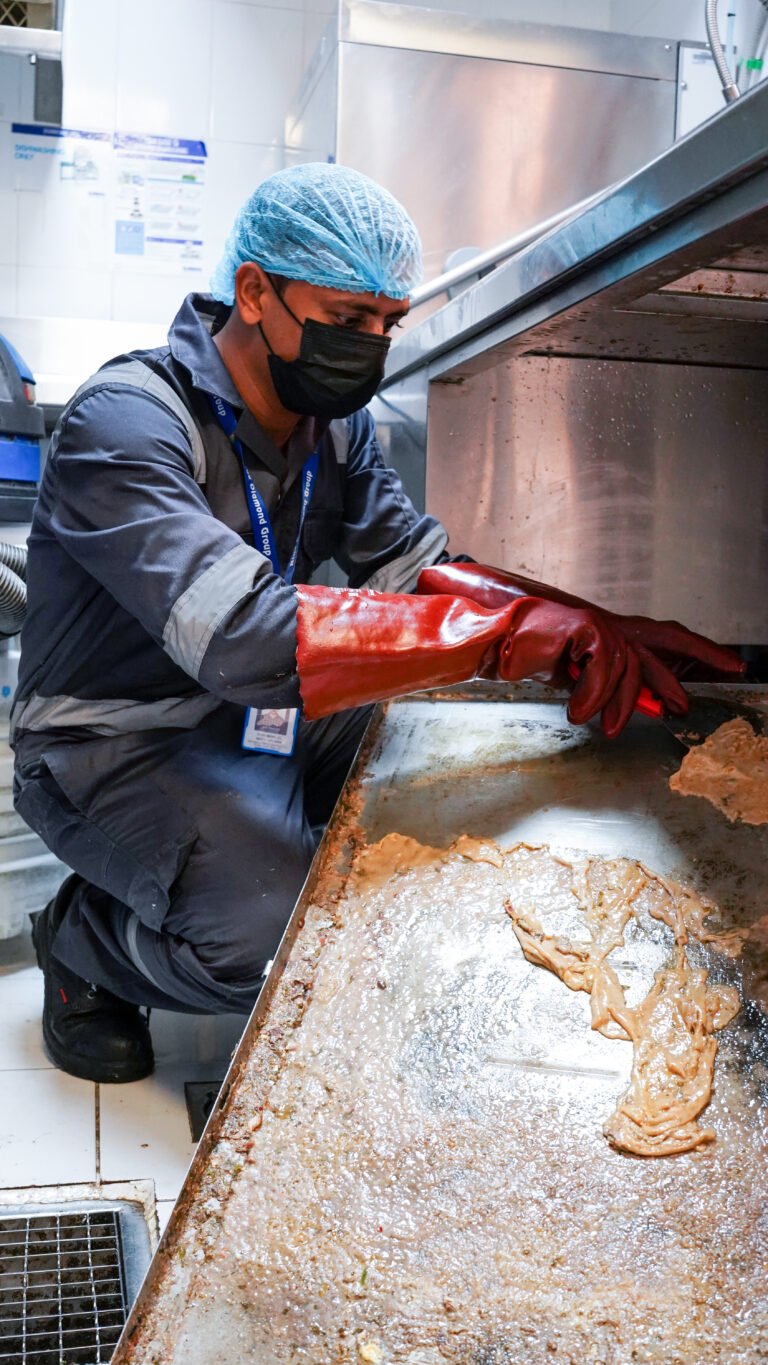
Scheduled grease trap services: pump-outs and manual cleaning at frequencies aligned to production load.
Secure transport: sealed drums and manifest documentation transported by licensed collectors.
Treatment & recycling: licensed facilities perform settling, filtration, dewatering and rendering to produce feedstock for biodiesel, industrial fuel or anaerobic digestion.
Documentation: manifests and certificates confirm lawful recycling or reuse.
This workflow not only protects city sewers but also enables restaurants to participate in circular-economy programs through FOG Recycling in the UAE.
Practical FOG recycling strategies restaurants should adopt
Implement scheduled cleaning programs. Align trap pump-outs with menu and service load — high-volume kitchens typically require weekly service, while smaller outlets may use biweekly or monthly intervals. Pair cleaning with digital reporting so records are audit-ready.
Segregate UCO from trap solids. Liquid oil collected in sealed containers retains higher value and easier recycling; solids from traps require different treatment. Clear segregation simplifies processing at recycling plants.
Train staff on best practices. Pre-scrape plates, use strainers, and avoid pouring oil down sinks. Simple behavioral controls significantly reduce FOG accumulation.
Partner with licensed recyclers. Verify licenses, end-use claims and manifest procedures before contracting. A credible partner completes the chain-of-custody that underpins FOG Recycling in the UAE.
Keep digital and printed records. Time-stamped digital logs, photo documentation and retained manifests create a defensible audit trail.
When FOG Recycling in the UAE is combined with sound operational controls, restaurants reduce fines, improve hygiene and can report measurable sustainability outcomes.
Environmental and business benefits of FOG recycling
FOG Recycling in the UAE delivers both environmental and commercial returns:
Reduced enforcement risk. Proper disposal and documentation reduce the likelihood of fines and remediation orders.
Operational resilience. Scheduled programs lower emergency pump-out frequency and unplanned downtime.
ESG value. Recycling used cooking oil into biodiesel or other products supports sustainability reporting and strengthens brand reputation.
Cost offsets. Some UCO programs offer collection incentives or modest revenue streams, helping offset haulage and service costs.
For many operators, these benefits justify the modest administrative and service costs of implementing FOG Recycling in the UAE.
Common mistakes restaurants make — and how to avoid them
Operators sometimes fall into predictable errors:
Using unlicensed collectors or accepting cash-only pickups without manifests. This creates compliance gaps and audit exposure.
Poor segregation between liquid UCO and greasy solids, which reduces recycling value.
Inadequate records — unsigned logs or missing photo evidence weaken your defense during inspections.
Reactive maintenance that waits for blockages rather than preventing them.
Avoid these mistakes by requiring proof of licensing, insisting on sealed containers and manifests, and integrating FOG Recycling in the UAE procedures into standard operating manuals.
How to choose the right FOG recycling partner in the UAE
Selecting a reliable partner is central to any FOG Recycling in the UAE program. Use this vendor checklist:
Verify licensing and permits. Ask for copies of waste collection and receiving-facility licenses.
Confirm end-use. Request written confirmation of whether recycled FOG is converted to biodiesel, used in industrial processes, or processed in compliant waste-to-energy systems.
Inspect manifest and reporting processes. Providers should supply time-stamped digital manifests and disposal certificates after every collection.
Assess transparency. Request references, ask for plant visits (where feasible), and require sample reports.
Prefer bundled services. Providers that combine grease trap cleaning with UCO collection simplify logistics and documentation.
A good partner will make FOG Recycling in the UAE operationally simple and legally robust.
Case scenarios — small café to large hotel
Small café: implements weekly UCO collection in sealed bottles; digital manifests are stored in the cloud and sampled in monthly audits. The café uses the environmental story to support local marketing.
Busy restaurant: uses a weekly pump-out schedule, separates liquid oil, and receives monthly recycling certificates; emergency call-outs fall by 60% year-over-year.
Large hotel: centralizes pre-treatment and schedules consolidated pickups; the hotel reports recycled volumes in annual ESG disclosures, aligning commercial goals with municipal expectations.
These scenarios show how FOG Recycling in the UAE scales from single outlets to multi-site operations.
Implementing FOG recycling — practical next steps
Conduct a site audit. Map trap locations, UCO storage, and access for collectors.
Segment waste streams. Provide clearly labeled containers for UCO and solids.
Select licensed partners. Verify credentials and request sample manifests.
Deploy digital record-keeping. Use cloud storage for manifests, photos and service logs.
Train staff. Embed pre-scraping and strainer cleaning into shift checklists.
Start small with a pilot and scale once processes and reporting align with both your operational needs and municipal expectations for FOG Recycling in the UAE.
Implementation roadmap and quick ROI considerations
FOG Recycling in the UAE is a practical strategy that protects sewer infrastructure, reduces compliance risk and supports sustainability. Restaurants that segregate oil, schedule professional trap services, partner with licensed recyclers and maintain rigorous records avoid fines and gain operational resilience. If your business is ready to move from reactive disposal to a managed recycling program, request a site assessment and a vetted FOG Recycling in the UAE partner list to get started.
Book a free FOG compliance audit or request our FOG Recycling in the UAE vendor shortlist to implement a compliant, sustainable program for your kitchens.
Most Frequently Asked Question
FOG Recycling in the UAE refers to the lawful collection, transport and processing of fats, oils and grease from kitchens into usable products such as biodiesel or industrial feedstock by licensed facilities.
Frequency depends on load; high-volume kitchens typically require weekly pump-outs, while smaller outlets may be served monthly—adjust frequency based on trap fill rates and monitoring.
Yes, but only to licensed collectors who provide manifests and disposal or recycling certificates to ensure a legal chain-of-custody.
Inspectors commonly request cleaning logs, waste-transfer manifests, and certificates from licensed recycling facilities demonstrating lawful disposal or reuse.
Some programs provide collection incentives or modest revenue; more commonly, recycling reduces disposal costs and supports sustainability commitments.
Begin with a site audit, segregate UCO, contract a licensed collector, and implement digital record-keeping to support municipal inspections.
Our Services
Our step-by-step guide simplifies the cleaning process, ensuring a hassle-free experience while keeping your traps clean.
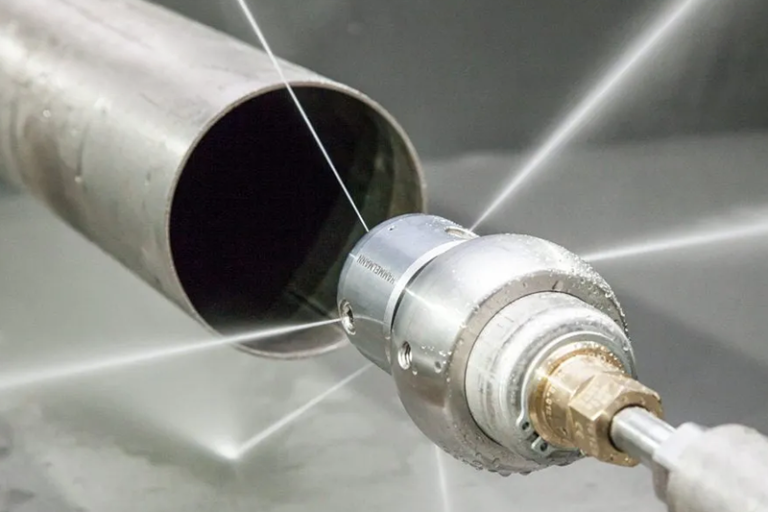
Drain Line Jetting
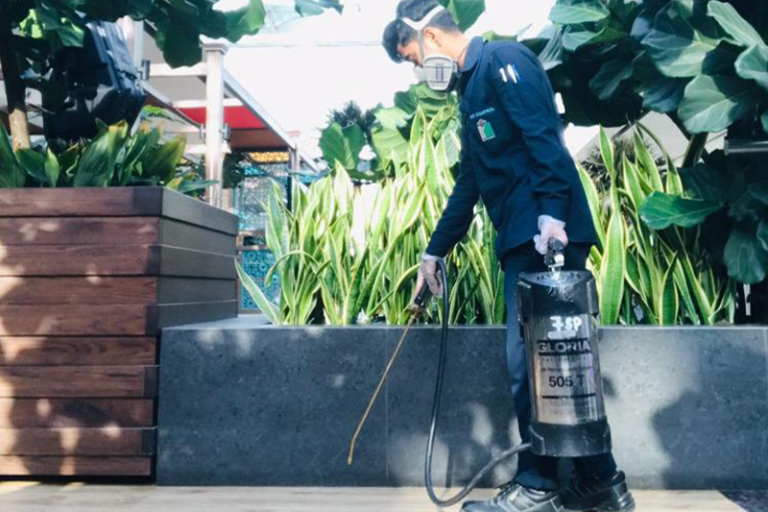
Pest Control Service
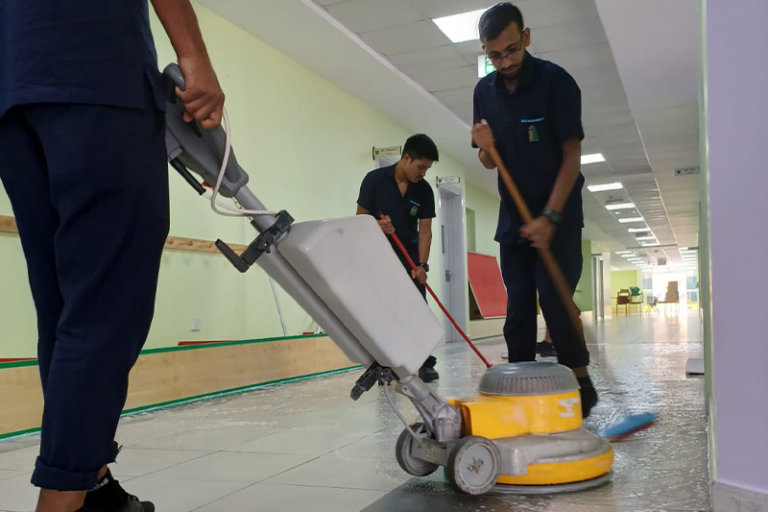
Deep Cleaning
business
Our Working Process
Let’s start the journey towards success and enhance revenue for your business. Take your company to the next level.
Book An Appointment Today
Blue Diamond would like to hear from you. if you have business inquiries. Get in touch with us.