CCTV Drain Survey & High-Pressure Jetting for Restaurant Drains in Dubai
A restaurant drain that blocks once is an annoyance. A restaurant drain that blocks again and again is a warning. Each time, someone clears it with a rod or a chemical, the water drains for a few days and then the problem returns, usually at the worst possible moment: a full dining room, a Friday night, a busy delivery window.
Recurring blockages almost always mean the real cause hasn’t been found. A CCTV drain survey shows what’s actually inside the pipe, and high-pressure jetting removes what’s built up, so the line is clear and you know why it was blocked. This guide explains how CCTV drain survey & high-pressure jetting work together for restaurant drains in Dubai, when to book each, how the work is carried out around a busy kitchen, what a survey report tells you and how to choose a contractor you can trust.
Restaurant drains carry a tougher mix than almost any other type of building drain:
- Fats, oils and grease (FOG): cool and harden on pipe walls, narrowing the bore layer by layer. A well-maintained grease trap catches most of it, but not all.
- Food solids: such as rice, pasta, vegetable peel, coffee grounds and bones lodge at bends and joints and trap more debris.
- Soap, detergent scale and mineral deposits: build up inside pipes over time.
- Sand and silt: enter through floor drains, yard gullies and washing areas, then settle in low points.
- Poor design or fit-out work: such as flat gradients, sharp bends, undersized pipes and unsuitable connections, slows flow and encourages blockages.
- Damage and ageing: including cracks, displaced joints, collapsed sections and corrosion, hold water and debris.
- Shared building drainage: in towers, malls and strips means someone else’s neglected line can back up into yours.
A grease trap in good condition reduces the problem, but it doesn’t eliminate it. Our guide to restaurant drain blockages and the grease trap explains how to tell the two apart.
Why Restaurant Drains Fail
A CCTV drain survey sends a small, waterproof camera through the drainage pipework and records what it sees. It lets a technician look inside the pipe without digging or dismantling anything.
How It Works
- Access: the camera enters through a cleanout, floor drain, inspection chamber or removed fitting
- Travel: a push rod or a motorised crawler carries the camera along the pipe, with lights and a distance counter
- Recording: footage and still images are captured as it goes, with the position along the pipe noted
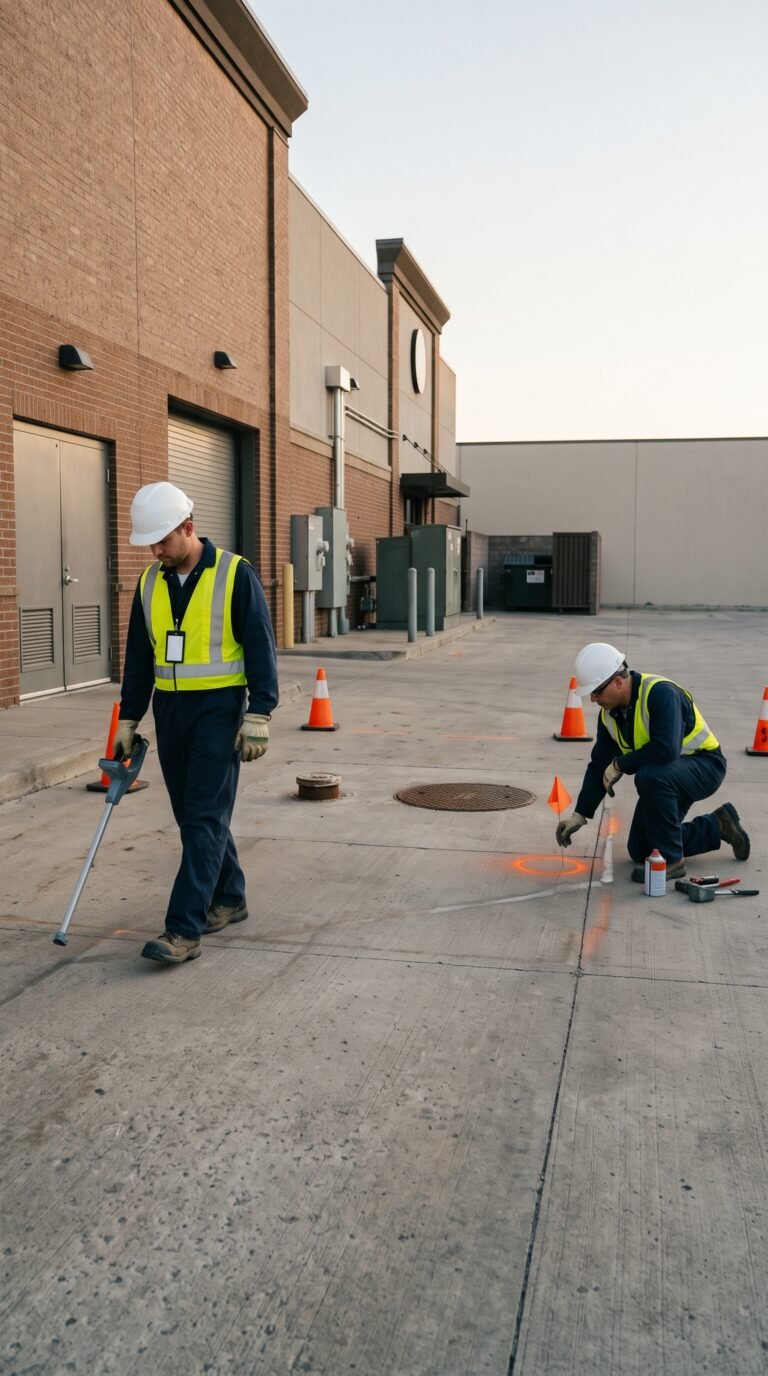
- Location: a transmitter in the camera head can be traced from above ground to mark exactly where a defect sits and how deep it is
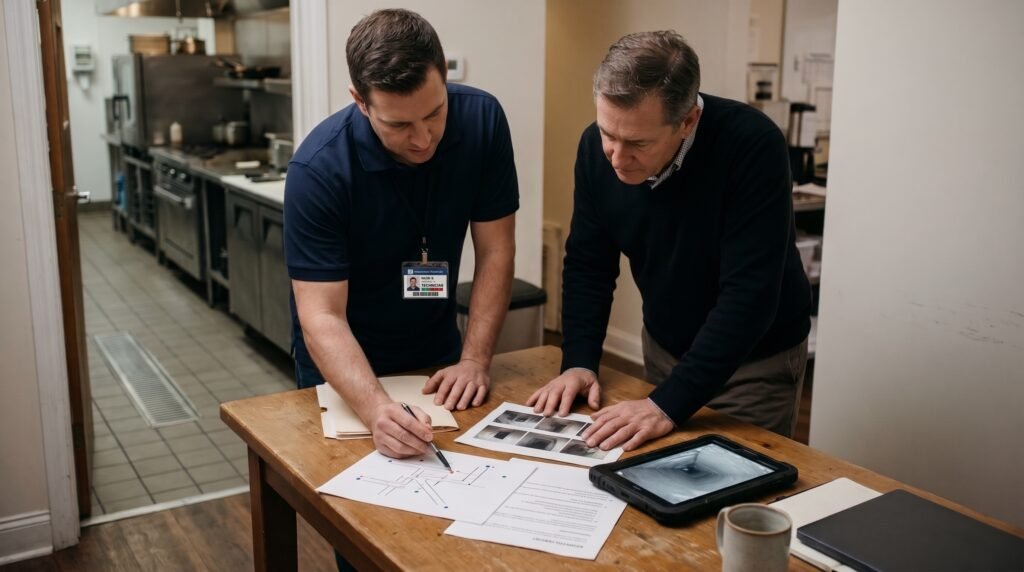
- Report: the findings are summarised in a report with images, observations and recommendations
What a Survey Can Find
- Grease and scale build-up
- Silt, sand and debris deposits
- Food waste lodged at bends and joints
- Cracks, fractures and collapsed sections
- Displaced or open joints
- Sagging pipe sections (“bellies”) where water collects
- Poor gradients and incorrect falls
- Intruding roots or foreign objects
- Unknown connections or misconnections, including stormwater entering the foul system
- Pipe size, material and layout, which are often missing from drawings
What Is a CCTV Drain Survey?
What a Survey Report Should Include
- The location, access point and pipe details for each run
- Footage and still images of key findings
- A list of defects, with their positions and severity
- A drainage sketch or marked-up plan
- Clear recommendations: clean, monitor, repair, reline or replace
- A copy of the footage for your records
What Is High-Pressure Jetting?
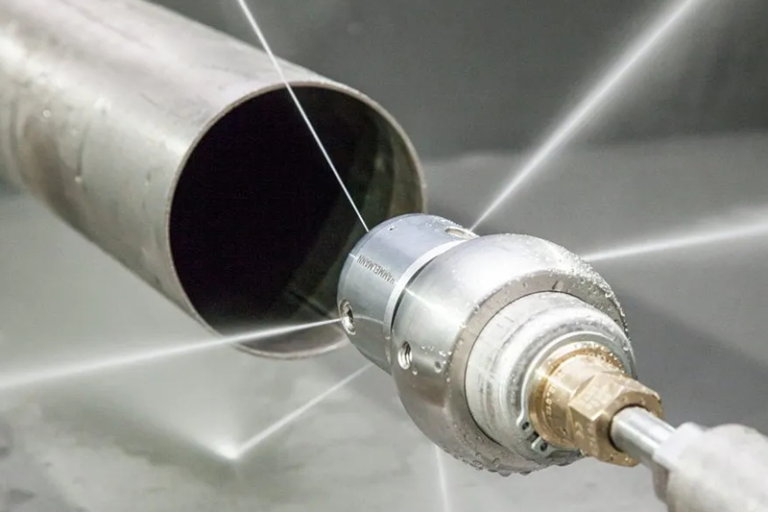
High-pressure jetting uses a hose and nozzle to blast water through the pipe, scouring grease, scale, silt and debris from the walls and flushing it out.
How It Works
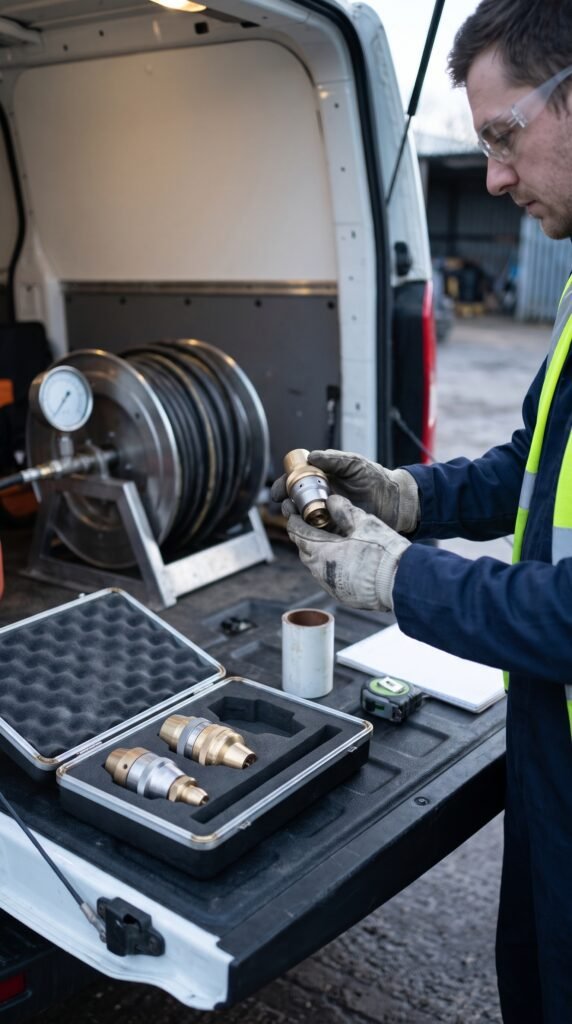
- A powerful pump: drives water through a flexible, reinforced hose
- A specialised nozzle: fires jets forward to break up blockages and backward to pull the hose along and push debris away
- Different nozzles: suit different jobs, from clearing a blockage to scouring a pipe wall or removing hardened grease
- Hot water jetting: can help soften and remove grease more effectively than cold water
- Pressure and flow: are selected to suit the pipe material, size and condition, because too much pressure can damage fragile or old pipework
What Jetting Is Good At
- Removing grease and soap build-up from kitchen drain lines
- Clearing food-waste blockages
- Flushing out silt and sand
- Descaling pipe walls
- Restoring flow in lines that are partly blocked
What Jetting Can’t Do
- Repair cracked, collapsed or displaced pipes
- Fix poor gradients, undersized pipes or design faults
- Replace a faulty grease trap or a missing one
- Make a seriously damaged line safe to jet repeatedly
That’s why the two services belong together: jetting cleans the pipe, and the survey shows whether the pipe is sound.
Survey, Jetting or Both?
| What You’re Seeing | Recommended Approach |
|---|---|
| A single sudden blockage in one fixture | Clear the blockage, then check the fixture’s trap and strainer |
| Slow drains, gurgling or odors across several fixtures | Jet the affected lines, then survey to confirm they’re clear and sound |
| The same drain blocks again within weeks | Jet, then CCTV survey to find the underlying cause |
| Grease visible beyond the trap, or the line has never been cleaned | Jet first, then survey |
| A new fit-out, a new lease or a change of kitchen use | CCTV survey to understand the system you’re inheriting |
| Backups or flooding after heavy rain | Survey, with jetting as needed, and a check for stormwater entering the foul system |
| Odors with no obvious cause | CCTV survey to look for defects, leaks or dry traps |
| Suspected structural damage, such as a depression in the floor or damp patches | CCTV survey, with a location trace |
| Routine prevention for a heavy-use kitchen | Scheduled jetting, with periodic surveys |
The Right Sequence for a Restaurant
For a line with recurring problems, the usual order is:
- Assess symptoms and history: Which fixtures are affected, how often and what’s been tried?
- Service the grease trap: so the upstream source of grease is under control- see our guides to the signs your grease trap needs cleaning and annual grease trap maintenance plans.
- Pre-clean the line with high-pressure jetting: so the camera can see the pipe wall rather than a layer of grease.
- Carry out the CCTV survey: recording the whole run and any branches.
- Review the findings: with the contractor and, if needed, your landlord or consultant.
- Decide on action: continue with scheduled jetting, carry out repairs, relining or replacement, or improve how the kitchen handles grease.
- Verify after the work: with a short follow-up camera run where repairs have been made.
- Set a maintenance schedule: and keep the report and footage on file.
When to Book?
Consider a survey and jetting when:
- Blockages keep coming back
- Drains are slow in several places at once
- You notice persistent odors, gurgling or damp patches
- You’re taking over a new unit, or planning a fit-out
- You’ve had flooding or backflow after rain- see our guide to grease trap backflow during heavy rain.
- The building has a history of shared-drain problems
- You’ve had repeated emergency call-outs
- An inspection or audit raised drainage concerns
Preventive Jetting Intervals
These are starting points. Your contractor should adjust them using survey findings and how quickly lines build up.
| Kitchen Type | Typical Preventive Jetting Interval |
|---|---|
| High-volume fried, grilled or shawarma outlets | Every 3 months |
| Hotel, banqueting and large catering kitchens | Every 3 to 6 months |
| Standard full-service restaurants | Every 6 months |
| Cafés and low-oil outlets | Every 6 to 12 months |
| Cloud kitchens with several brands | Every 3 to 6 months |
| Lines with a history of blockages | More frequently, until the cause is fixed |
Understanding Survey Findings
| Finding | What It Means | Typical Action |
|---|---|---|
| Light grease or scale build-up | The line is narrowing but intact | Jet, then set a preventive schedule |
| Heavy grease coating or hardened deposits | The line has been under-maintained | Hot jetting, repeat if needed and review the grease trap |
| Silt and sand deposits | Debris is settling in low points or entering through floor drains | Jet, fit strainers or silt traps and check where the sand enters |
| Food waste lodged at bends or joints | Solids are entering the system | Jet, improve kitchen habits and fit or clean strainers |
| Sagging section or poor gradient | Water pools and debris settles | Re-lay or correct the section, since jetting only gives temporary relief |
| Cracked or displaced joints | The pipe is damaged and may leak | Repair, reline or replace, and avoid aggressive jetting |
| Collapsed section | The pipe is structurally failed | Excavation or replacement, with landlord involvement |
| Unknown connection or stormwater in the foul line | The system is misconnected | Correct the connection, with landlord and authority involvement where needed |
| No fault found, line clear | The problem may be upstream, such as an overloaded grease trap or kitchen habits | Review the trap, habits and schedule |
Doing the Work Around a Working Kitchen
Drain work in an operating restaurant needs planning:
- Schedule out of hours: typically late at night or early in the morning, so trading isn’t disrupted
- Agree access points: such as cleanouts, floor drains, gullies and chambers in advance, and move equipment if needed
- Protect the kitchen: cover food, equipment and floors, and use mats, barriers and containment so water and debris don’t spread
- Control water and debris: vacuum extraction and proper containment prevent mess and hygiene risks
- Manage safety: hoses under pressure, slippery floors, confined spaces and hygiene hazards need trained operators and the right equipment
- Coordinate with building management: in towers, malls and shared buildings, including access, lifts and permitted hours
- Never push debris downstream: since that can cause a blockage in a shared line or a neighbor’s unit
- Dispose of waste properly: Grease-laden slurry and debris must be collected and taken for authorised disposal, not washed into the network or dumped
Our guides to grease trap cleaning in JLT, Dubai Marina & JBR and in Business Bay & Downtown cover access in tower buildings.
Records and Compliance
Good drainage records help with inspections, insurance and disputes:
- Dated jetting reports: for each visit
- CCTV survey reports and footage
- Drainage sketches: showing pipe runs and defects
- Waste disposal records: for any collected waste
- Repair and relining records
- Your grease trap service records: since inspectors look at the whole grease and drainage system together
Our UAE restaurant compliance checklist covers the wider set of kitchen records, and our guide to grease trap rules in UAE free zones explains how requirements can differ by location. Confirm what applies to your premises with your contractor and the relevant authorities.
What Affects the Cost?
Pricing varies, so ask for an itemised quotation. The main drivers are:
- Length, diameter and number of lines: to be surveyed or jetted
- Access difficulty: including basements, shared lines and restricted hours
- Severity of build-up: since hardened grease takes longer
- Equipment needed: such as hot water jetting, crawlers or locating equipment
- Out-of-hours work
- Report detail: and number of copies
- Waste handling and disposal
- Follow-up visits: and any verification survey
A very low quote may leave out the survey, the report, hot water or proper waste disposal.
Choosing a Contractor
Look for a provider who can show:
- A valid trade license: and authorization to collect and dispose of grease waste
- Proper equipment: high-pressure jetters (including hot water where needed), crawler and push-rod cameras and locating equipment
- Trained, supervised operators: who understand safety and kitchen hygiene
- Experience with restaurant, hotel and tower drainage
- A clear report: with footage, findings and recommendations
- A written scope: itemised pricing and out-of-hours availability
- Insurance: suited to working in occupied premises
- References: from similar kitchens
- A link to your grease trap service: since the trap and the drain line are one system
Our contractor selection guide provides a fuller checklist.
Preventing the Next Blockage
After the line is clear, protect it:
- Keep the grease trap on a schedule– see our guide to annual grease trap maintenance plans.
- Scrape plates and pans into bins: before washing
- Use and clean sink strainers
- Collect used cooking oil: through an authorized provider, never down the drain
- Fit strainers or silt traps: on floor drains and washing areas
- Don’t use chemicals or enzymes as a substitute: for cleaning
- Schedule preventive jetting: at the interval your survey recommends
- Act on early signs: such as slow drains, gurgling and odors
Find the Cause, Then Fix It Once
CCTV drain survey & high-pressure jetting give restaurants something a rod or a chemical never can: a clear pipe and the proof of why it blocked. Survey to see, jet to clean, repair what’s damaged and keep the line on a maintenance schedule alongside a well-serviced grease trap.
Book a free drain assessment today with Blue Diamond team. They will inspect your drainage, advise whether you need a survey, jetting or both and give you a clear written scope and quotation, for restaurants, cafés and kitchens anywhere in Dubai.
Contact us today on WhatsApp | Call | Email
Phone: +971 55 996 3058
Email: info@bluediamondfm.com
Most Frequently Asked Question
A CCTV survey inspects the inside of the pipe with a camera and records its condition. Jetting cleans the pipe with high-pressure water. Surveys show why a line blocked, while jetting removes what’s built up, so they work best together.
If the blockage was a one-off, probably not. If it keeps returning, a survey will show whether the cause is build-up, damage, poor gradients or something else, so you can fix it properly.
It depends on the kitchen and the line, but heavy-use kitchens commonly jet every three to six months, while lighter users may be fine every six to twelve months. A survey helps set the right interval.
Usually it’s best out of hours, so kitchens aren’t disrupted and the area can be protected and cleaned properly. Your contractor should plan the work around your trading hours and building rules.
That depends on where the defect sits and your lease. Blockages or damage in your own pipework are generally your responsibility, while communal lines are usually the landlord’s or building manager’s. A survey report with footage and a location trace is the best evidence.
Our Services
Our step-by-step guide simplifies the cleaning process, ensuring a hassle-free experience while keeping your traps clean.
Drain Line Jetting
Pest Control Service
Deep Cleaning
business
Our Working Process
Let’s start the journey towards success and enhance revenue for your business. Take your company to the next level.
Book An Appointment Today
Blue Diamond would like to hear from you. if you have business inquiries. Get in touch with us.