Grease Trap Problems and Pest Infestations in UAE Commercial Kitchens: Causes & Solutions
Running a commercial kitchen in the UAE — whether it’s a bustling Dubai restaurant, a hotel buffet in Abu Dhabi, or a cloud kitchen in Sharjah — comes with strict hygiene obligations. Yet one of the most overlooked threats to food safety is right beneath your feet: grease trap problems. Left unchecked, a failing grease trap doesn’t just create foul odours and drain blockages — it becomes the single biggest driver of pest infestations in commercial kitchens across the Emirates.
In this guide, we break down exactly what causes grease trap problems in UAE commercial kitchens, how they attract cockroaches, rodents, and flies, and — most importantly — the practical solutions that keep your kitchen compliant, pest-free, and protected from Dubai Municipality penalties.
A grease trap (also called a grease interceptor) is a plumbing device installed beneath or near kitchen sinks and dishwashers. It captures fats, oils, and grease (FOG) before they enter the main sewage system — preventing pipe blockages and environmental contamination.
In the UAE, grease trap installation is not optional. Dubai Municipality, Trakhees, and Abu Dhabi’s ADAFSA (Agriculture & Food Safety Authority) all mandate grease trap units for any commercial food preparation premises. Failure to install or maintain one correctly is a direct violation of food trade licence requirements.
The challenge? The UAE’s extreme heat — regularly exceeding 45°C in summer — dramatically accelerates grease decomposition inside the trap, producing foul gases and accelerating blockages. This is why grease trap problems are far more severe and fast-developing here than in cooler climates, and why a professional maintenance schedule is not just recommended — it is essential.
What Is a Grease Trap and Why Do UAE Kitchens Need One?
The 5 Most Common Grease Trap Problems in UAE Commercial Kitchens
Understanding the root causes of grease trap problems is the first step toward preventing them. Here are the five issues our engineers encounter most frequently across Dubai, Abu Dhabi, and Sharjah:
1. Blockages and Overflow
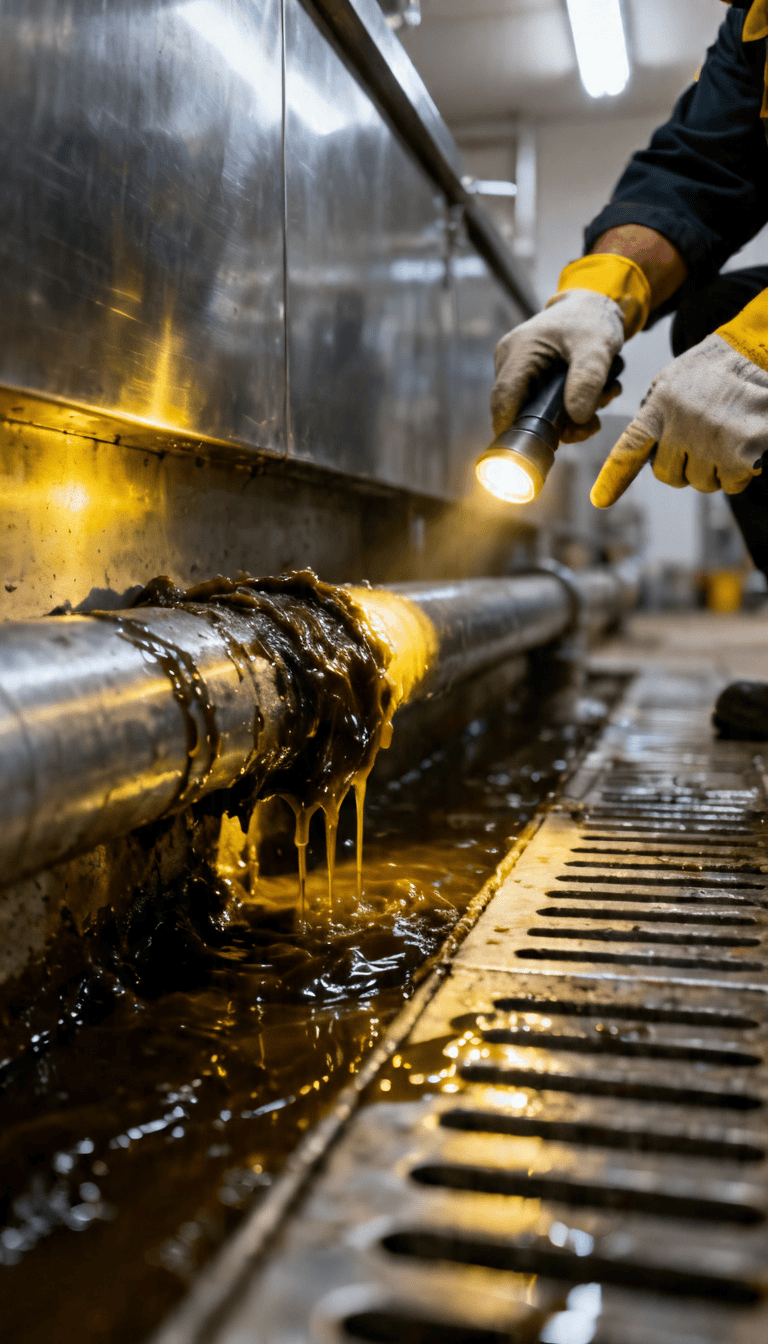
When the grease layer inside the trap reaches maximum capacity, FOG solidifies in the outlet pipes — causing overflow back into kitchen drains. In UAE kitchens that operate two or three shifts daily, this can happen within weeks of the last clean if volumes are high. Symptoms include slow-draining sinks, gurgling sounds, and visible grease backing up near floor drains.
2. Foul and Persistent Odors
As trapped grease decomposes, it produces hydrogen sulphide gas — the classic ‘rotten egg’ smell. In UAE temperatures, this process is significantly accelerated. Odors travel rapidly through poorly sealed drainage connections into dining areas, customer bathrooms, and service corridors — directly impacting guest experience and triggering health inspector concerns.
3. Infrequent or Skipped Cleaning Cycles
Industry guidelines recommend cleaning commercial grease traps every 4–12 weeks, depending on kitchen output. Yet in our experience across UAE commercial properties, many operators stretch this to 6 months or longer — creating severe grease trap problems that require emergency intervention. The ‘25% rule’ applies: when the combined depth of grease and solids reaches 25% of the trap’s total liquid depth, it must be cleaned immediately.
4. Structural Corrosion and Damage
Acidic by-products of decomposing grease corrode the steel components of grease traps over time. Underground units installed in older Dubai and Abu Dhabi buildings are particularly susceptible to cracking and joint failures, which allow grease to seep into surrounding ground — an environmental violation that carries significant fines.
5. Undersized or Non-Compliant Units
Many older commercial kitchens in the UAE were fitted with grease traps sized for lower output volumes. As businesses expand — adding delivery operations, catering services, or additional kitchen equipment — the existing trap cannot handle the load. This is one of the most common structural grease trap problems we identify during compliance audits.
How Grease Trap Problems Directly Cause Pest Infestations
Here is the direct chain that our pest control specialists observe repeatedly: unresolved grease trap problems create the ideal breeding and feeding environment for three primary pest species in UAE commercial kitchens.
Cockroaches (American and German Species)
Grease overflow coats drain interiors and floor channels with a warm, nutrient-rich organic film — exactly what cockroaches need to thrive. American cockroaches (Periplaneta americana), the most common species in UAE restaurant drains, enter through drain access points and breed rapidly inside the moist, warm environment of a poorly maintained grease trap. A single female can produce over 300 offspring in her lifetime.
Rodents
Structural damage caused by corroded grease traps creates physical entry points at drain junctions and pipe connections. Rats and mice follow the scent of decomposing grease — detectable across significant distances — and exploit these gaps to enter kitchen sub-floor areas. Once inside, they contaminate food preparation surfaces, chew through electrical cabling, and prove extremely difficult to eradicate without addressing the source.
Drain Flies and Fruit Flies
Drain flies (Psychodidae) breed exclusively in the sludge layer inside blocked or overloaded grease traps. In UAE summer conditions, their life cycle compresses to just 7–10 days — meaning a minor fly problem can escalate to a full infestation within two weeks. Fruit flies follow overflow grease trails to fermentation sources in kitchen drains.
Solutions: How to Fix Grease Trap Problems and Eliminate Pests
Resolving this issue requires a twin-track approach: rectifying the underlying grease trap problems AND treating the pest infestation simultaneously. Here is exactly what that looks like:
5.1 Professional Grease Trap Cleaning (Every 4–8 Weeks)
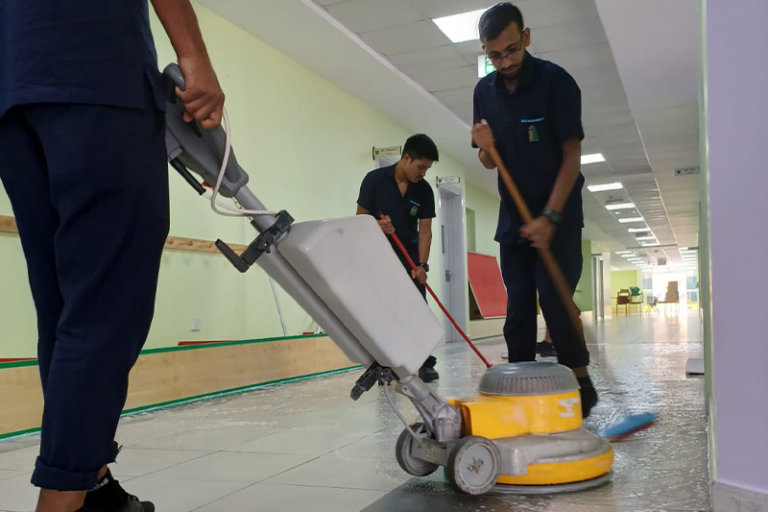
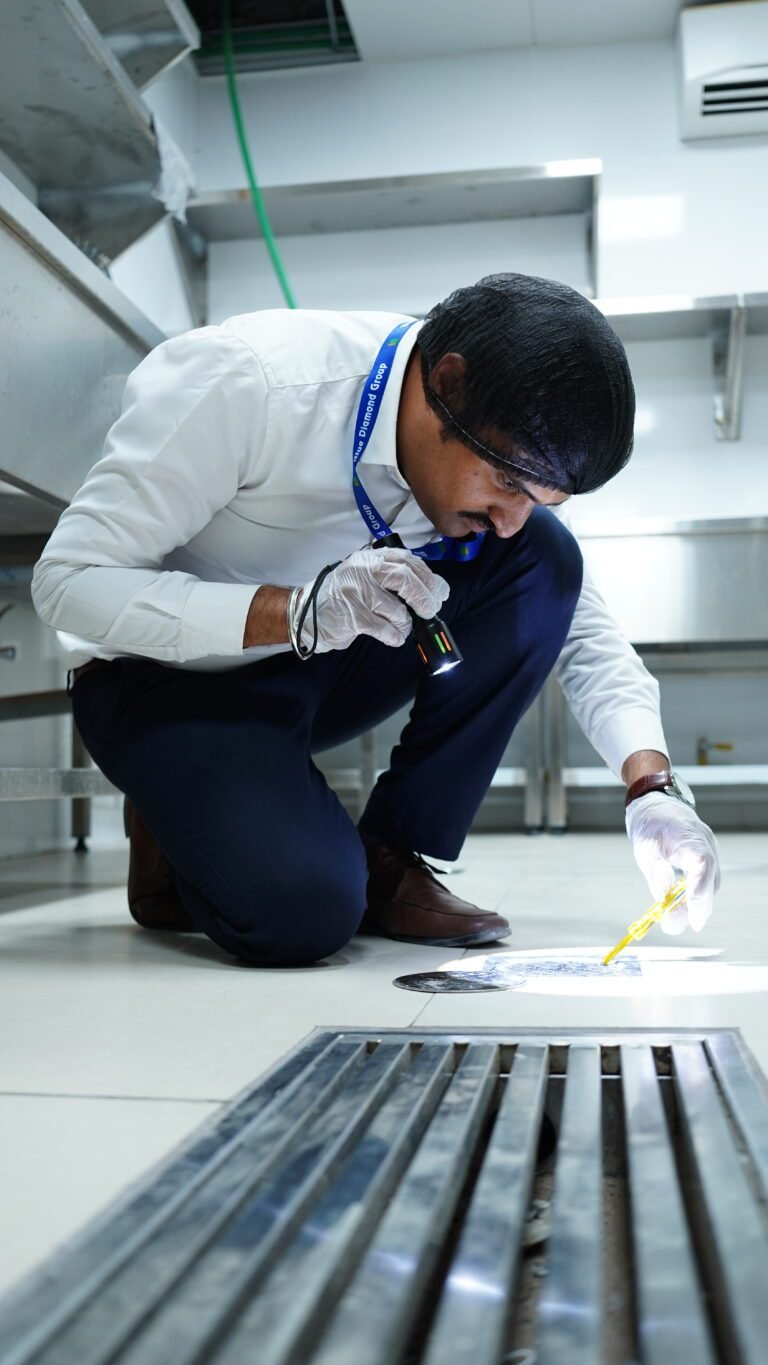
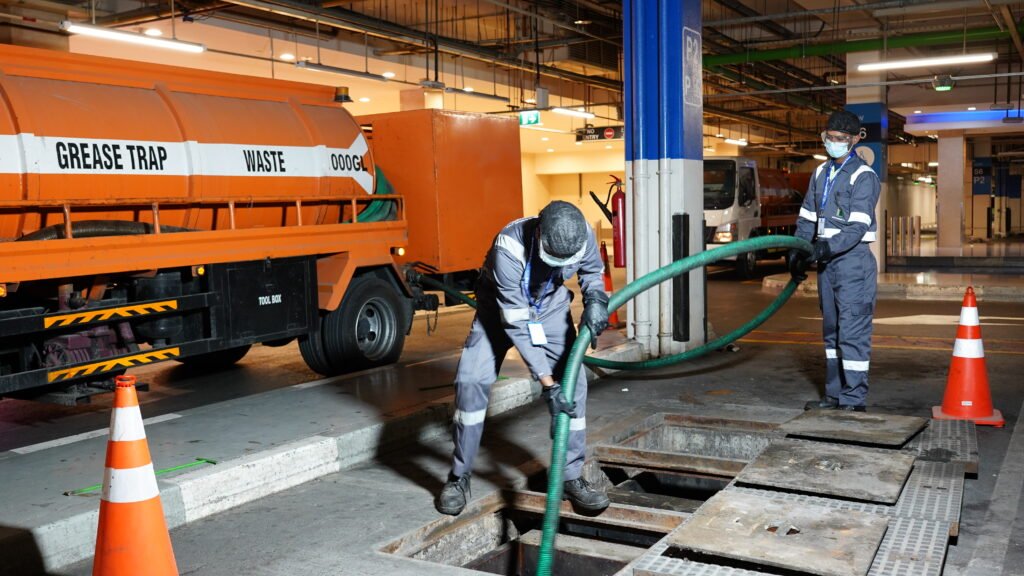
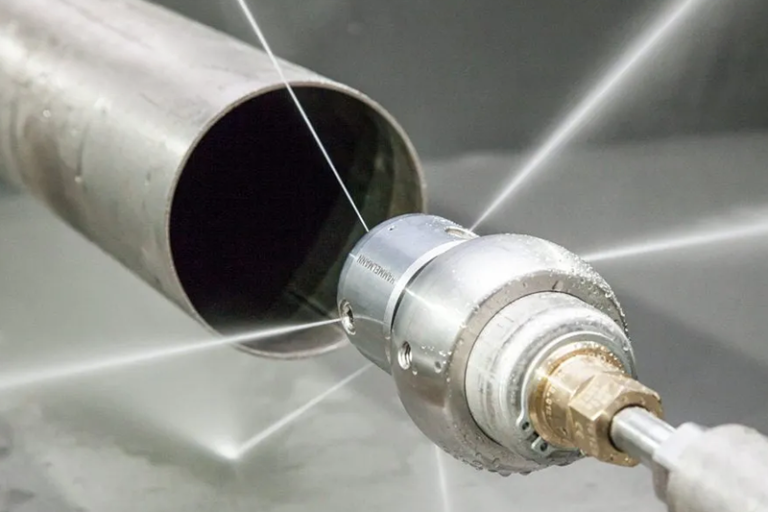
A certified grease trap cleaning service involves full pump-out of FOG and solids, high-pressure jetting of outlet pipes, inspection of baffles and seals, and certified waste disposal in compliance with UAE environmental regulations. DIY cleaning is not compliant — all waste must be transported by a licensed waste carrier.
5.2 Biological Enzyme Dosing
Between professional cleans, biological enzyme treatments (dosed weekly into drains) break down grease at the molecular level — significantly slowing the accumulation rate and reducing odor. This is particularly effective in UAE conditions where high temperatures accelerate grease build-up.
5.3 Grease Trap Inspection, Repair, and Upsizing
If structural grease trap problems are identified — corrosion, cracks, or under sizing — the unit must be repaired or replaced. Our engineers assess the correct trap size based on your kitchen’s actual flow rate, ensuring compliance with current Dubai Municipality and Trakhees specifications.
5.4 Integrated Pest Management (IPM)
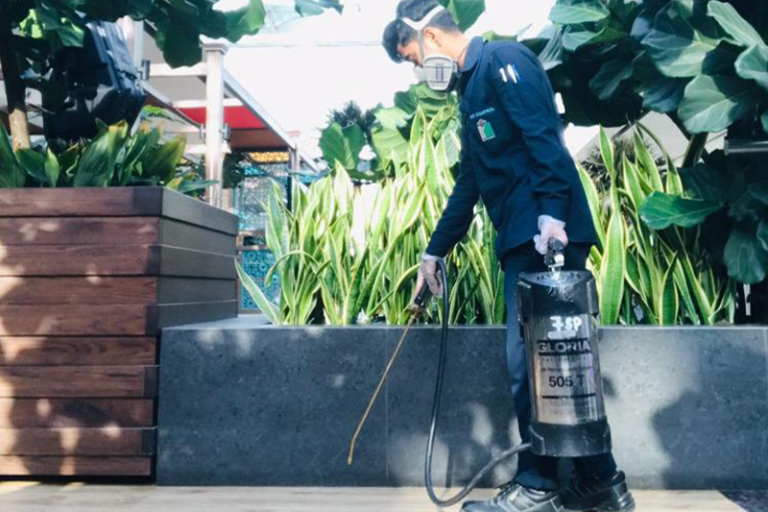
Once the grease trap is serviced, a licensed pest control treatment addresses the existing infestation using HACCP-compatible methods: residual gel baiting for cockroaches, bait stations and proofing for rodents, and drain treatments (enzyme foams and larvicide) for fly species. All treatments are food-safe and compliant with UAE pesticide regulations.
5.5 Staff Training and Daily SOPs
Long-term prevention requires behavioral change. Staff must be trained never to pour cooking oil, dairy, or food scraps directly into drains. Daily drain wipe-down checklists and monthly internal audits significantly reduce the speed at which grease trap capacity is reached
UAE Regulations: What the Law Requires
Both grease trap maintenance and pest control in UAE commercial kitchens are regulated activities:
- Dubai Municipality Food Control Department requires grease traps to be cleaned at a frequency appropriate to kitchen output — typically every 1–3 months minimum
- All grease waste must be collected by a Dubai Municipality–approved waste contractor and disposed of at designated facilities
- Pest control treatments in food-handling premises must be carried out by a company licensed by Dubai Municipality or the relevant authority in each Emirate
- ADAFSA in Abu Dhabi enforces equivalent standards under the Food Safety Law
- Repeated inspection failures result in escalating penalties: warnings, fines (from AED 5,000), temporary closure, and in severe cases, permanent licence revocation
Partnering with a licensed grease trap cleaning and pest management company is not just an operational decision — it is a legal safeguard for your food trade licence and business continuity.
Prevention Checklist: Avoiding Grease Trap Problems in UAE Kitchens
Use this checklist to assess your kitchen’s current risk level:
- Clean grease traps professionally every 4–8 weeks for high-volume kitchens; every 8–12 weeks for lower-volume operations
- Ensure your grease trap is correctly sized for your kitchen’s daily output — consult a certified engineer if in doubt
- Apply biological enzyme treatments weekly between professional cleans
- Seal all drain access points, floor joints, and wall penetrations monthly
- Schedule quarterly pest control inspections with a Dubai Municipality–approved company
- Train all kitchen staff: no cooking oil, dairy, or food scraps directly into drains
- Keep maintenance records — inspectors may request documentation of your cleaning schedule
Conclusion:
The connection between grease trap problems and pest infestations in UAE commercial kitchens is direct, well-documented, and entirely preventable. A neglected grease trap is not just a maintenance issue — it is an open invitation to cockroaches, rodents, and flies, and a guaranteed path toward Dubai Municipality fines and potential closure.
The solution is straightforward: a consistent professional cleaning schedule, the right-sized equipment, biological maintenance between cleans, and a licensed pest management partner who understands UAE compliance requirements.
Ready to Protect Your Kitchen?
Is your commercial kitchen in Dubai, Abu Dhabi, or Sharjah overdue for a grease trap inspection? Contact Blue Diamond Team team today for a free site assessment and grease trap maintenance quote. We serve restaurants, hotels, cloud kitchens, and facility managers across all seven Emirates.
Contact us today on WhatsApp | Call | Email
Phone: +971 55 996 3058
Email: info@bluediamondfm.com
Most Frequently Asked Question
Every 4 to 8 weeks for most commercial kitchens in UAE. High-volume restaurants may need monthly service, particularly during summer. This is significantly more frequent than international guidelines because UAE temperatures accelerate grease decomposition.
Neglecting grease trap cleaning leads to severe drain blockages, foul odors, pest infestations, and potential fines. Over time, grease buildup can cause system overflows, kitchen downtime, and even temporary closure during inspections—making regular maintenance a critical business necessity.
The most effective solution is a combination of professional pest control and proper grease management. Eliminating grease buildup, sealing entry points, and scheduling regular treatments with licensed pest control providers ensures long-term results, especially in compliance with Dubai Municipality hygiene standards.
Dubai Municipality requires all commercial kitchens to install properly sized grease traps, maintain them regularly, and dispose of waste through licensed contractors. Businesses must also keep cleaning records and disposal documentation for inspections to ensure full compliance.
Grease trap cleaning costs in Dubai typically range from AED 250 to AED 1,500+, depending on the size of the trap, frequency of service, and kitchen usage. Investing in regular service plans is more cost-effective than dealing with emergency blockages or compliance penalties.
Drain flies are usually caused by organic buildup inside drains and grease traps, where moisture and food residue create the perfect breeding environment. Regular grease trap cleaning and proper sanitation eliminate these conditions and prevent infestations before they start.
Our Services
Our step-by-step guide simplifies the cleaning process, ensuring a hassle-free experience while keeping your traps clean.
Drain Line Jetting
Pest Control Service
Deep Cleaning
business
Our Working Process
Let’s start the journey towards success and enhance revenue for your business. Take your company to the next level.
Book An Appointment Today
Blue Diamond would like to hear from you. if you have business inquiries. Get in touch with us.