Grease Trap Maintenance for Schools, Universities & Staff Canteens in the UAE
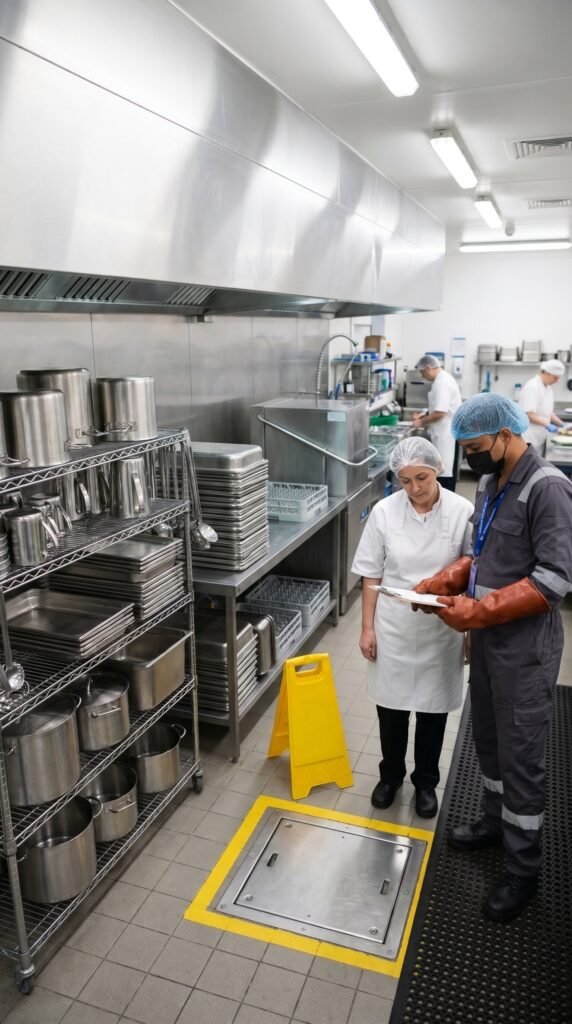
An institutional kitchen doesn’t behave like a restaurant. A school canteen might serve hundreds of meals in a lunch window of under an hour, then go quiet until the next day. A university food court runs flat out between lectures and falls silent at the weekend. A staff canteen feeds a whole workforce in shifts, six or seven days a week, all year. Each has a very different rhythm, and each puts a very different load on the grease trap.
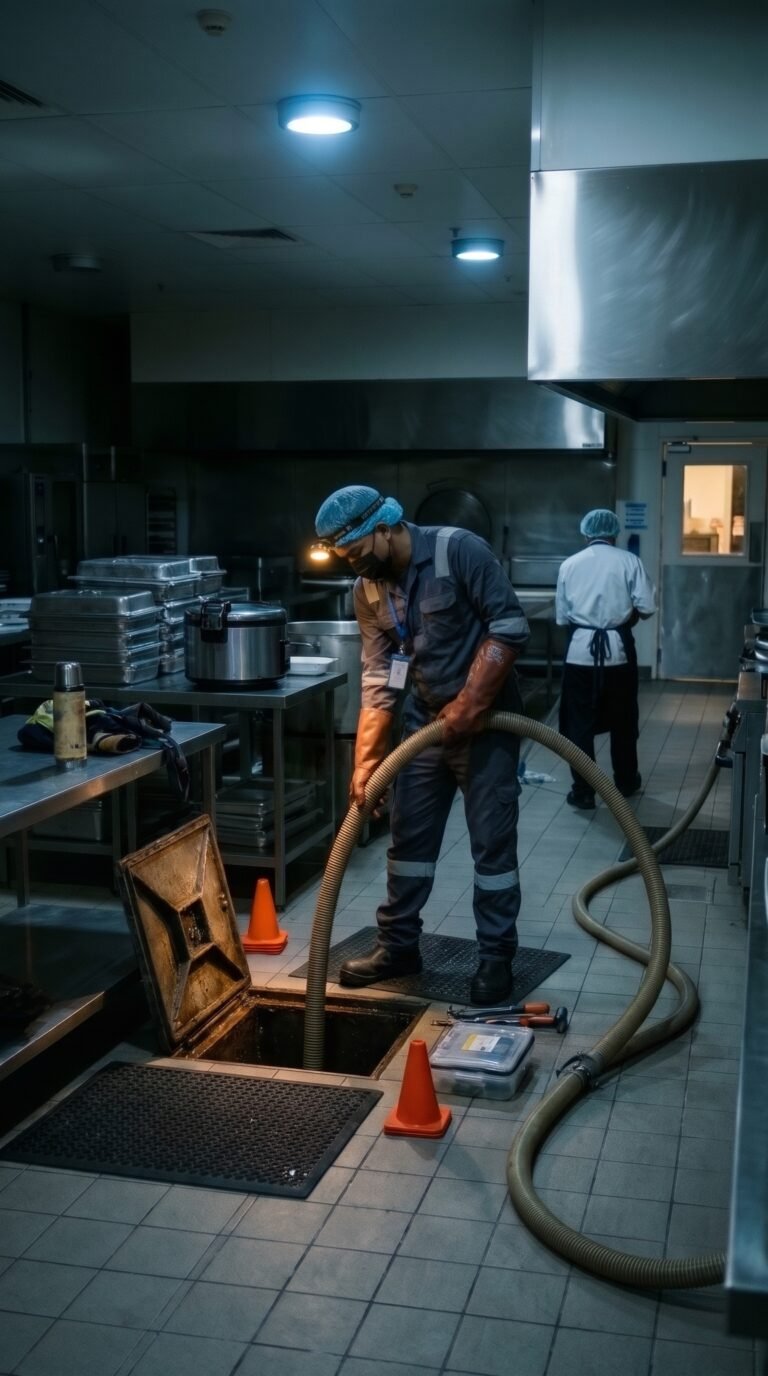
Grease trap maintenance for schools, universities & staff canteens in the UAE therefore needs a plan built around the calendar, the people on site and the safeguarding rules that come with an institution, not just a standard restaurant schedule. This guide covers how institutional kitchens differ, how to schedule servicing around terms, holidays and shifts, how to protect children and staff while work is carried out, who is responsible for what and how to choose a contractor an institution can trust.
Sharp, predictable peaks: Most meals are served in short, intense windows. Pots, trays and dishwashers discharge heavy volumes of greasy water in a short time, which tests a trap’s capacity more than steady restaurant use.
A calendar that never matches a restaurant’s: Term dates, exam periods, holidays, Ramadan hours, graduation events and summer breaks all change the load. Some weeks the kitchen is almost idle, and others it produces its highest volumes of the year.
Large-batch cooking: Fried items, curries, rice dishes, gravies and bulk-cooked meat add significant fats and oils, even in kitchens that aim to serve healthy food.
Safeguarding and vetting: On school and nursery sites, every contractor on the premises is a safeguarding matter. Access, supervision and timing are governed by the institution’s policies.
Contract catering: Many institutions outsource kitchen operations to a catering company. That creates a three-way relationship between the institution, the caterer and the maintenance contractor, and responsibility for the grease trap isn’t always clear.
Public health stakes: Children, students and large workforces depend on these kitchens daily, so a blocked drain, an odor or a closure affects hundreds or thousands of people at once.
Why Institutional Kitchens Are Different
Follow any interval set in your approved conditions or by the relevant authority. As a starting point:
| Kitchen | Typical Interval |
|---|---|
| Large staff canteens and labour accommodation kitchens | Every 2 to 4 weeks |
| Central production kitchens | Every 2 to 4 weeks |
| University canteens and food courts | Every 2 to 4 weeks, outlet by outlet |
| School canteens during term | Every 4 weeks, adjusted to meal volumes and menu |
| Nursery and small school kitchens | Every 4 to 8 weeks, based on measured accumulation |
| Kitchens in low-use periods (holidays) | Based on inspection before reopening |
These intervals are a starting point only. The best schedules come from measuring how fast each trap fills over its first few cycles, then adjusting for term time, peaks and holidays.
How Often Should Institutional Grease Traps Be Cleaned?
The Main Types of Institutional Kitchen
| Kitchen Type | Typical Profile | What Matters Most for Grease Trap Maintenance |
|---|---|---|
| School canteens | Short, intense lunch peak; term-time operation; sometimes breakfast and snack service | Servicing outside school hours, safeguarding, odor control near classrooms and playgrounds |
| Nurseries and early-years settings | Small kitchens, high hygiene standards, very young children on site | Strict access control, minimal disruption, careful scheduling |
| University canteens and food courts | Several outlets, long opening hours, student and staff peaks | Many traps to track, event peaks, outlet-by-outlet records |
| Student residences and dining halls | Large meal volumes, extended hours, sometimes 24-hour service | Heavy load, shared drainage with accommodation, night-time access |
| Staff canteens (corporate, industrial, hospital) | Shift-based service, high volumes, often contract-catered | Shift timing, extended hours, central interceptors and consistent reporting |
| Labour accommodation catering | Very high volume, often fried and rice-based menus | Frequent servicing, large traps and strict hygiene records |
| Central production kitchens | One kitchen preparing meals for several schools or sites | Very high grease output and tighter service windows |
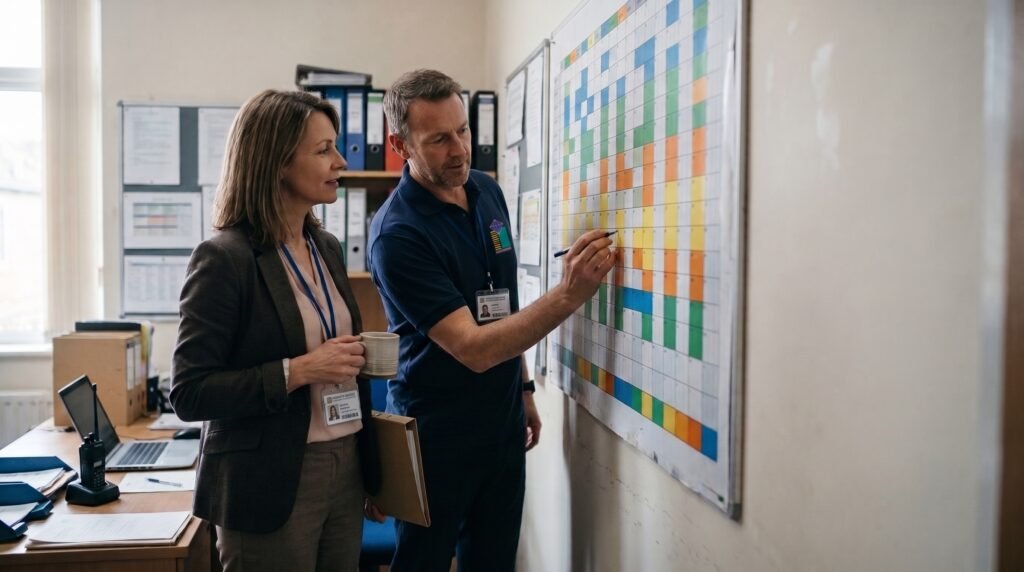
A Term-Time Service Calendar
| Period | What to Do |
|---|---|
| Before term starts | Full service and inspection, check covers, seals and drains, confirm access arrangements and contractor vetting |
| During term | Regular scheduled service, ideally outside school hours or on weekends, with records after every visit |
| Before exams, events and open days | Add a service cycle before known peaks |
| Ramadan and altered hours | Review the schedule, since meal patterns, timing and volumes change |
| Holidays and summer break | Deep clean and any repairs or resizing while the kitchen is quiet, plus a check on stagnant water and odour in unused traps |
| Before reopening | Inspect and service the trap so it’s ready for the first full-volume day |
| Annually | Review the whole schedule, trap sizing and contractor performance |
Idle periods deserve care too. A trap that sits unused for weeks can develop odor and stagnant, hardened grease, so check it before reopening rather than assuming it’s fine.
Safeguarding: Working Safely Around Children
Where children are on site, grease trap servicing needs the same discipline as any other contractor activity. Good practice includes:
- Scheduling work outside school hours: at weekends or during holidays wherever possible
- Vetting contractors in line with the institution’s policies: including identification checks and any background screening the school requires
- Issuing visitor badges, inductions and escorted access: so every contractor is known, supervised and signed in and out
- Keeping work areas away from children: with barriers, cones and signage, and no unattended open covers or hoses
- Controlling vehicle movements: away from drop-off and pick-up times, play areas and pedestrian routes
- Containing odors: with sealed equipment and tidy waste handling
- Storing equipment securely: and never leaving tools or chemicals unattended
- Keeping a log: of who was on site, when, and what work was done
A contractor experienced in schools will already work this way and will welcome clear rules.
Who Is Responsible? Institution, Caterer and Landlord
Responsibility for the grease trap varies by arrangement, so confirm it in writing. An illustrative guide:
| Arrangement | Usually Responsible for Grease Trap Maintenance | Confirm In |
|---|---|---|
| Kitchen run directly by the institution | The institution’s facilities team | Operating policies and maintenance contracts |
| Kitchen run by a contract caterer | Often the caterer for the trap serving the kitchen, sometimes the institution | Catering contract |
| Campus or leased premises | A mix of the tenant and the landlord or campus manager for shared interceptors and lines | Lease and campus operating agreement |
| Shared drainage serving several kitchens | The landlord or campus manager for central interceptors and shared lines | Operating agreement |
Where responsibility is shared, agree who books the service, who pays, who keeps the records and who handles emergencies, so nothing falls between the caterer, the institution and the landlord.
Sizing and Design for Peak Service
A trap sized for average daily flow can be overwhelmed by a lunchtime surge. When planning a new kitchen or reviewing an existing one:
- Size for the peak period: not the day’s total volume
- Check the dishwashing and pot-wash capacity: since large machines discharge heavy volumes quickly
- Route all grease-producing fixtures through the trap: including pre-rinse sinks, pot sinks and floor drains
- Allow access for pumping: away from play areas, entrances and public routes
- Plan capacity for growth: such as a larger student intake, a new outlet or an extended menu
- Consider a central interceptor: for campuses with several kitchens
If a trap needs servicing much more often than comparable kitchens, ask for a sizing review.
Reducing the Load: Good Kitchen Practice
Institutional kitchens can reduce grease load significantly with a few habits:
- Scrape trays and plates into bins: before washing, particularly in busy service windows
- Use sink strainers: and empty them frequently
- Collect used cooking oil: through an authorised provider and never pour it down a drain
- Wipe heavily greasy pots and pans: before washing
- Train kitchen and catering staff: including temporary and shift staff, and refresh the training each term
- Avoid chemical or enzyme shortcuts: that move grease downstream instead of removing it
- Report slow drains and odors: as soon as they appear
Records, Compliance and Reporting
Institutions answer to owners, governors, parents, regulators and auditors, so records matter. Keep in one place:
- Dated service reports: for every trap and visit
- Waste disposal or transfer records: from an authorised collector
- The contractor’s license and insurance details
- Vetting and induction records: for contractor staff on site
- Before-and-after photographs, ideally
- A trap register: showing locations, sizes, last service dates and next due dates
- Records of defects and corrective actions
Food safety authorities inspect institutional kitchens, and schools and universities may also have requirements from their education regulators or owners about canteen standards. Confirm what applies to your emirate and institution. Our UAE restaurant compliance checklist covers the wider set of kitchen records, and our guide to annual grease trap maintenance plans explains how a scheduled contract creates them automatically.
Planning for Disruption and Emergencies
A blocked trap during lunch service affects hundreds of people. Prepare for it:
- Agree an emergency contact and written response time: with your contractor
- Keep a contingency plan: for serving meals if the kitchen is out of action, such as packed meals or a temporary alternative
- Know the warning signs: -see our guide to the signs your grease trap needs cleaning– and act early
- Prepare for rain and shared-drain problems: see our guide to grease trap backflow during heavy rain
- Run a post-incident review: to learn why it happened and prevent a repeat
Choosing a Grease Trap Contractor for an Institution
Look for a provider who can show:
- A valid trade license: and authorisation to handle and dispose of FOG waste
- Experience in schools, universities or large canteens: with references
- Willingness to meet the institution’s vetting and induction requirements
- Flexible out-of-hours and weekend scheduling
- Capacity to service several traps across a campus: with consistent reporting
- Odor-controlled, tidy equipment and good traffic management
- A clear written scope: and itemised pricing
- A service certificate and disposal record: after every visit
- A written emergency response commitment
- Public liability insurance: suited to working in occupied sites
See our contractor selection guide for a fuller checklist, and our guide to grease trap cleaning quotes for the factors that explain price differences.
Procurement Tips for Institutions
If you’re issuing a tender or renewing a contract:
- Specify the scope: trap register, service intervals, term-time and holiday arrangements, reporting.
- Set service levels: for response times, missed visits and reporting
- Require vetting compliance: and named staff where appropriate
- Ask for a sample report: and references from similar institutions
- Compare total annual cost: not just the price of a single visit
- Review performance annually: and keep the right to change the schedule as menus, numbers and sites change
Keep the Kitchen Running Through Every Term
Effective grease trap maintenance for schools, universities & staff canteens in the UAE means planning around the academic calendar, working safely around children and staff, agreeing responsibilities in writing, servicing on a schedule that matches real meal volumes and keeping records that satisfy owners, parents and regulators. Do that, and the grease trap stays one of the quietest parts of the operation.
Book a free institutional kitchen assessment with Blue Diamond Team Today. They will inspect your traps, agree access and safeguarding arrangements with your team and set up a documented term-time service schedule with authorized disposal, for schools, universities and staff canteens across the UAE.
Contact us today on WhatsApp | Call | Email
Phone: +971 55 996 3058
Email: info@bluediamondfm.com
Most Frequently Asked Question
It depends on the menu and meal volumes, but a common starting point for a school canteen during term is about every four weeks, adjusted by measuring how quickly the trap fills. Your approved conditions or authority guidance may set a specific interval, which takes priority.
Outside school hours, at weekends or during holidays wherever possible, with the contractor vetted, signed in and supervised, and work areas kept well away from children.
Many campuses with several food outlets use central interceptors alongside tenant traps. Whether you have one depends on the campus design. If you do, someone must own its maintenance, and it should be inspected on a fixed cycle based on measured accumulation.
Unused traps can develop odor and stagnant grease. Check and, if needed, service the trap before the kitchen reopens, and use the quiet period for repairs, resizing and deep cleaning.
Dated service reports, disposal records, the contractor’s license and insurance details, vetting and induction records, a trap register and any corrective actions, all stored where they can be produced quickly.
Our Services
Our step-by-step guide simplifies the cleaning process, ensuring a hassle-free experience while keeping your traps clean.
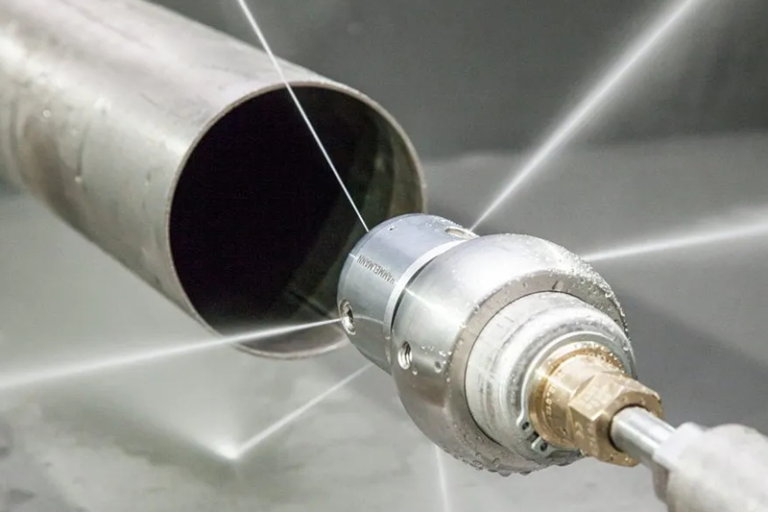
Drain Line Jetting
Pest Control Service
Deep Cleaning
business
Our Working Process
Let’s start the journey towards success and enhance revenue for your business. Take your company to the next level.
Book An Appointment Today
Blue Diamond would like to hear from you. if you have business inquiries. Get in touch with us.