Grease Trap Maintenance for Hospital Kitchens in UAE: Best Practices & Compliance Guide
Hospital kitchens operate under a different set of pressures than a typical restaurant. Meals run around the clock, food volumes are high and consistent, and any breakdown in hygiene or drainage can directly affect patient safety. That makes grease trap maintenance for hospital kitchens in UAE one of the most overlooked but highest-risk compliance areas for healthcare facility managers, catering contractors, and hospital operations teams across Dubai, Abu Dhabi, Sharjah, and the Northern Emirates.
This guide breaks down what grease trap maintenance for hospital kitchens in UAE actually requires — from sizing and cleaning frequency to the specific regulatory bodies you answer to — so your facility stays compliant, odor-free, and inspection-ready year-round.
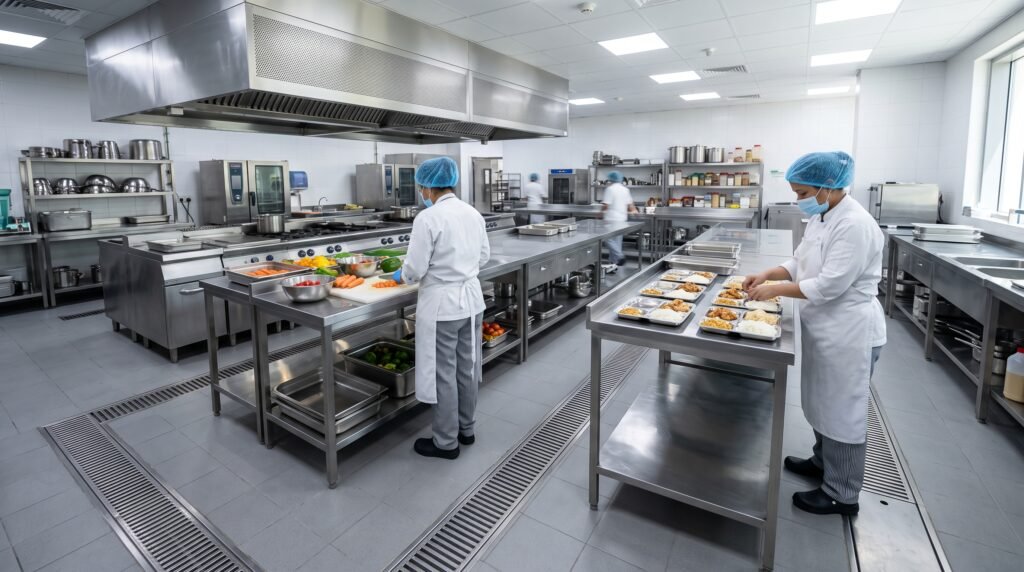
A hospital central kitchen can produce three meals a day for hundreds — sometimes thousands — of patients, staff, and visitors, in addition to specialized dietary meals prepared in smaller batches. This creates a continuous stream of fats, oils, and grease (FOG) that a standard restaurant-grade trap is rarely sized to handle.
Because hospitals fall under both healthcare licensing bodies (such as the Dubai Health Authority or the Department of Health Abu Dhabi) and municipal food safety regulators, grease trap maintenance for hospital kitchens in UAE is typically held to a stricter inspection standard than standalone F&B outlets. Infection control audits, facility accreditation reviews, and routine municipal food safety checks can all flag a poorly maintained grease trap — meaning non-compliance carries reputational risk on top of financial penalties.
Why Grease Trap Maintenance for Hospital Kitchens in UAE Is Different From Restaurants
UAE Regulatory Framework Governing Hospital Kitchen Grease Traps
Every emirate enforces grease trap compliance slightly differently, but the underlying principle is the same across the UAE: no untreated FOG waste may enter the public sewage network, and only licensed providers may service or empty a trap.
Dubai Municipality Requirements
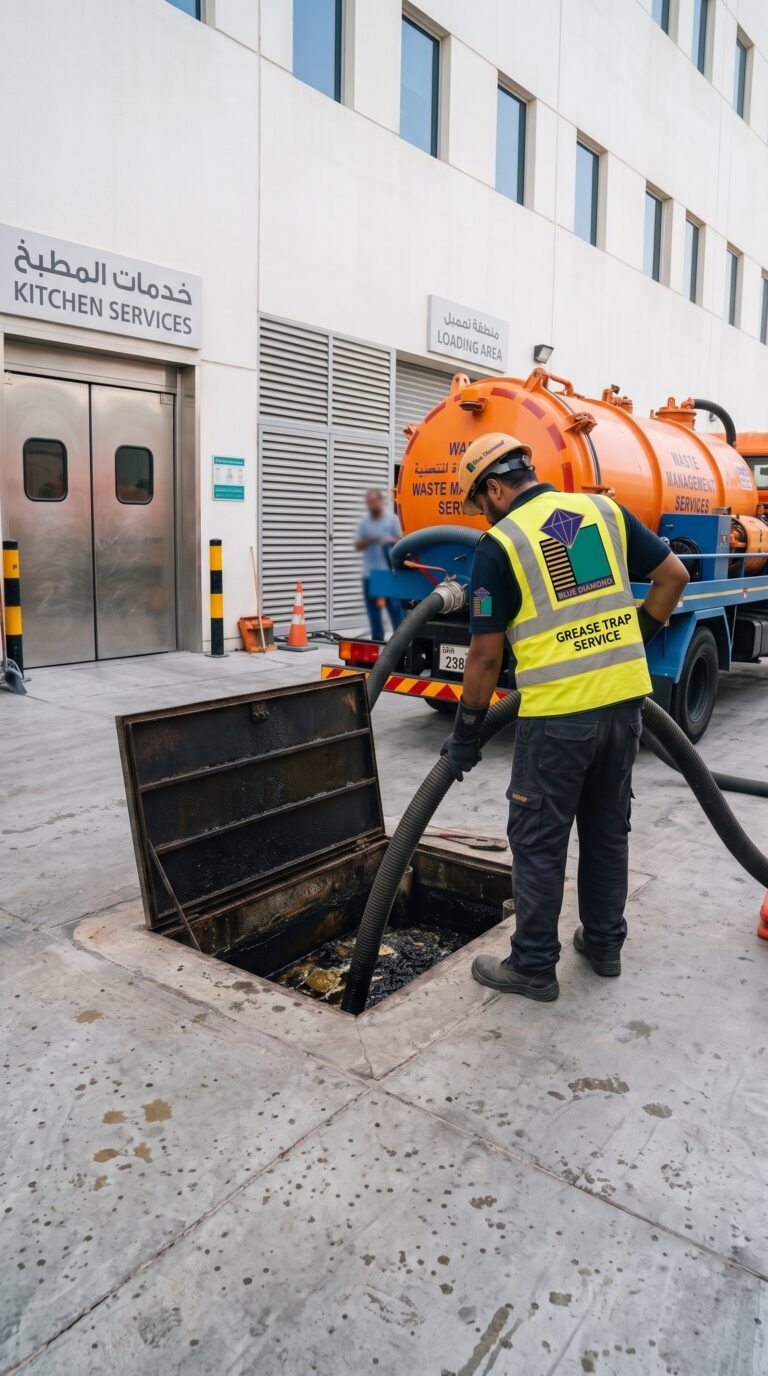
In Dubai, commercial and institutional kitchens — including hospital kitchens — must install a properly sized grease trap ahead of any drainage connection to the sewage network. Dubai Municipality’s Food Safety Department conducts both scheduled and unannounced inspections, and facilities are generally expected to service high-output kitchens, such as hospital central kitchens, on a weekly to bi-weekly basis depending on meal volume. Only Dubai Municipality-approved contractors may legally collect and dispose of grease trap waste, and facilities must retain service records and disposal certificates for inspection.
Abu Dhabi (ADAFSA) Requirements
Hospitals operating in Abu Dhabi, Al Ain, or the Al Dhafra region fall under the Abu Dhabi Agriculture and Food Safety Authority (ADAFSA) rather than Dubai Municipality. The engineering principles are consistent — a correctly sized trap, routine servicing, and licensed waste haulers — but the inspection cadence, documentation format, and approved-contractor list are specific to ADAFSA, so facilities operating in multiple emirates should not assume a Dubai-approved provider is automatically authorized in Abu Dhabi.
Sharjah, Ajman & the Northern Emirates
Sharjah, Ajman, and the other Northern Emirates apply comparable FOG-discharge and licensing rules through their respective municipalities. Hospital facilities in these jurisdictions should confirm current requirements directly with the local municipality, since inspection frequency and permitted contractor lists can differ from Dubai or Abu Dhabi even though the compliance intent is the same across the UAE.
Best Practices for Grease Trap Maintenance in Hospital Kitchens
Right-Sizing the Grease Trap for High-Volume Output
An undersized trap is the single most common failure point in hospital kitchens. Facility managers should have their trap capacity reassessed whenever meal volume increases — for example, after adding a new patient wing, expanding a cafeteria, or bringing catering in-house — since an undersized unit will bypass grease into the sewage line long before it visibly overflows.
Recommended Cleaning Frequency
Given the continuous cooking cycle in most hospital kitchens, a weekly to bi-weekly cleaning schedule is generally appropriate for central kitchens, with smaller satellite pantries or ward kitchenettes serviced on a monthly basis. The right interval ultimately depends on trap size and daily FOG output, so facilities should work with a licensed provider to set a documented schedule rather than relying on a generic industry rule of thumb.
- High-volume central kitchens: weekly to bi-weekly servicing
- Mid-size cafeterias and staff dining: bi-weekly to monthly servicing
- Ward pantries and satellite kitchenettes: monthly servicing, with visual checks in between
Staff Training & Daily FOG Management
Kitchen staff should be trained to scrape plates and cookware into waste bins before washing, avoid pouring oil or fat down floor drains, and report slow drainage immediately rather than waiting for a scheduled visit. Small daily habits reduce the load on the trap and extend the interval between deep cleans.
Recordkeeping & Certification
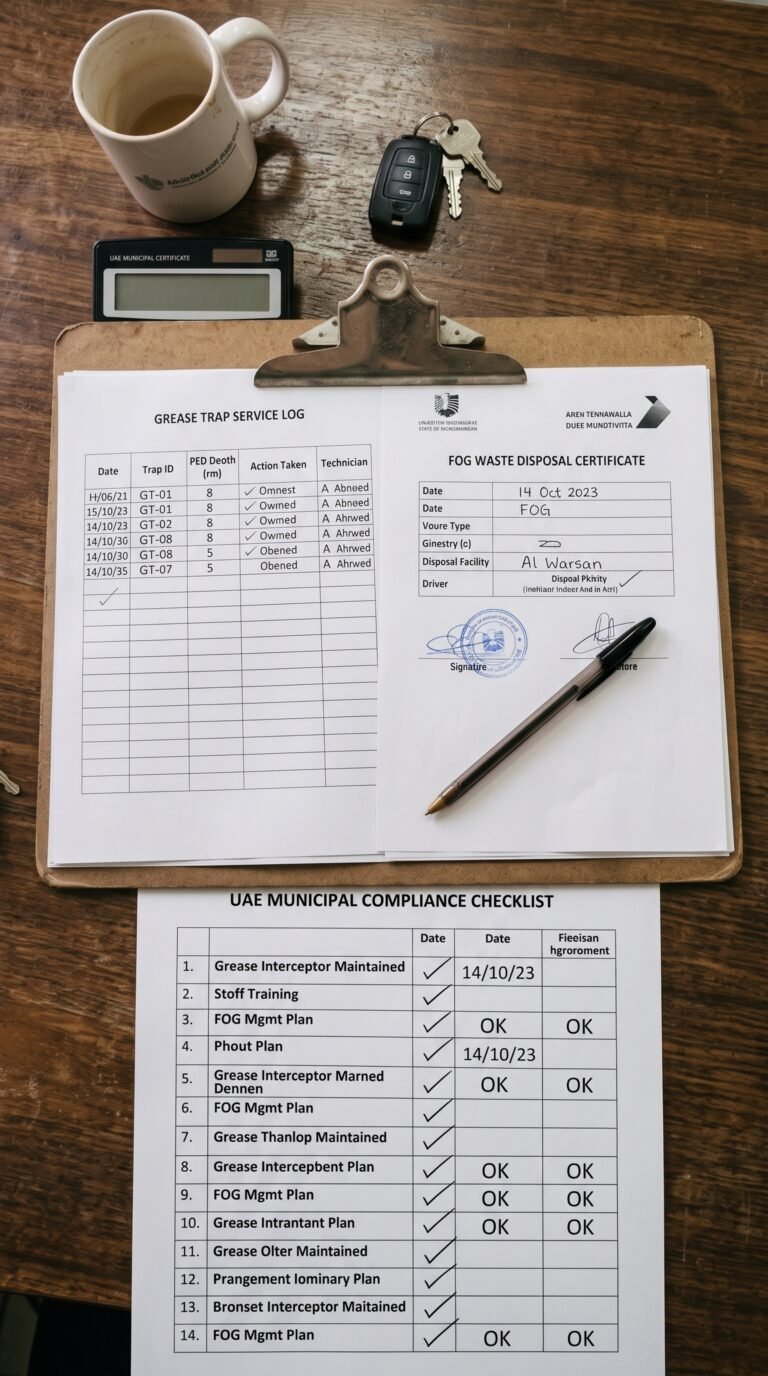
Every service visit should generate a disposal certificate and a logged entry covering the date, volume removed, and the servicing company’s municipal license number. These records are usually the first thing an inspector requests, and gaps in documentation are treated the same as a missed cleaning even if the trap itself is in good condition.
Skipping or delaying grease trap maintenance for hospital kitchens in UAE creates risk well beyond a bad odor. Consequences typically include:
- Sewage backflow into food preparation or ward-adjacent areas
- Municipal fines and, in repeat cases, a temporary closure order on the kitchen
- Failed infection-control or facility-accreditation audits tied to environmental hygiene
- Pest activity around drainage points, a direct food-safety hazard in a clinical setting
- Costly emergency plumbing repairs from grease-hardened pipework
Risks of Neglecting Grease Trap Maintenance in Hospital Settings
Choosing a Licensed Grease Trap Cleaning Provider for Healthcare Facilities
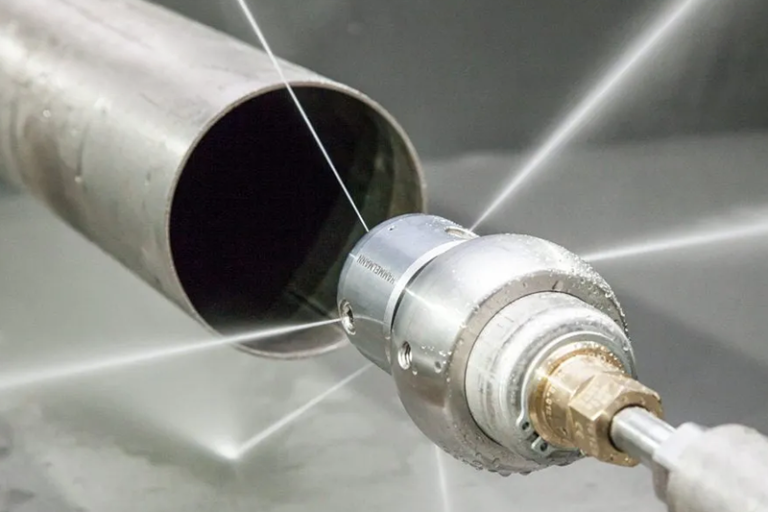
Hospital procurement teams should verify a few things before signing a service contract: the provider’s municipal license number, experience servicing high-volume institutional kitchens specifically (not just restaurants), the equipment used for extraction and jetting, and whether the company issues compliant disposal certificates automatically after every visit. A provider familiar with healthcare facility protocols — such as restricted access hours, infection-control clearance, and low-noise equipment near patient areas — will integrate far more smoothly into hospital operations than a standard commercial cleaning contractor.
Grease Trap Maintenance Checklist for Hospital Kitchens Across UAE
- Confirm the correct regulatory authority for your emirate (Dubai Municipality, ADAFSA, or local municipality).
- Verify your grease trap is correctly sized for current meal volume.
- Set a documented cleaning schedule based on kitchen output, not guesswork.
- Use only licensed, municipality-approved service providers.
- Retain disposal certificates and service logs for every visit.
- Train kitchen staff on daily FOG-reduction habits.
- Reassess trap capacity after any expansion in meal volume or catering scope.
Conclusion
Grease trap maintenance for hospital kitchens in UAE sits at the intersection of food safety, infection control, and municipal compliance — which makes it a higher-stakes responsibility than in a typical commercial kitchen. Facilities that document their schedule, work with a licensed and experienced provider, and train kitchen staff on daily FOG habits consistently avoid the fines, closures, and audit flags that come with a neglected trap.
Need a compliance partner for your facility? Get in touch With Blue Diamond Team for a site assessment and a documented maintenance schedule tailored to your hospital kitchen’s meal volume — covering Dubai, Abu Dhabi, Sharjah, and the Northern Emirates.
Contact us today on WhatsApp | Call | Email
Phone: +971 55 996 3058
Email: info@bluediamondfm.com
Most Frequently Asked Question
Most hospital central kitchens need servicing weekly to bi-weekly because of continuous, high-volume cooking, though the exact interval depends on trap size and daily FOG output. A licensed provider can recommend a documented schedule based on your facility's actual usage.
Dubai Municipality's Food Safety Department oversees grease trap compliance for commercial and institutional kitchens in Dubai, including hospitals, alongside relevant healthcare licensing bodies that may review hygiene practices during facility accreditation.
Yes. Hospitals in Abu Dhabi, Al Ain, or Al Dhafra fall under ADAFSA rather than Dubai Municipality. The compliance principles are similar, but approved contractor lists and documentation requirements are specific to each authority.
Outcomes can range from a formal warning and fine to a temporary closure order for the kitchen, along with potential flags on infection-control or facility-accreditation reviews, depending on the severity and repeat-offense history.
No. Only municipality-licensed providers may legally collect and dispose of grease trap waste. Hospitals should also confirm the provider's experience with institutional kitchens and healthcare facility access protocols.
Large in-ground interceptors or high-capacity stainless steel traps.
Our Services
Our step-by-step guide simplifies the cleaning process, ensuring a hassle-free experience while keeping your traps clean.
Drain Line Jetting
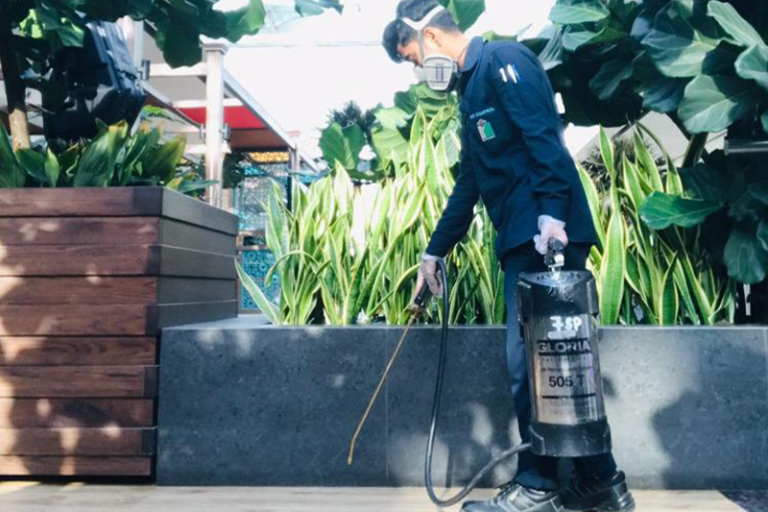
Pest Control Service
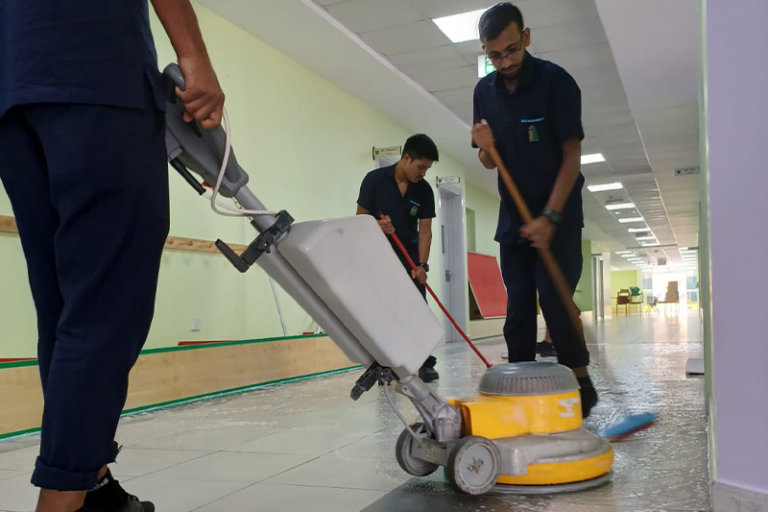
Deep Cleaning
business
Our Working Process
Let’s start the journey towards success and enhance revenue for your business. Take your company to the next level.
Book An Appointment Today
Blue Diamond would like to hear from you. if you have business inquiries. Get in touch with us.