Ajman Grease Trap Cleaning: Commercial Kitchen Compliance Guide
Ajman‘s restaurant and café scene has grown steadily alongside its residential and industrial expansion — from the dense F&B clusters around Ajman Corniche and Al Nuaimiya to the growing commercial strips near Al Jurf and the industrial zones bordering Sharjah. With that growth comes the same compliance obligation every commercial kitchen in the UAE shares: a properly sized, regularly serviced grease trap, documented to the standard Ajman Municipality expects.
This guide covers what Ajman grease trap cleaning compliance actually requires, how often service should happen, what it costs, and how to choose a contractor who understands the local regulatory landscape rather than applying a generic UAE-wide template.
Fats, oils and grease (FOG) discharged untreated into drainage lines cool and solidify, narrowing pipe diameter until blockages force wastewater back into kitchens, shared building drainage, or the surrounding municipal network. In Ajman’s older commercial buildings and denser F&B strips in particular, undersized or neglected drainage infrastructure makes this risk more acute than in newer developments built to current standards.
Beyond the practical plumbing risk, Ajman Municipality’s Food Control Department inspects grease management as part of standard food safety compliance. A restaurant found without a functioning, documented grease trap program faces the same kind of escalating consequences seen across the UAE: warnings, fines, and in repeat cases, license action.
This is why consistent FOG control is not just an operational best practice but a regulatory expectation. Proper installation, scheduled maintenance, and accurate record‑keeping form the foundation of compliant kitchen operations. When grease traps are neglected, the impact extends beyond a single outlet — it affects neighboring tenants, shared drainage systems, and municipal infrastructure. Ultimately, proactive grease management protects businesses from avoidable disruptions and reinforces public health standards across Ajman.
Why Grease Trap Compliance Matters in Ajman
Ajman Municipality Food Control Department
Restaurants, cafés, hotel kitchens and catering facilities operating in Ajman fall under the municipality’s food safety inspection regime, which includes grease trap installation and maintenance as part of its broader hygiene and drainage requirements. Trade license renewal and food establishment approval are generally contingent on passing these inspections.
Installation Standards
A compliant grease trap installation in Ajman should be:
- Correctly sized: against kitchen output, seating capacity and cuisine type
- Constructed from approved materials: stainless steel or reinforced concrete/fiberglass units rather than small under-sink plastic traps for any full-service kitchen
- Positioned with clear technician access: for pumping and inspection
- Installed as part of approved MEP drawings: submitted during fit-out
Regulatory Requirements for Grease Trap Cleaning in Ajman
Documented Maintenance
Ajman Municipality inspectors expect to see evidence of an active cleaning program, not just an installed unit. This typically means:
- Dated service/pumping records
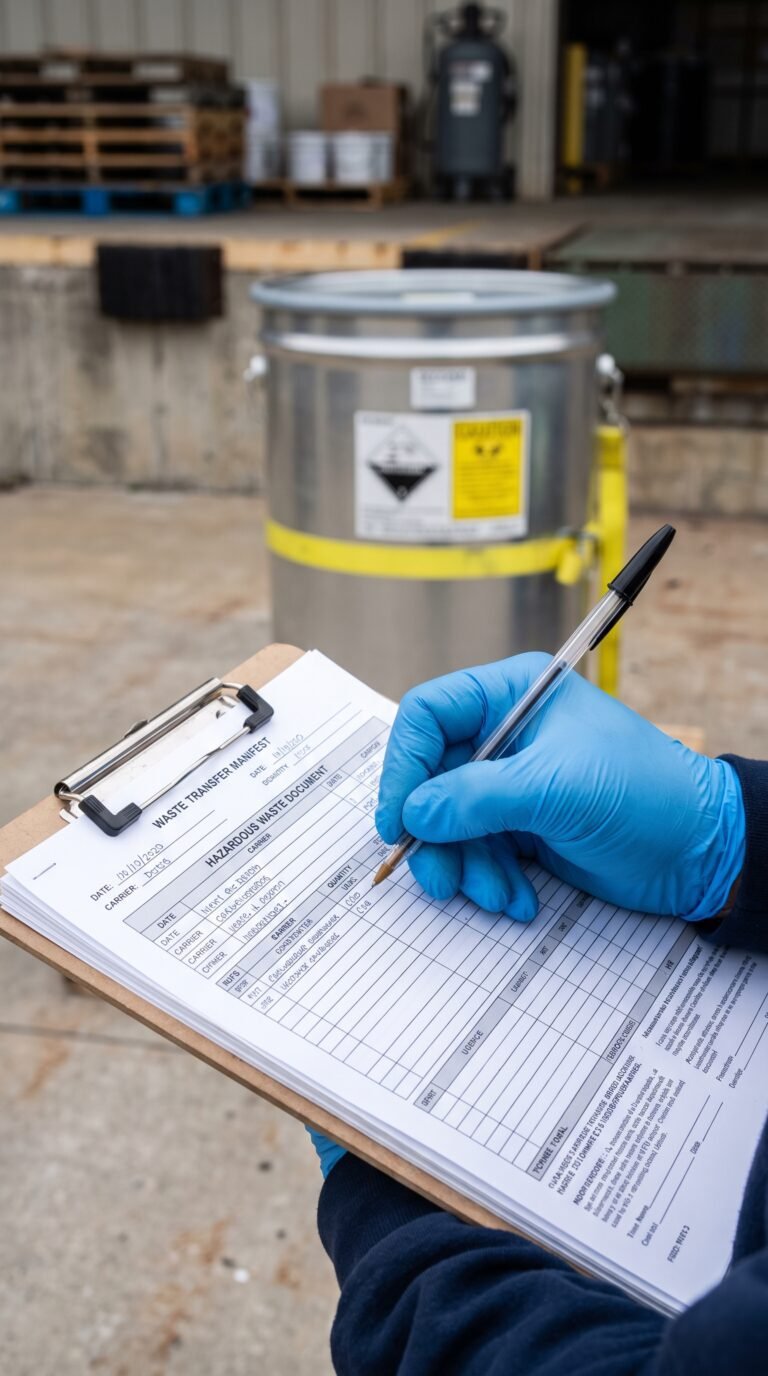
- Waste transfer documentation showing disposal through a licensed provider
- The servicing contractor’s trade license and registration details available on request
Licensed Waste Disposal
As across the UAE, FOG waste removed from a grease trap must be transported and disposed of by a provider licensed to handle this category of waste. Dumping extracted grease into general drainage or unauthorised sites carries serious penalties and exposes the restaurant, not just the waste contractor, to liability.
Recommended Grease Trap Cleaning Frequency for Ajman Restaurants
| Kitchen Type | Recommended Interval |
|---|---|
| High-volume, fried/grilled cuisine (shawarma, grills, fast food) | Every 2–4 weeks |
| Standard full-service restaurants | Every 4–6 weeks |
| Cafés and lower-oil-output outlets | Every 6–8 weeks |
| Hotel kitchens and catering facilities | Every 2–4 weeks |
Ajman’s climate, like the rest of the UAE, accelerates grease breakdown and accumulation year-round, so waiting for visible signs (odor, slow drains, overflow) typically means service is already overdue. A documented, scheduled interval based on your kitchen’s actual output is more reliable than reacting to symptoms.
What a Proper Ajman Grease Trap Cleaning Service Includes
A genuinely compliant service covers more than a surface skim. Look for:
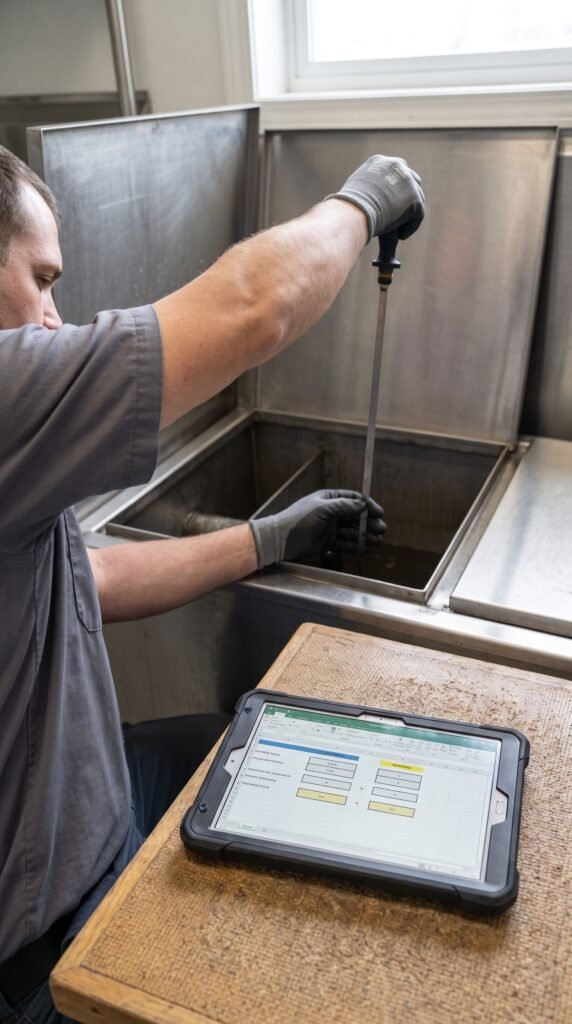
- Full pump-out of liquid, solids and the grease cap
- Wall and baffle scraping to remove hardened residue
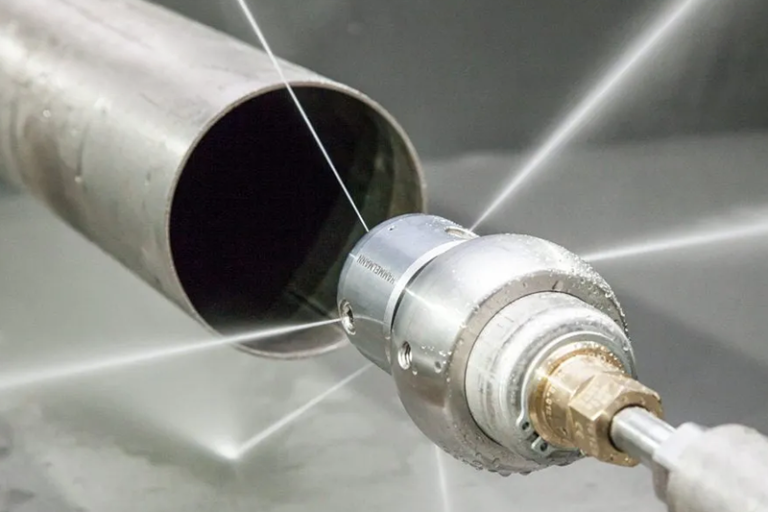
- Inlet and outlet pipe flushing
- Visual inspection of the unit’s condition and seals
- Licensed waste disposal with documentation
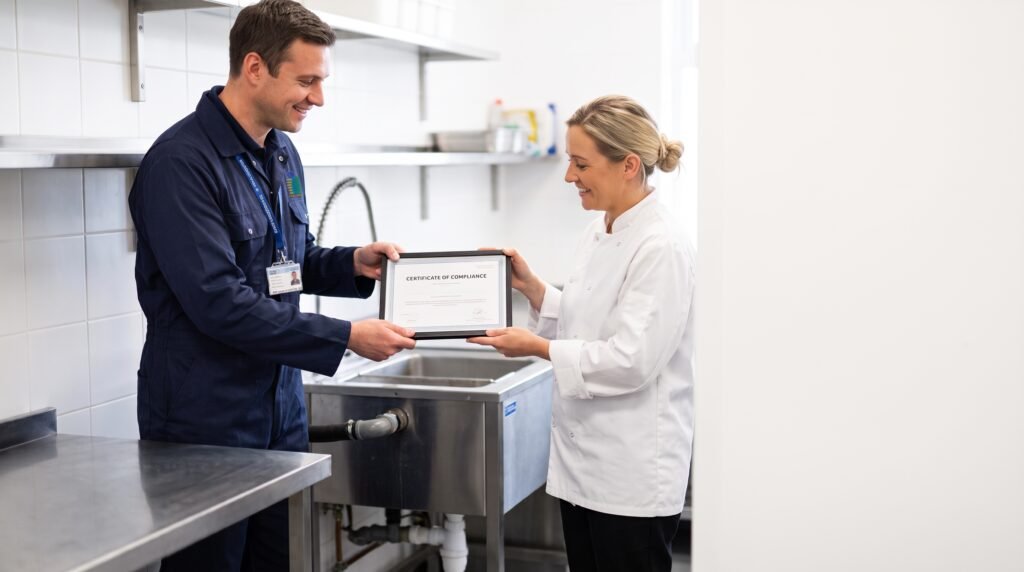
- A dated service certificate after every visit
- Before-and-after photographic evidence, ideally
A cheaper quote that skips several of these steps isn’t actually cheaper — it just shifts the cost to a future emergency call-out or a failed inspection.
Grease Trap Cleaning Cost Factors in Ajman
Pricing follows the same core drivers seen across the UAE market:
- Trap size: and volume of material to remove and dispose of
- Service frequency: scheduled AMC visits typically cost less per visit than ad-hoc call-outs
- Kitchen type and grease load: high-FOG cuisines require more frequent, more intensive service
- Access conditions: ground-floor external traps cost less to service than those in tighter commercial units
- Condition at first visit: a long-neglected trap takes considerably longer to bring back to standard than one on a regular schedule
As with the rest of the UAE market, be cautious of quotes significantly below the market average — they typically exclude disposal documentation, full scraping, or proper waste handling, all of which matter for compliance.
How to Choose a Grease Trap Contractor in Ajman
- Valid trade license: covering waste handling/pest-and-drainage services as applicable
- Experience specifically with Ajman Municipality inspection standards; not just a generic UAE pitch
- Transparent, itemised quotations: rather than vague lump-sum pricing
- Licensed waste disposal: with manifests provided after every visit
- Certificate issuance after each service
- Flexible scheduling: around your kitchen’s operating hours
- References from other Ajman-based F&B operators
Red flags: no written scope of work, reluctance to confirm where waste is disposed, no willingness to inspect the trap before quoting, and pressure to sign a long-term contract without a site visit.
Areas We Covered
Ajman grease trap cleaning demand spans the emirate’s commercial corridors, including:
- Ajman Corniche and Al Rashidiya: dense restaurant and café clusters
- Al Nuaimiya and Al Rumailah: mixed residential and commercial F&B
- Al Jurf Industrial Area: catering facilities and food-adjacent industrial operations
- Ajman city center and Al Bustan: retail and mall F&B outlets
- Masfout and Manama: Ajman’s inland exclaves, increasingly relevant as commercial activity grows there
A provider able to service the full emirate, rather than just the Corniche strip, matters for restaurant groups operating multiple Ajman locations.
Stay Compliant Across Ajman
Ajman grease trap cleaning compliance comes down to three things: correct sizing, a documented and realistic cleaning schedule, and licensed disposal you can prove with paperwork. Getting these right protects your trade license, your kitchen’s drainage, and your standing with Ajman Municipality inspectors.
Book a free grease trap assessment with Blue Diamond licensed technicians, They will review your kitchen’s output, confirm correct sizing, and set up a documented cleaning schedule with certified waste disposal, anywhere across Ajman.
Contact us today on WhatsApp | Call | Email
Phone: +971 55 996 3058
Email: info@bluediamondfm.com
Most Frequently Asked Question
Yes. Ajman Municipality's food safety inspection regime expects a properly installed and regularly maintained grease trap as part of standard commercial kitchen compliance, with trade license renewal generally contingent on passing inspection.
This depends on kitchen type and output, but high-volume or fried-food kitchens typically need service every 2–4 weeks, while standard restaurants and cafés can often extend to 4–8 weeks. A documented schedule based on your actual grease load is more reliable than waiting for visible problems.
Many providers service multiple emirates, but confirm they understand Ajman Municipality's specific inspection expectations and can realistically schedule service for your location, rather than treating Ajman as an afterthought to a Dubai-focused operation.
Dated service records, waste transfer or disposal manifests, and your contractor's licensing details should all be kept on file and ready to produce during a municipality inspection or food safety audit.
Yes, but size alone doesn't determine frequency — a larger trap processing a high grease load from a busy kitchen can still need frequent service, while a smaller trap in a low-output café may need less. Frequency should be based on actual usage, not trap size alone.
Our Services
Our step-by-step guide simplifies the cleaning process, ensuring a hassle-free experience while keeping your traps clean.
Drain Line Jetting
Pest Control Service
Deep Cleaning
business
Our Working Process
Let’s start the journey towards success and enhance revenue for your business. Take your company to the next level.
Book An Appointment Today
Blue Diamond would like to hear from you. if you have business inquiries. Get in touch with us.