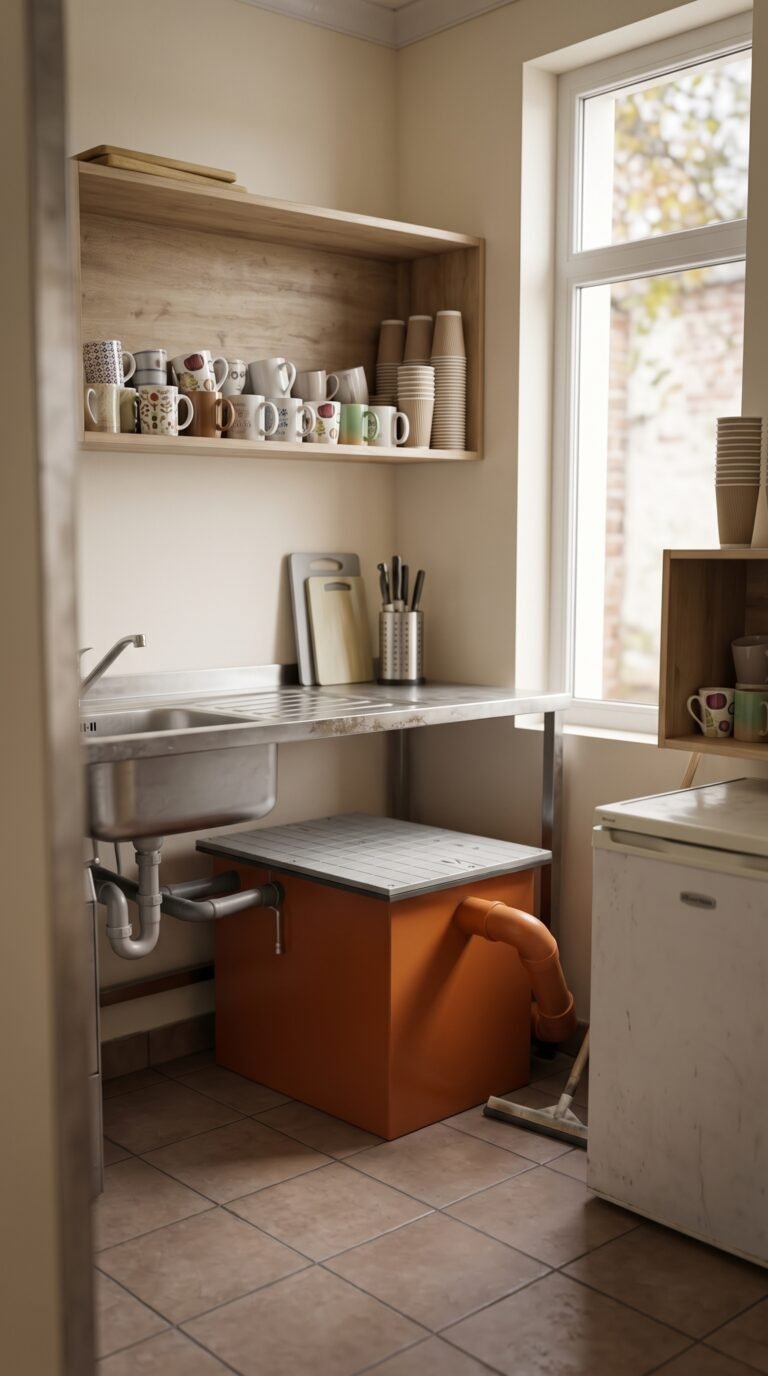
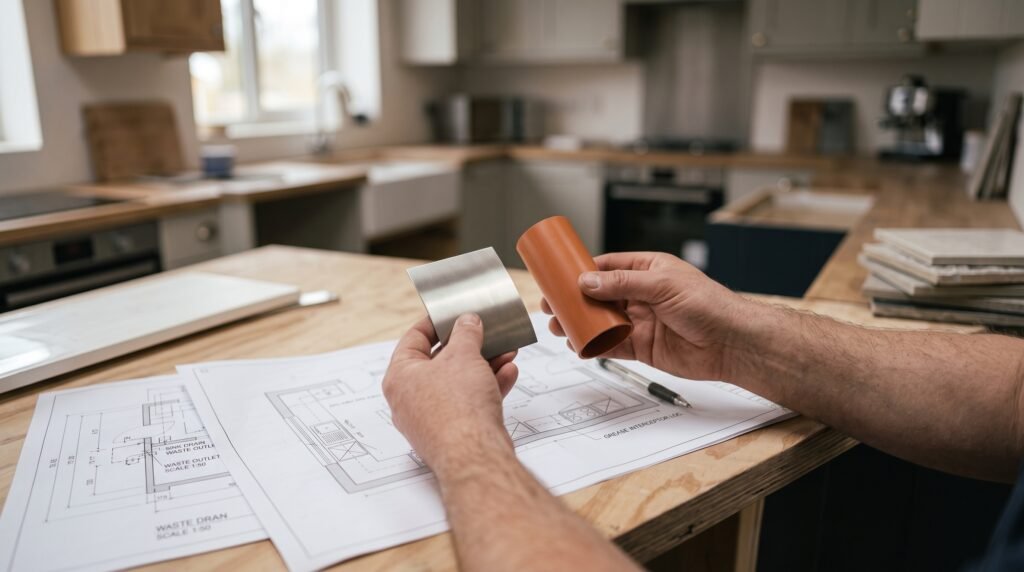
Stainless Steel vs PVC Grease Traps: Which to Choose?
Choosing between Stainless Steel vs PVC Grease Traps is one of the first decisions a kitchen fit-out has to get right, and it’s a decision that affects durability, maintenance cost, and compliance for years after installation. Both materials are used across UAE commercial kitchens, but they perform very differently under daily FOG (fats, oils, and grease) exposure, heat, and heavy-duty cleaning cycles.
This guide breaks down the real differences in the Stainless Steel vs PVC Grease Traps debate — covering durability, cost, hygiene, installation, and which option makes sense for different kitchen types across the UAE.
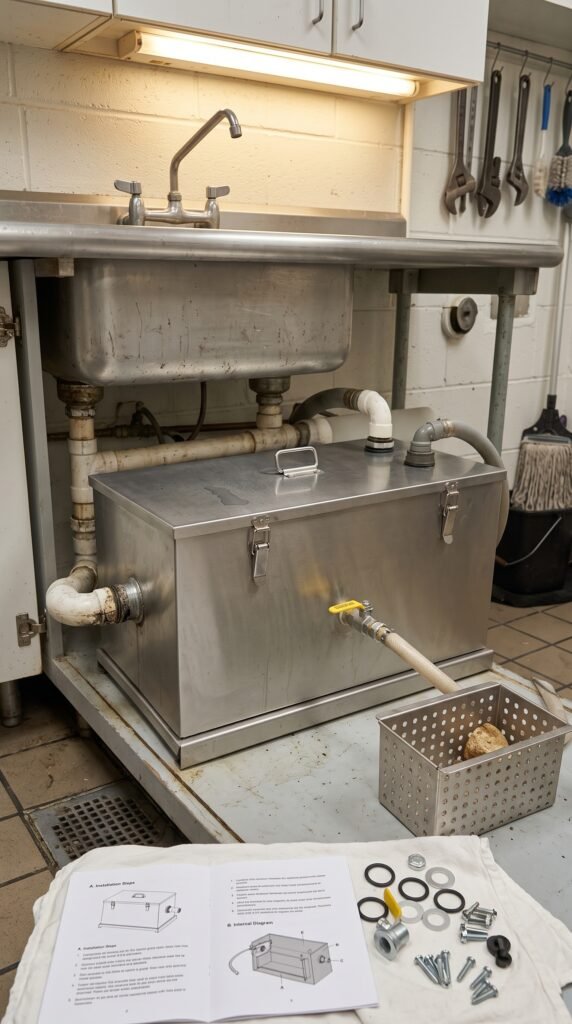
The Stainless Steel vs PVC Grease Traps decision ultimately comes down to a trade-off between upfront cost and long-term durability. Stainless steel traps are built for heavy, continuous commercial use and resist corrosion, heat, and physical impact far better than PVC. PVC traps are lighter and cheaper to purchase, but they’re more prone to warping under high heat and cracking under heavy daily use, which shortens their effective lifespan in a busy commercial kitchen.
The two materials also behave differently once they’re actually installed and exposed to the day-to-day realities of a working kitchen. Stainless steel holds its shape and structural integrity even after years of hot grease discharge, aggressive pump-outs, and the general wear that comes with a high-turnover service schedule, which is why it’s the default choice for most full-service restaurants and hotel kitchens in the UAE. PVC, by contrast, is a perfectly capable material in lower-demand settings, but its performance tends to decline faster once it’s exposed to sustained heat, repeated flexing during cleaning, and constant contact with FOG waste — small stresses that add up over months of continuous use. In practice, this means the Stainless Steel vs PVC Grease Traps choice isn’t just about the price tag on day one; it’s about how each material is going to hold up against your specific kitchen’s volume, climate exposure, and cleaning frequency over the years it stays in service.
Stainless Steel vs PVC Grease Traps: The Core Difference
Stainless Steel vs PVC Grease Traps: Side-by-Side Comparison
Factor | Stainless Steel Grease Trap | PVC Grease Trap |
Durability | High — resists corrosion, impact, and heat over years of use | Moderate — prone to warping under heat and cracking under stress |
Upfront cost | Higher initial investment | Lower initial investment |
Long-term cost | Lower over time due to fewer replacements | Higher over time due to more frequent replacement |
Heat resistance | Excellent, suited to hot water and grease discharge | Limited, can deform under sustained high temperatures |
Hygiene / cleanability | Non-porous, easy to sanitize, resists odor absorption | Can absorb odors and stain over time |
Best suited for | High-volume restaurants, hotels, catering kitchens | Small cafés, low-volume kitchens, budget-conscious fit-outs |
Durability: Where Stainless Steel vs PVC Grease Traps Really Diverge
Durability is usually the deciding factor in the Stainless Steel vs PVC Grease Traps comparison for high-volume kitchens. Stainless steel withstands years of hot grease discharge, heavy-duty pump-outs, and physical wear without degrading, which matters most for kitchens running multiple service periods a day. PVC can hold up reasonably well in lower-volume settings, but sustained heat exposure and frequent cleaning cycles cause it to warp, crack, or discolor faster — leading to more frequent replacements and a higher risk of leaks over time.
Cost Comparison: Upfront vs Long-Term
On paper, PVC looks like the more budget-friendly choice, and for a small café or low-output kitchen, it often is. But for a full-service restaurant or hotel kitchen producing significant daily FOG volume, the Stainless Steel vs PVC Grease Traps cost comparison shifts once you factor in replacement frequency, downtime during swaps, and the risk of a failed trap during a busy service period. Stainless steel’s higher upfront cost is frequently offset within a few years by avoiding repeat replacements.
Hygiene and Compliance Considerations
Stainless steel’s non-porous surface makes it easier to sanitize fully during scheduled cleanings, which supports consistent compliance with UAE municipality hygiene requirements. PVC surfaces are more prone to staining and odor retention over time, which can affect inspection outcomes if the surface isn’t fully deodorized during every cleaning cycle. For kitchens under frequent municipality inspection — restaurants, hotels, and catering operations — this hygiene difference is a meaningful factor in the Stainless Steel vs PVC Grease Traps decision.
Which Should You Choose?
- High-volume restaurants and hotel kitchens: stainless steel is almost always the better long-term investment given daily FOG output and inspection frequency.
- Small cafés and low-volume kitchens: PVC can be a reasonable, budget-friendly option if maintenance schedules are kept consistent.
- Kitchens in hot climates or with high water temperatures: stainless steel handles sustained heat far more reliably than PVC.
- Fit-outs on a tight renovation budget: PVC lowers upfront cost, but budget for earlier replacement cycles.
- Multi-site operators standardizing across locations: stainless steel offers more consistent long-term performance across varying kitchen volumes.
Installation and Maintenance Differences
- Stainless steel traps are typically heavier and may require more robust mounting or support during installation.
- PVC traps are lighter and easier to install in tight spaces, which can suit smaller kitchen retrofits.
- Both materials still require a regular pump-out and cleaning schedule — material choice doesn’t remove the need for scheduled maintenance.
- Stainless steel traps generally tolerate more aggressive cleaning methods without surface damage.
Conclusion
The Stainless Steel vs PVC Grease Traps decision isn’t about which material is universally better — it’s about matching the trap to your kitchen’s volume, budget, and compliance needs. High-volume kitchens generally get more value from stainless steel’s durability and hygiene profile, while smaller, lower-output kitchens can reasonably choose PVC to manage upfront fit-out costs. Either way, the right material should be confirmed with a site assessment before installation.
Still deciding between Stainless Steel vs PVC Grease Traps for your kitchen? Get expert guidance on the right material, sizing, and installation for your UAE kitchen. Book a site assessment today with Blue Diamond Team.
Contact us today on WhatsApp | Call | Email
Phone: +971 55 996 3058
Email: info@bluediamondfm.com
Most Frequently Asked Question
Stainless steel typically lasts significantly longer under commercial kitchen conditions, resisting corrosion, heat, and physical wear far better than PVC over several years of continuous use.
Yes, for small cafés or low-volume kitchens with modest FOG output, PVC can be a cost-effective option, provided cleaning schedules are kept consistent to manage staining and odor retention.
Material doesn't significantly change routine cleaning cost, but PVC traps that have degraded or cracked may require repair or replacement sooner, adding cost beyond standard maintenance.
In many cases yes, especially for under-sink or in-line units, though below-ground installations may require more significant work. A site assessment can confirm feasibility for your specific setup.
Stainless steel grease traps are generally easier to maintain because they resist warping, cracking, and odor absorption. They can withstand frequent cleaning and high‑temperature waste. PVC traps are lighter and cheaper but may require more frequent inspections due to their lower durability and sensitivity to heat.
Yes — stainless steel traps are recommended for commercial kitchens due to their durability, higher flow capacity, and compliance with most municipal standards. PVC traps can work for small cafés or low‑volume kitchens, but they are not ideal for heavy daily operations.
Our Services
Our step-by-step guide simplifies the cleaning process, ensuring a hassle-free experience while keeping your traps clean.
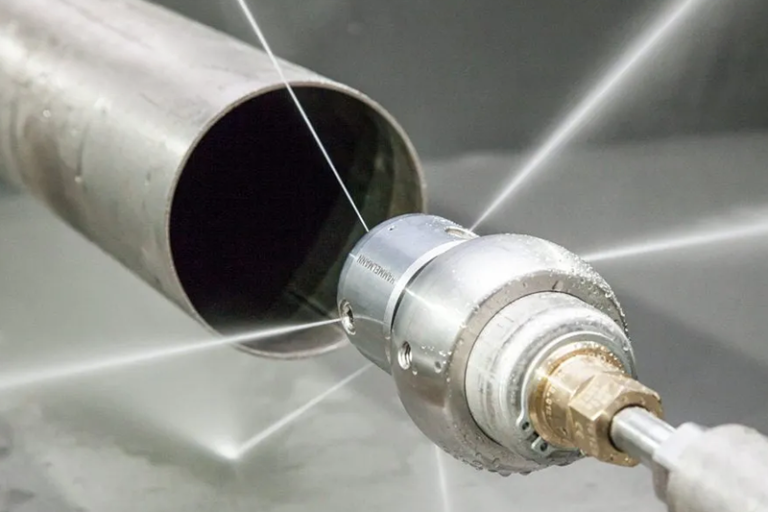
Drain Line Jetting
Pest Control Service
Deep Cleaning
business
Our Working Process
Let’s start the journey towards success and enhance revenue for your business. Take your company to the next level.
Book An Appointment Today
Blue Diamond would like to hear from you. if you have business inquiries. Get in touch with us.