
Grease Trap Services in Al Quoz, Al Qusais & Deira: Industrial-Area Kitchens Guide
Dubai’s food scene doesn’t only live in towers and malls. A large share of it runs out of industrial units, ground-floor shops in older buildings and converted warehouses: cloud kitchens turning out thousands of orders a day, catering companies feeding workforces, shawarma counters in narrow Deira streets and cafés tucked into Al Quoz workshop blocks. These kitchens fry, grill and wash at volume, often in buildings that were never designed for it.
That makes grease trap services in Al Quoz, Al Qusais & Deira a different job from servicing a mall restaurant or a tower podium. Access is different, drainage is older, loads are heavier and the compliance picture is the same strict Dubai Municipality framework as everywhere else in the emirate. This guide covers what makes each area distinctive, what the municipality expects, how to schedule and run servicing in these districts and how to choose a contractor who can actually reach, service and document your trap.
| Area | Typical Kitchens | What Stands Out for Grease Management |
|---|---|---|
| Al Quoz | Cloud kitchens, catering units, cafés and restaurants in warehouse and workshop blocks, staff canteens | Large, heavy-load kitchens in industrial buildings, shared drainage between units, sand and silt in drains |
| Al Qusais | Cloud kitchens, catering companies, accommodation and staff kitchens, neighborhood restaurants, bakeries | Very high-volume frying and batch cooking, multi-brand kitchens sharing lines and high demand for scheduled service |
| Deira | Small restaurants, shawarma and grill counters, cafés and sweet shops in older buildings | Narrow streets and limited access, older and sometimes undersized drainage, tight kitchens and limited space for traps |
Three Districts, Three Kinds of Kitchen
All three districts sit under the same municipal framework, and it is firm. Dubai Municipality’s drainage authorities have set out rules requiring eateries to install grease traps or interceptors on their premises. The municipality’s grease trap guideline applies to food establishments and all producers of fats, oils and grease waste, including restaurants, cafés, cafeterias and labour camps, which matters in areas such as Al Qusais, where catering and staff accommodation kitchens are common.
In practice, that means:
- A correctly installed, approved grease trap: connected to the right drainage point
- Cleaning by licensed providers: Municipal guidance describes grease trap cleaning by specialised companies licensed by Dubai Municipality, with inspectors checking traps periodically.
- Authorized disposal: Grease trap waste is expected to be collected by authorized companies and delivered to the designated grease trap waste recycling plant in Al Aweer. Dumping into drains, storm systems or unauthorised sites is a serious breach, and businesses found dumping grease illegally have been fined.
- Records: Operators remain responsible for their waste until a licensed collector takes it, so you should keep dated service reports and disposal documentation for every visit.
Rules and procedures are updated from time to time, so confirm the current requirements with Dubai Municipality and your contractor.
What Dubai Municipality Expects
Al Quoz: Heavy Loads in Industrial Buildings
What’s Different
Al Quoz mixes workshops, warehouses, showrooms, creative studios and a growing number of food businesses in converted industrial units. Cloud kitchens and catering companies take advantage of the space, the access for delivery vehicles and the lower rents, but the buildings weren’t designed for commercial kitchens.
Typical Challenges
- Heavy frying and batch cooking: that fills traps quickly
- Shared drainage: between units, so one neglected trap affects neighbors
- Sand, dust and silt: entering floor drains and washing areas
- Older or improvised drainage: where kitchens were added after construction
- Traps that were sized for a smaller operation: and never reassessed as volumes grew
- Unclear responsibility: between tenants and the building owner for shared lines
What Works
- Size and review the trap against actual output: especially if orders or menu have grown
- Fit strainers and silt traps: on floor drains and washing areas
- Agree responsibilities with the landlord: for shared lines and any central interceptor
- Use scheduled service: not emergency call-outs
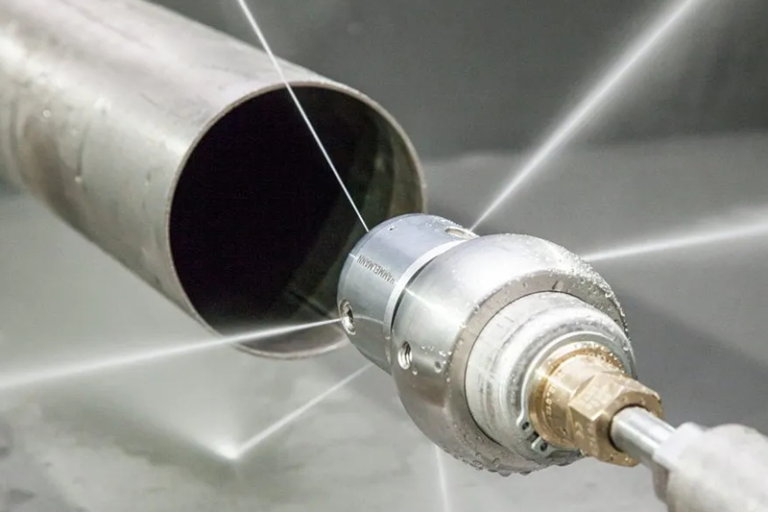
- Check the drain lines downstream: if blockages recur- see our guide to CCTV drain survey and high-pressure jetting.
Al Qusais: Cloud Kitchens, Catering and Staff Kitchens
What’s Different
Al Qusais combines busy residential streets with industrial areas, catering units, bakeries and a large number of staff and accommodation kitchens. It’s one of the places where high-volume, multi-brand cloud kitchens are concentrated, and where large kitchens serve whole workforces.
Typical Challenges
- Very high grease output: from fried and batch-cooked menus
- Multi-brand kitchens: with several fryers sharing a single trap
- Long operating hours: sometimes around the clock
- Staff and accommodation kitchens: covered by the same municipal guideline as restaurants
- Fast growth: with new brands added to the same kitchen without upgrading drainage
- Limited staff time: for daily kitchen hygiene routines
What Works
- Size for the combined output: of every brand and fryer in the kitchen
- Shorter service intervals: for heavy-load kitchens, with extra cycles before known peaks
- Strict kitchen habits: dry-wiping, strainers and used-oil collection through an authorised provider
- A written maintenance plan: that covers every trap on site- see our guide to annual grease trap maintenance plans.
- Combined records: for kitchens, canteens and accommodation- see our guides to grease trap maintenance for schools, universities and staff canteens, and to pest control for labour camps and staff accommodation.
Deira: Old Streets, Small Kitchens, Hard Access
What’s Different
Deira is one of Dubai’s oldest commercial districts. Dense blocks, narrow streets, busy souks and hundreds of small restaurants, cafés and shawarma counters operate from compact ground-floor units in older buildings. Footfall is high and kitchens work hard in very little space.
Typical Challenges
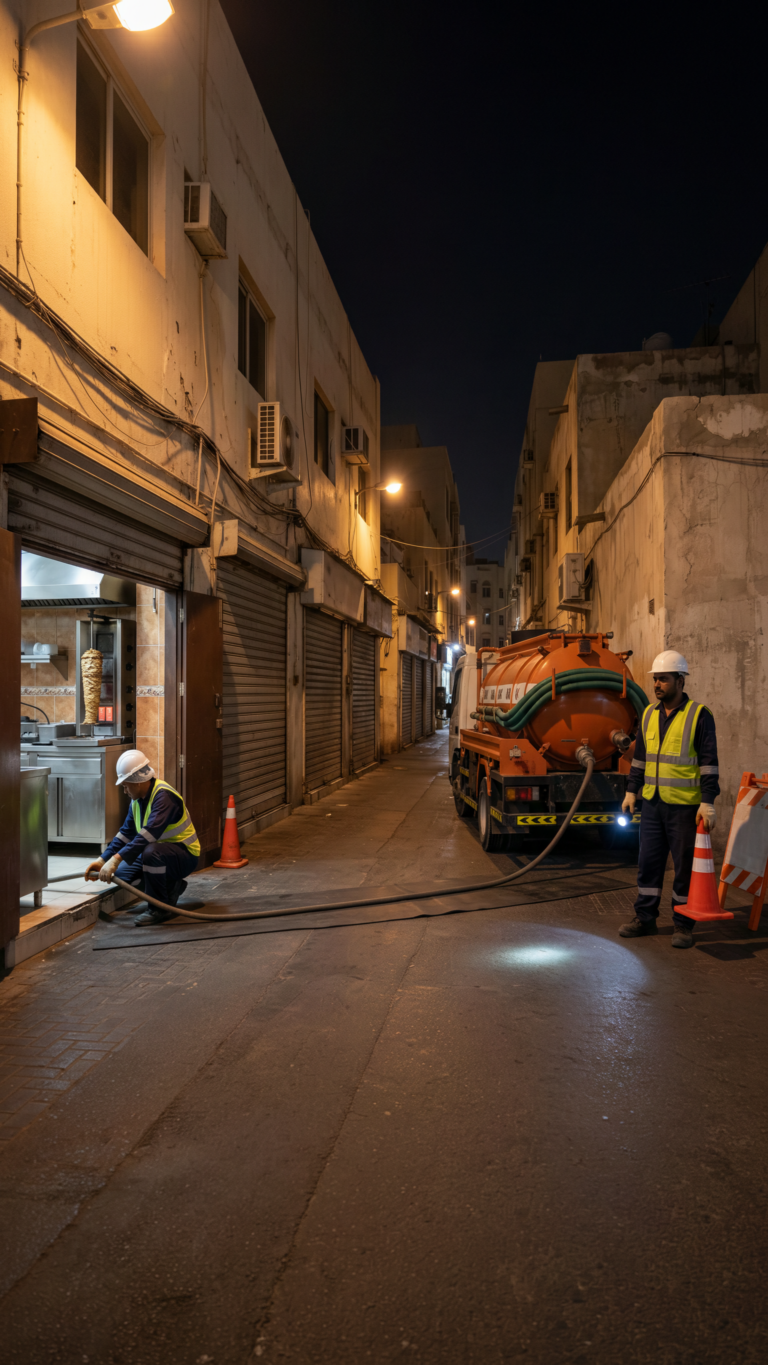
- Narrow lanes and limited parking: which restrict where a service vehicle can stop and how far a hose has to run
- Older drainage: that may be undersized, damaged or poorly documented
- Tight kitchens: with little room for a trap, and sometimes none installed
- Shared lines: in mixed-use buildings, where residents and other businesses use the same pipes
- Traffic and time restrictions: that limit when vehicles can enter an area
- Strong odors: which carry quickly in dense streets and affect neighbors
What Works
- Smaller, manoeuvrable service vehicles: and well-planned access routes
- Out-of-hours servicing: typically late at night or early in the morning, when streets are quieter
- Compact or properly engineered trap solutions: that fit the available space- see our comparison of automatic grease removal units and traditional grease traps.
- Early action on odors: since complaints in dense areas escalate quickly
- A drainage survey: to understand older lines before they cause a flood or a failure
Common Problems in Industrial-Area Kitchens
| What You See | Likely Cause | First Action |
|---|---|---|
| Slow drains and recurring blockages | Overloaded trap, grease build-up in downstream pipes | Service the trap, then jet and survey the line |
| Persistent odor in the unit or the lane | Overdue trap, damaged cover or dry drain seals | Service now, check covers and seals |
| Floor drains blocked with silt | Sand and debris entering through washing areas | Clear, fit strainers and silt traps |
| Backups affecting several units | Shared line overloaded or blocked | Notify the landlord, survey the line |
| Trap fills far faster than expected | Undersized for current output | Review sizing and service frequency |
| No trap, or trap can’t be found | Old fit-out or missing records | Locate or install an approved unit, and update records |
| Contractor “can’t get a vehicle in” | Access limits or poor scheduling | Agree access, time slots and vehicle size in advance |
| Inspector asks for records you don’t have | Missing service and disposal documentation | Set up a documented schedule and keep every report |
How Often Should Industrial-Area Kitchens Service Their Grease Traps?
Follow any interval set in your approved conditions or by the authority. As a starting point:
| Kitchen Type | Typical Interval |
|---|---|
| Multi-brand cloud kitchens and high-volume fried outlets | Every 2 to 4 weeks |
| Catering companies and staff or accommodation kitchens | Every 2 to 4 weeks |
| Shawarma, grill and fried outlets in Deira | Every 2 to 4 weeks |
| Standard restaurants and cafés | Every 4 to 6 weeks |
| Bakeries, sweet shops and low-oil outlets | Every 6 to 8 weeks |
Measure how fast each trap fills over its first few cycles and adjust, because actual output matters more than a generic calendar.
What a Proper Service Includes
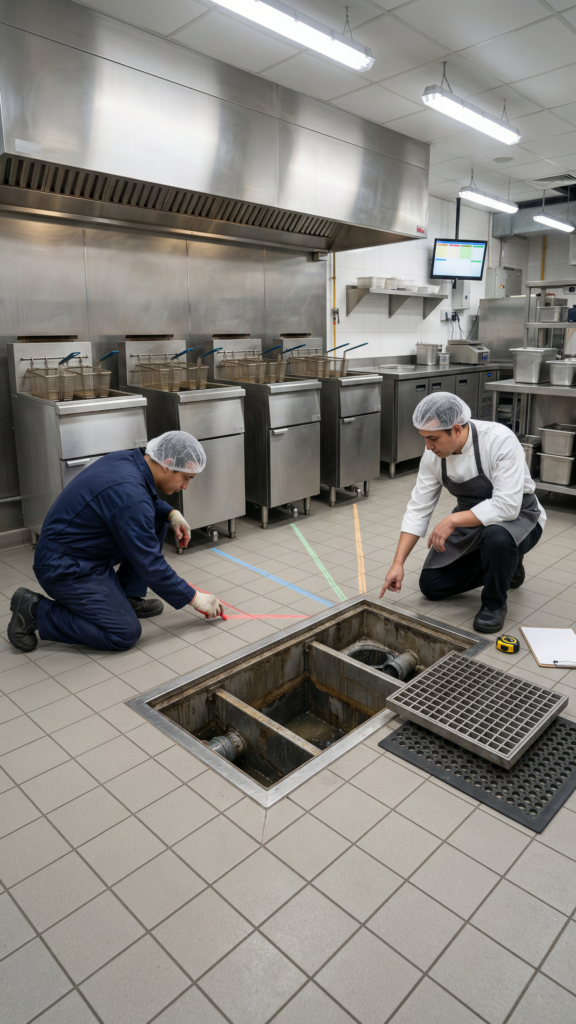
- Full pump-out: of liquids, solids and the grease cap
- Wall and baffle scraping
- Inlet and outlet pipe flushing
- Inspection: of the unit’s condition, seals and covers, with defects reported
- Authorised collection and disposal: of the waste
- A dated service certificate: and disposal record
- Before-and-after photographs: ideally
A cheap quote that omits several of these just moves the cost to a later emergency or a failed inspection. Our guide to grease trap cleaning quotes explains the factors that drive price differences.
Access and Logistics: Getting the Job Done
- Vehicle size and reach: confirm the contractor can reach your trap, including hose length and any restricted lanes
- Time slots: agree service windows that avoid peak traffic and trading hours
- Building permissions: landlords or owners may need to approve contractor access, particularly in shared buildings
- Containment: sealed equipment and tidy hose handling protect neighbors and pedestrians
- Parking and traffic management: cones, barriers and a spotter where needed
- Emergency response: a written commitment on how quickly the contractor can attend an overflow
Cloud Kitchen Clusters and Shared Lines
Many Al Quoz and Al Qusais buildings house several cloud kitchens on one drainage line. To prevent disputes and failures:
- Map every trap and line: and record who owns and maintains each
- Agree responsibility in writing: between tenants and the landlord
- Coordinate service schedules: so no kitchen falls behind
- Share records: so the building can show it’s managing the whole system
- Review capacity: when new brands move in or volumes change
- Plan for downstream blockages: with periodic jetting and surveys
Choosing a Contractor for Industrial-Area Kitchens
Look for a provider who can show:
- A Dubai Municipality license: for grease trap cleaning and waste collection
- Authorized transport and disposal: with documentation for every collection
- Experience in your district: with the right vehicles and access knowledge
- Capacity for heavy loads: and multiple traps in one building
- Flexible out-of-hours scheduling
- A clear written scope: and itemised pricing
- A service certificate and disposal record: after every visit
- A written emergency response commitment
- Public liability insurance
- References: from similar kitchens in Al Quoz, Al Qusais and Deira
Our contractor selection guide provides a fuller checklist.
What Affects the Cost?
Pricing depends on trap size and capacity, service frequency, kitchen type and grease load, access and vehicle requirements, scope of service, waste volume, out-of-hours work and the number of traps on site. A scheduled contract usually costs less per visit than emergency call-outs.
Keep Industrial-Area Kitchens Compliant and Flowing
Grease trap services in Al Quoz, Al Qusais & Deira come down to the same fundamentals as anywhere in Dubai: a correctly sized and approved trap, a schedule that matches your real output, licensed collection and disposal and records you can show on the day. In these districts, add one more: a contractor who knows the access, the buildings and the shared drains.
Book a free grease trap assessment with Blue Diamond Team Today. They will inspect your trap, plan access and set up a documented service schedule with authorized disposal, for cloud kitchens, catering units and restaurants in Al Quoz, Al Qusais, Deira and across Dubai.
Contact us today on WhatsApp | Call | Email
Phone: +971 55 996 3058
Email: info@bluediamondfm.com
Most Frequently Asked Question
Yes. Dubai Municipality requires food establishments to install approved grease traps or interceptors, and its guideline covers restaurants, cafés, cafeterias and labour camps. Confirm the exact requirements for your premises with the municipality and your contractor.
Cleaning should be carried out by a contractor licensed for the activity, and the waste should be collected and disposed of through authorized channels. Ask for the license and disposal records.
Multi-brand and high-volume cloud kitchens commonly need service every two to four weeks, with extra cycles before known peaks. Measure how quickly the trap fills and adjust.
Common causes include an undersized trap, grease building up in downstream pipes, a blocked or shared line, or heavy kitchen use beyond the original design. A drain survey and a sizing review will identify the cause.
Options include compact or properly engineered units, a trap in an alternative approved location, shared arrangements with the landlord and more frequent service. Discuss the choice with a qualified contractor and the landlord before changing anything.
Our Services
Our step-by-step guide simplifies the cleaning process, ensuring a hassle-free experience while keeping your traps clean.
Drain Line Jetting
Pest Control Service
Deep Cleaning
business
Our Working Process
Let’s start the journey towards success and enhance revenue for your business. Take your company to the next level.
Book An Appointment Today
Blue Diamond would like to hear from you. if you have business inquiries. Get in touch with us.