Trakhees Grease Trap Requirements for Restaurants in Dubai

If your restaurant, café or F&B outlet operates within a Trakhees-governed jurisdiction — Palm Jumeirah, JAFZA, National Industries Park, Dubai Maritime City, or one of the other free zones and master developments under the Dubai Ports, Customs and Free Zone Corporation umbrella — your grease trap obligations are not the same as a mainland restaurant regulated solely by Dubai Municipality. Trakhees runs its own environmental health inspection regime, and grease trap non-compliance is one of the most common reasons F&B outlets in these zones receive violation notices.

This guide sets out the Trakhees grease trap requirements for restaurants in Dubai in plain terms: what’s mandated, how it’s sized, how often it must be serviced, and what happens if you don’t comply.

Trakhees is the regulatory authority overseeing several of Dubai’s free zones and master-planned communities, including areas within Palm Jumeirah, Dubai Maritime City, National Industries Park, and JAFZA-adjacent zones. Where Trakhees has jurisdiction, it — not Dubai Municipality — issues trade licences, conducts food safety and environmental health inspections, and enforces its own building and public health code for F&B outlets.

Grease trap compliance falls under Trakhees’ Environment, Health, Safety and Quality (EHSMS) framework and its food-establishment fit-out approval process. Any restaurant, café, cloud kitchen or catering facility discharging kitchen wastewater into the drainage network within a Trakhees zone must have a compliant grease trap or interceptor installed and maintained before final food-trade licence approval is granted.

What Trakhees Is and Why It Regulates Grease Traps

Trakhees Grease Trap Requirements for Dubai Restaurants

Why This Matters Beyond the Paperwork

Fats, oils and grease (FOG) discharged untreated into drainage lines solidify as they cool, narrowing pipe diameter until blockages force wastewater backward — into kitchen floors, into shared building drainage, and in worse cases into the surrounding municipal network. In a mixed-use free zone building with multiple F&B tenants sharing risers, one restaurant’s non-compliant discharge becomes every tenant’s blocked drain.

This is precisely why Trakhees grease trap requirements exist as a licensing precondition rather than a suggestion: they protect shared infrastructure that Trakhees itself is liable for maintaining.

Non‑compliance doesn’t just risk fines — it can trigger emergency shutdowns, tenant disputes, and expensive corrective maintenance. Shared drainage failures often escalate into building‑wide incidents, affecting operations, customer experience, and brand reputation. Proper grease trap installation and maintenance protect every stakeholder: landlords, tenants, facility managers, and the regulatory authority itself. Meeting Trakhees standards ensures uninterrupted business operations and demonstrates responsible environmental stewardship within regulated zones.


Core Trakhees Grease Trap Requirements

1. Mandatory Installation Before Trade Licence Approval

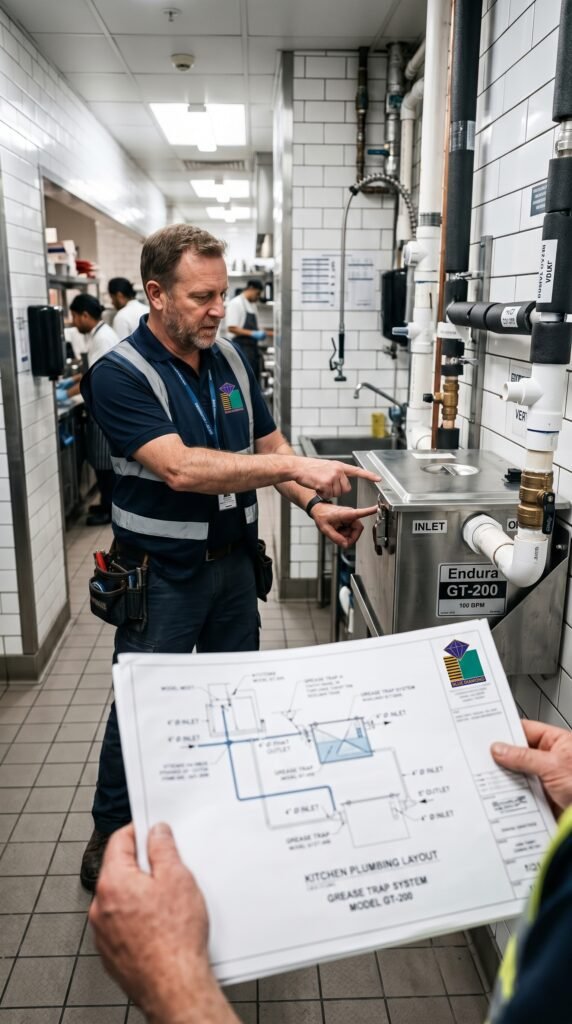
Any food and beverage outlet applying for a trade licence or fit-out approval within a Trakhees jurisdiction must submit grease trap details as part of the MEP (mechanical, electrical, plumbing) drawings package. Approval of the food licence is contingent on the grease trap being installed, inspected and signed off.

2. Sizing Based on Kitchen Output

Trakhees does not accept a generic, one-size grease trap. Sizing must be calculated against:

  • Kitchen seating capacity and covers per day
  • Type of cuisine and cooking methods (fried food and high-oil cuisines require larger capacity)
  • Peak wastewater flow rate
  • Number of fixtures discharging greasy wastewater (dishwashers, pre-rinse sinks, floor drains)

Undersized traps are among the most common points of rejection during Trakhees fit-out inspections.

3. Installation Location and Access

The grease trap must be installed in an accessible location — typically outside the kitchen or in a dedicated service area — with sufficient clearance for pumping equipment and technician access. Traps buried without accessible covers, or installed inside cramped kitchen floor voids, routinely fail inspection.

4. Material and Construction Standards

Stainless steel or approved reinforced concrete/fiberglass units are generally required, sized to relevant capacity standards referenced in Trakhees’ EHS technical guidelines. Under-sink plastic traps, common in small cafés elsewhere, do not satisfy commercial-scale Trakhees requirements for a full-service restaurant.

5. Documented Cleaning and Maintenance Schedule

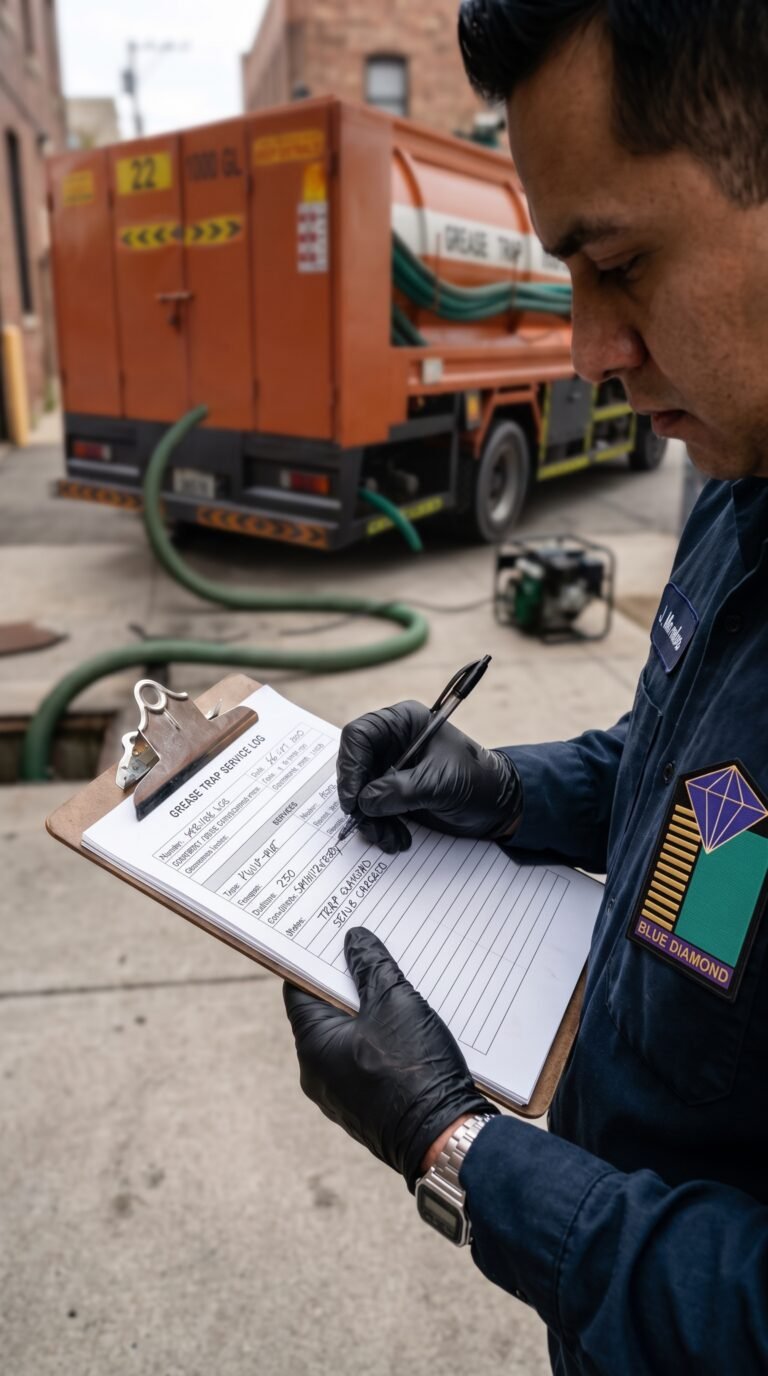
Trakhees Grease Trap Requirements an evidence of a regular, documented cleaning schedule — not just an installed unit. Restaurants must retain:

  • Cleaning/pumping service records with dates
  • Waste transfer/disposal manifests showing legal disposal of extracted FOG waste
  • The licensed contractor’s registration details

6. Licensed Waste Transporter Requirement

FOG waste removed from the trap must be transported and disposed of by a contractor licensed for grease/FOG waste handling and disposal in Dubai. Dumping extracted grease into general drainage, storm drains, or unauthorized sites is a serious violation carrying escalated penalties.

7. Inspection Access

Trakhees EHS inspectors may conduct scheduled or surprise inspections of F&B outlets. Restaurants must provide access to the grease trap and produce maintenance records on request during these visits.

Recommended Cleaning Frequency

While exact intervals can be specified in your outlet’s approval conditions, the general operating principle Trakhees-regulated restaurants should follow is:

Kitchen TypeRecommended Cleaning Frequency
High-volume restaurants, fried/grilled cuisineEvery 2–4 weeks
Standard full-service restaurantsEvery 4–6 weeks
Cafés and low-oil-output outletsEvery 6–8 weeks
Cloud kitchens with multiple brandsEvery 2–4 weeks (higher combined FOG load)

Waiting until the trap overflows or odour complaints arrive is the single most common compliance failure. A trap at 25% capacity is already losing effectiveness — most contractors recommend pumping once it reaches that threshold, not when it’s full.

Trakhees Grease Trap Requirements for Dubai Restaurants

The Approval and Inspection Process

  1. MEP drawing submission: grease trap specification submitted as part of fit-out drawings
  2. Pre-installation review: Trakhees or its appointed consultant reviews sizing and location
  3. Installation and NOC inspection: physical inspection confirms the trap matches approved drawings
  4. Trade license/food license issuance: contingent on passing this inspection
  5. Ongoing compliance inspections: periodic or complaint-triggered EHS visits check maintenance records and physical condition

Consequences of Non-Compliance

Restaurants operating in Trakhees zones without a compliant, documented grease trap program face escalating consequences:

  • Warning notices on first identified violation
  • Fines, which increase with repeat violations
  • Trade license suspension for continued non-compliance
  • Closure notices in cases involving repeated drainage blockages affecting shared building infrastructure
  • Liability for damage if untreated discharge causes blockages or damage to shared building drainage systems, potentially extending to neighbouring tenants’ claims

For a restaurant, a license suspension during peak trading periods is often more costly than years of proper maintenance combined.

How This Differs From Dubai Municipality Requirements

Restaurants outside Trakhees jurisdiction — the majority of mainland Dubai — are regulated by Dubai Municipality’s Food Safety Department, which maintains its own (broadly similar in principle) grease trap and FOG management requirements. The core obligations overlap significantly: mandatory installation, sizing to kitchen output, licensed disposal, and documented maintenance. What differs is the specific authority conducting inspections, issuing the trade licence, and enforcing penalties.

If your F&B group operates outlets both inside and outside Trakhees zones, your facilities team needs to track both compliance frameworks separately — a maintenance schedule that satisfies Dubai Municipality does not automatically satisfy Trakhees, and vice versa, even where the underlying engineering principle is identical.

How to Stay Compliant Without the Administrative Burden

Most restaurant operators outsource grease trap compliance entirely to a licensed facilities contractor who:

  • Assesses and confirms correct trap sizing against your kitchen’s actual output
  • Schedules recurring pumping/cleaning on a documented cycle
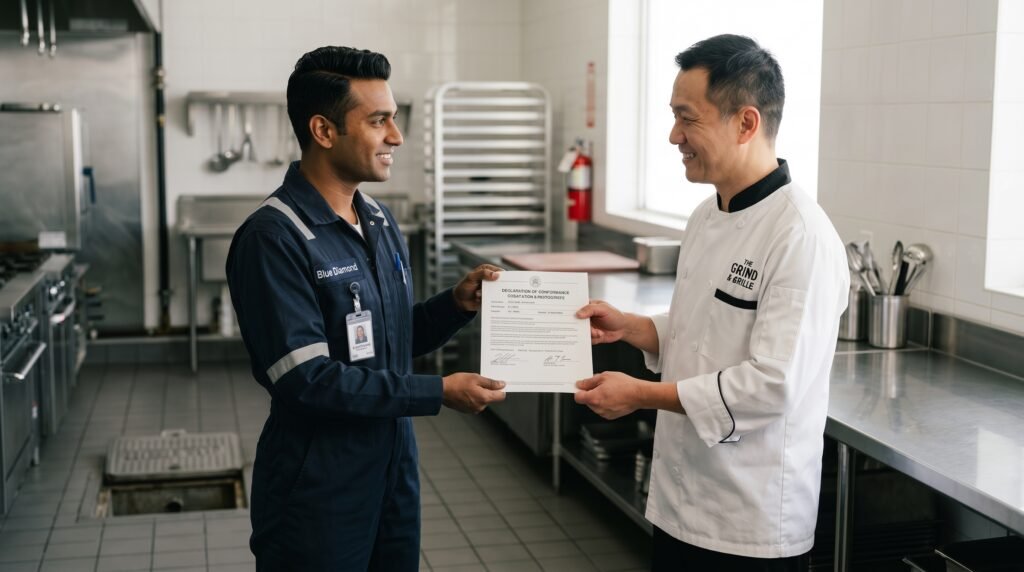
  • Issues dated service certificates and waste transfer manifests after every visit
  • Maintains records in a format ready to hand to a Trakhees inspector on demand
  • Flags trap condition issues (cracks, corrosion, failing baffles) before they become compliance failures

This converts an open-ended regulatory risk into a fixed, predictable operating cost — and removes the burden of tracking inspection cycles from your kitchen management team.

Keep Your Restaurant Licence Protected

Trakhees grease trap requirements exist to protect shared drainage infrastructure across free zones and master developments — and non-compliance puts your trade licence, not just your drains, at risk. A properly sized installation paired with a documented, recurring maintenance schedule is the only reliable way to stay inspection-ready year-round.

Book a free grease trap assessment. Blue Diamond licensed technicians will review your kitchen’s output, confirm correct sizing against Trakhees requirements, and set up a documented cleaning schedule with certified waste disposal — anywhere across Dubai’s Trakhees zones and beyond.


Contact us today on WhatsApp | Call | Email

Phone: +971 55 996 3058

Email: info@bluediamondfm.com

Most Frequently Asked Question

Yes. Any F&B outlet discharging kitchen wastewater into the drainage network within a Trakhees-governed area must have an installed, approved grease trap or interceptor as a condition of trade license approval.

Sizing is based on seating capacity, cuisine type, cooking methods, peak wastewater flow, and the number of grease-generating fixtures in the kitchen. A qualified MEP consultant or grease trap contractor typically performs this calculation as part of your fit-out drawings.

Dated cleaning/pumping service records, waste transfer manifests confirming licensed disposal, and the servicing contractor's registration or license details.

For a full-service commercial restaurant, no — under-sink units generally do not meet Trakhees' capacity requirements. Undersized traps are one of the most common reasons fit-out inspections fail.

Consequences range from a warning notice with a correction deadline, to fines, to trade license suspension for repeated or unresolved violations — particularly where non-compliance has caused drainage blockages affecting shared building infrastructure.

The underlying principles are similar, but Trakhees and Dubai Municipality are separate regulatory authorities with independent inspection regimes. Compliance with one does not automatically satisfy the other if your outlets fall under both jurisdictions.

Our Services

Our step-by-step guide simplifies the cleaning process, ensuring a hassle-free experience while keeping your traps clean.

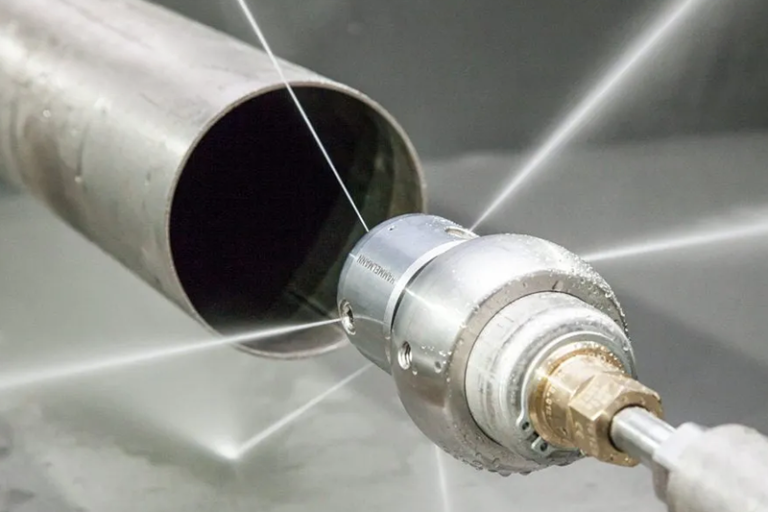
drain line jetting machine image

Drain Line Jetting

We deliver the best solution and provide a business strategy that makes you a full professional.
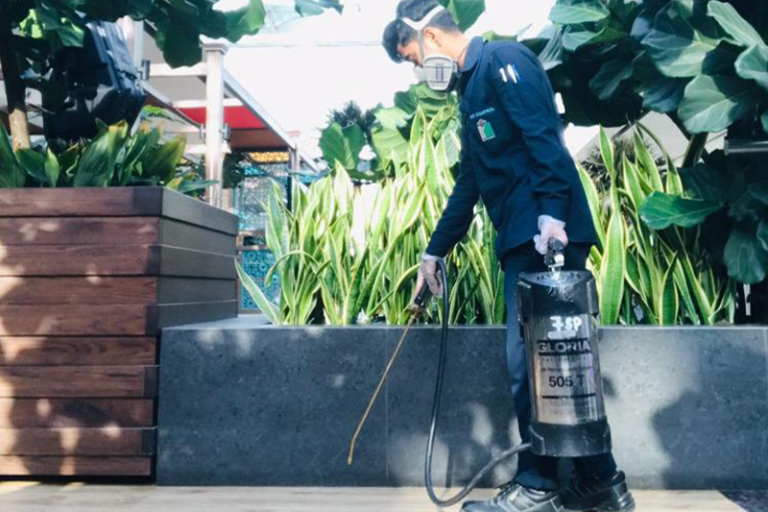
Man doing pest control with spray image

Pest Control Service

Pest control services are professional solutions offered to manage and eradicate pests that can pose a threat to property, health, or the environment.
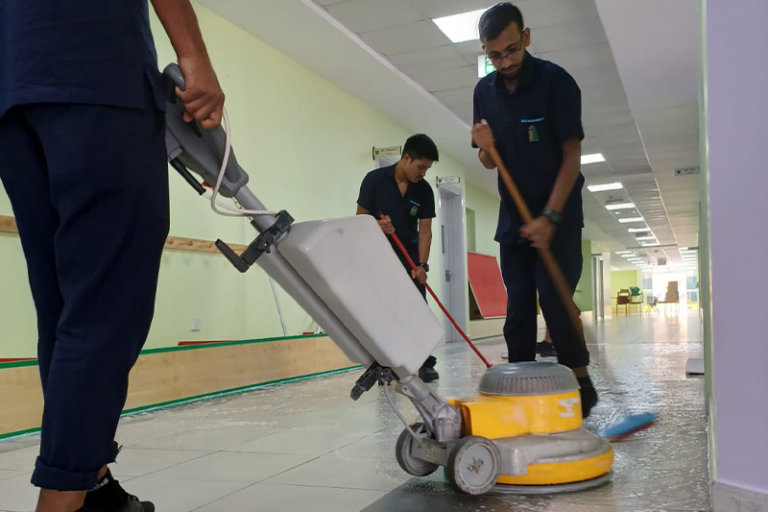
A group of people are providing deep cleaning service along with the dosing machine Image

Deep Cleaning

We deliver the best solution and provide a business strategy that makes you a full professional.

Why Choose Us

Grease Trap Cleaning UAE

28 years of expertise

Renowned name in facility management

New Technology

We are using latest techniques and technology

Customized Plans

We provide AMC & On call service

Satisfied Clients

40k+ clients trust our expertise

Book An Appointment Today

Blue Diamond would like to hear from you. if you have business inquiries. Get in touch with us.

Leave a Reply

Your email address will not be published. Required fields are marked *